
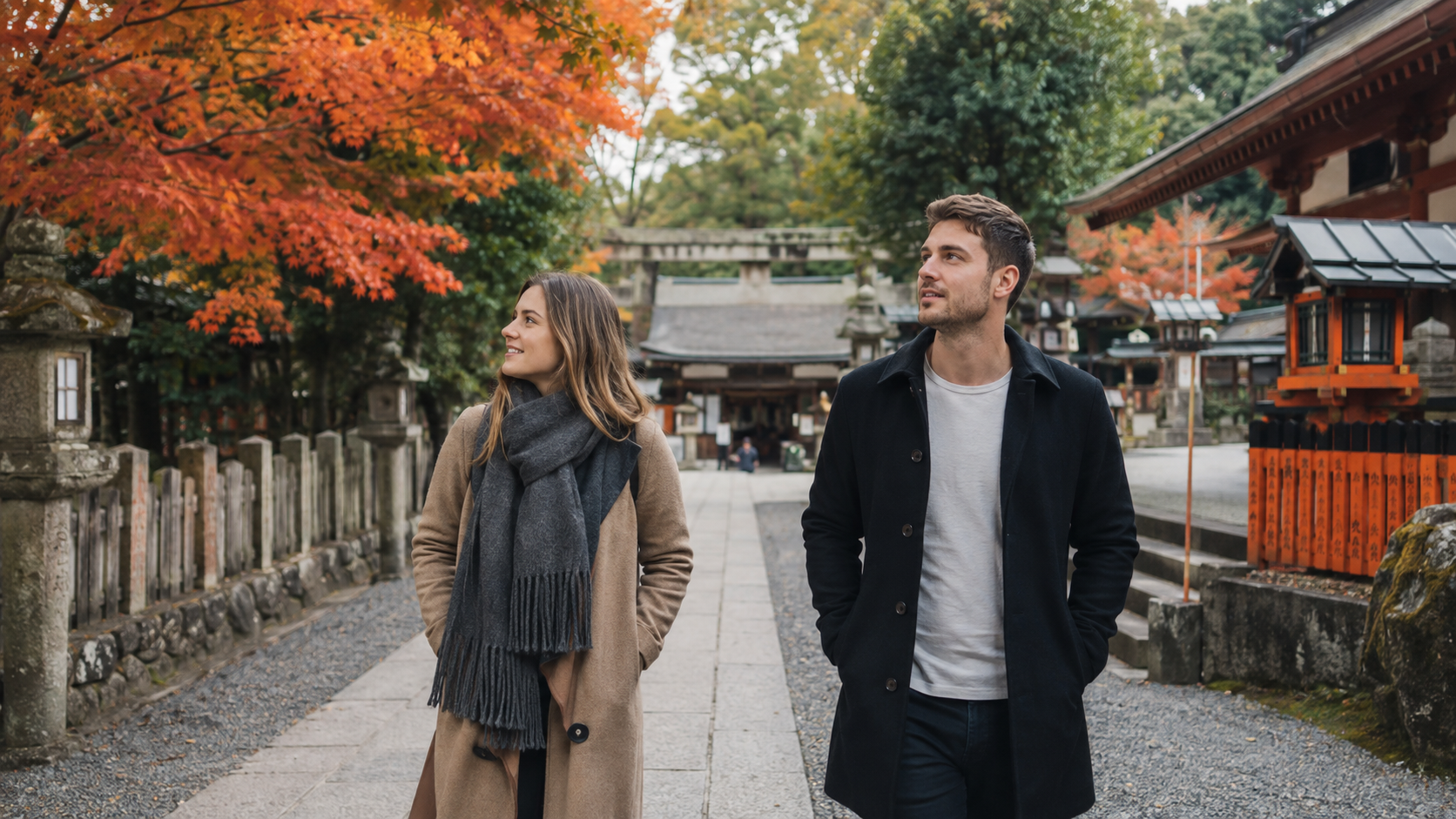
Can You Visit a Shrine Without Praying?
You are walking through Japan and notice a torii gate.
Maybe the shrine looks beautiful.
Maybe there is a festival happening inside.
Maybe you hear music, see food stalls, or simply want to walk through the grounds.
But you are not planning to pray.
So…is that okay?
Yes. You can visit a Shinto shrine without praying.
You do not need to make a formal prayer every time you enter shrine grounds.
People visit shrines for many reasons—to worship, to attend festivals, to see seasonal scenery, to receive goshuin or omamori, to accompany family or friends, or simply to experience the atmosphere of the place.
The important thing is not whether you pray.
It is whether you remember that you are visiting a sacred place and behave with respect.
You Do Not Have to Pray Every Time You Visit a Shrine
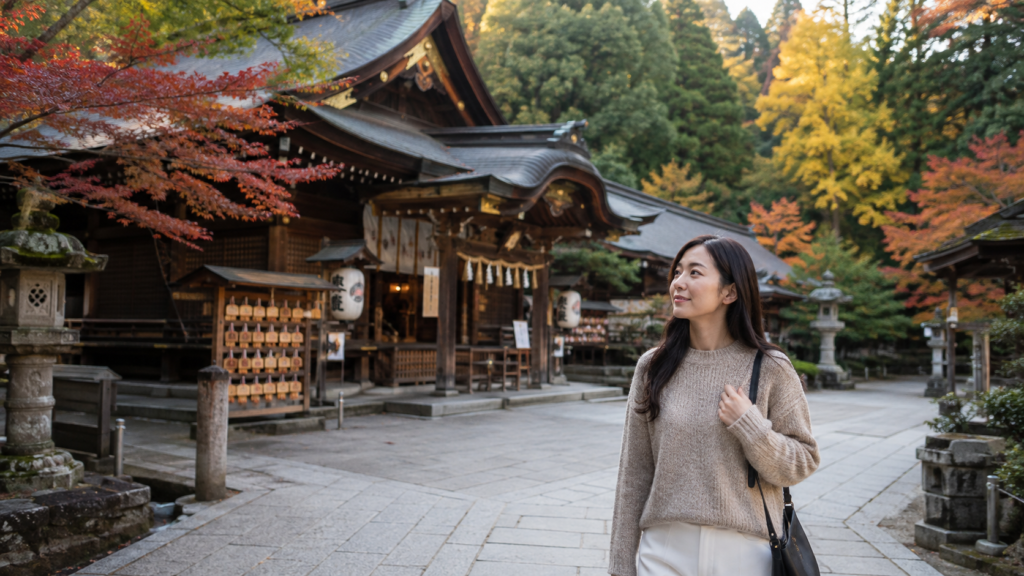
A Shinto shrine is first and foremost a place where kami are enshrined.
But that does not mean every person who enters the grounds must immediately perform a prayer.
In Japan, shrines are also deeply connected with everyday life.
The Association of Shinto Shrines describes shrines as familiar places people encounter through events such as hatsumode, festivals, Shichigosan, and other important moments in life.
So it is perfectly possible to enter a shrine because you are interested in its architecture, history, seasonal scenery, or local culture.
You might walk through the grounds.
You might look at the torii or sacred trees.
You might receive a goshuin.
You might visit during a festival.
And you may leave without making a formal prayer.
That alone is not disrespectful.
Sometimes People Go to Shrines Just for the Festival
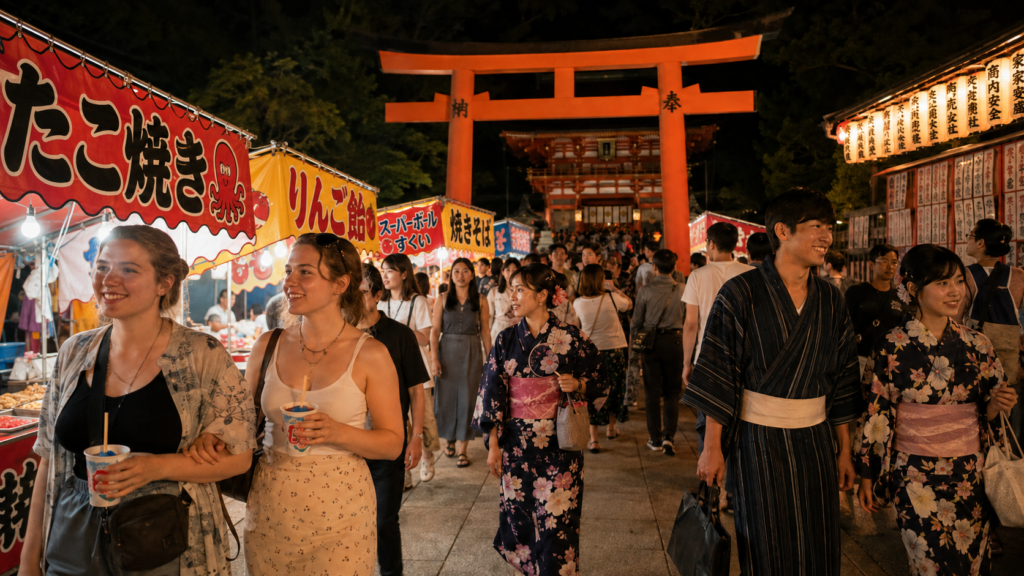
This is an important part of shrine culture that can be easy to miss if you only read basic shrine etiquette guides.
Shrines regularly hold matsuri, or festivals.
And people do not necessarily attend them because they want to stand quietly in front of the main sanctuary and pray.
They may come because:
- friends are going,
- there are food stalls,
- there is music,
- children want to play festival games,
- there is a procession,
- or simply because it is a fun local event.
That is not somehow separate from shrine culture.
Festivals have long been one of the ways shrines and local communities are connected.
What Is a Shrine Festival Actually For?
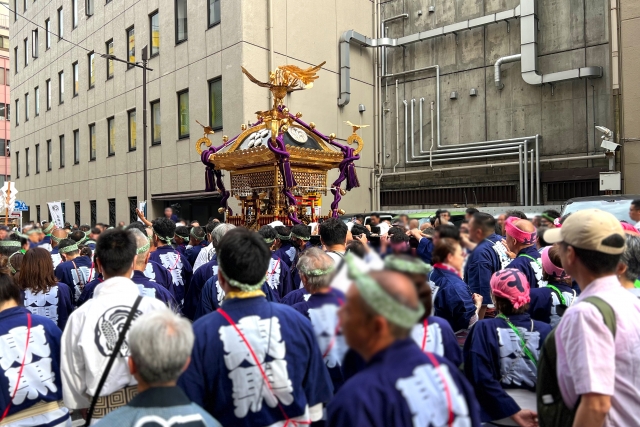
A shrine festival is not simply a street party that happens to take place near a shrine.
Traditionally, matsuri are occasions for expressing gratitude to the kami and offering prayers for people and communities.
The Association of Shinto Shrines describes shrine festivals as occasions for offering gratitude and prayers to the kami.
Historically, many festivals have also been closely connected to agriculture and seasonal life.
The Association explains that there are festivals to pray for a good harvest in spring, to pray for protection from damaging weather in summer, and to give thanks for the harvest in autumn.
Other shrine festivals may pray for things such as:
- the safety of the local community,
- health and happiness,
- protection from disasters,
- safe travel,
- successful fishing,
- or other blessings connected with the local kami.
For example, Anba Matsuri in Fukushima is officially described as a festival praying for good catches at sea and maritime safety.
So underneath the food, music, crowds, and excitement, there is still a religious foundation.
But Shrine Festivals Can Also Be Really Fun
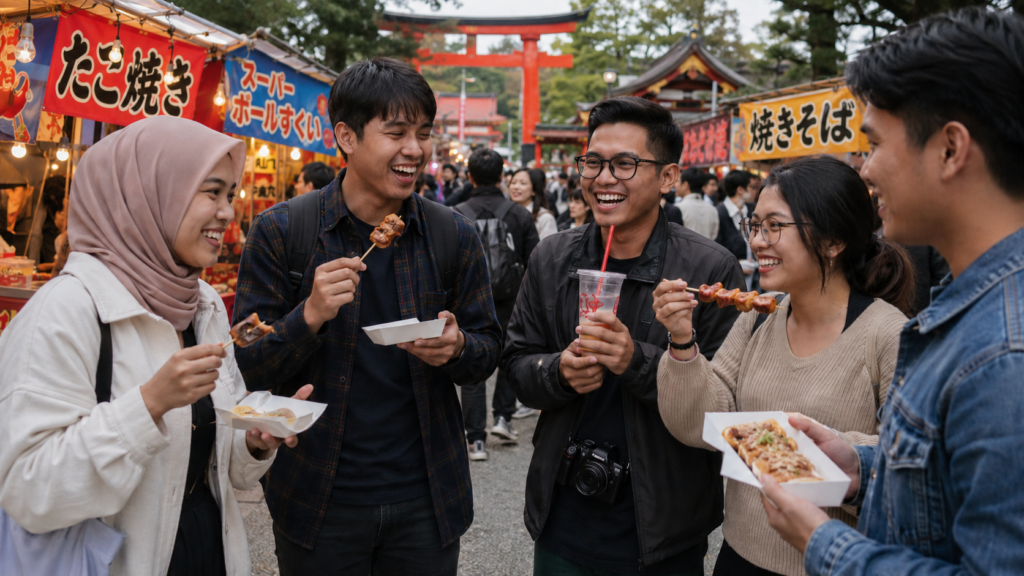
And that religious background does not mean you have to experience a festival solemnly from beginning to end.
Matsuri have long combined ritual with community celebration.
The Association of Shinto Shrines notes that festivals may include not only shrine rituals but also mikoshi processions and floats, bringing large numbers of people together.
Today, depending on the festival, you might find:
- yatai food stalls,
- festival games,
- taiko performances,
- live music,
- dancing,
- mikoshi,
- parades,
- fireworks,
- local performances,
- and all kinds of contemporary events.
JNTO, for example, describes Tokyo’s Kanda Matsuri as including large processions as well as local festival food, while other shrine festivals feature music, dancing, fireworks, and rows of food stalls.
So yes:
Going to a shrine because you want to enjoy the festival is completely normal.
Shrine Festivals Change With the Times
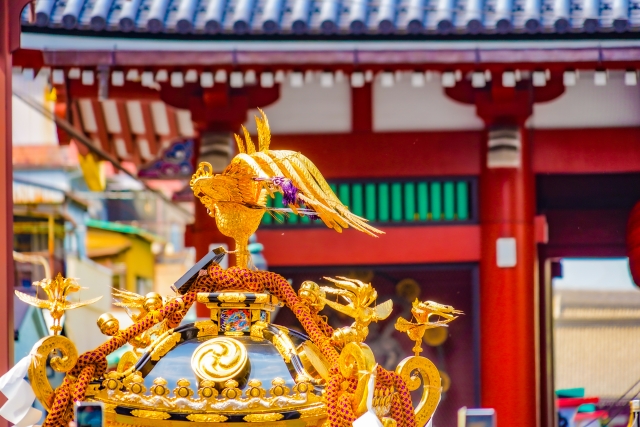
Shrine festivals are traditions.
But “tradition” does not mean they are frozen in one particular period of Japanese history.
The religious core may remain, while the public side of a festival changes with the local community and the times.
Some festivals still center heavily on traditional processions and performances.
Others combine those traditions with modern entertainment.
You might find contemporary musicians performing at a shrine.
You might find sports activities.
And yes—you might even find a DJ booth.
A current example is Ikuta Jinja in Kobe.
Its Daikai Natsumatsuri is a summer festival connected with Daikai Jinja, an auxiliary shrine dedicated to Sarutahiko no Mikoto. The shrine’s official information confirms the festival continues to be held, and recent editions have included stage performances and modern entertainment; the 2026 festival included music performances, food stalls, and a DJ booth.
So if your mental picture of a Shinto shrine is only:
ancient trees + silence + priests + traditional music
Japan may surprise you.
Sometimes there is a DJ.
Does Enjoying a Festival Make It Less Religious?
Not necessarily.
A festival can be both:
a religious event for the kami
and
a community celebration for people.
Those two sides have coexisted for a very long time.
The Association of Shinto Shrines describes matsuri as an important way of offering prayer and gratitude while also strengthening connections within the community.
That is part of what makes Japanese shrine festivals interesting.
A solemn ritual may be taking place in one part of the shrine.
Meanwhile, outside:
Someone is eating takoyaki.
Children are playing festival games.
A mikoshi is passing through the crowd.
Music is playing.
All of those things can be part of the same festival.
Can Tourists Go to Shrine Festivals?
Generally, yes.
Many shrine festivals are public events, and visitors—including international travelers—are welcome to enjoy them.
JNTO actively promotes shrine festivals such as Kanda Matsuri, Tenjin Matsuri, and other regional festivals to international visitors.
That said, festivals vary enormously.
Some parts may be open to everyone.
Some rituals may have restricted areas.
Some events may require reservations or participation by local groups.
And individual shrines may set their own rules.
So if there are signs or instructions, follow them.
Finding Shrine Festivals Can Be Hard in English
This is one practical problem for international travelers.
Major festivals are often easy to find in English.
Small local shrine festivals?
Not always.
Information may appear only on:
- the shrine’s Japanese website,
- Instagram,
- X,
- local tourism pages,
- posters around the neighborhood,
- or notices at the shrine itself.
So you can easily walk past a small shrine one day and discover that the same place will be full of food stalls and local festivities the following weekend.
If you are interested in shrine festivals while traveling, checking the shrine’s Japanese social media or official website can sometimes reveal events that never make it onto major English-language travel sites.
That is especially true for smaller community festivals.
Can You Just Walk Around the Shrine Grounds?
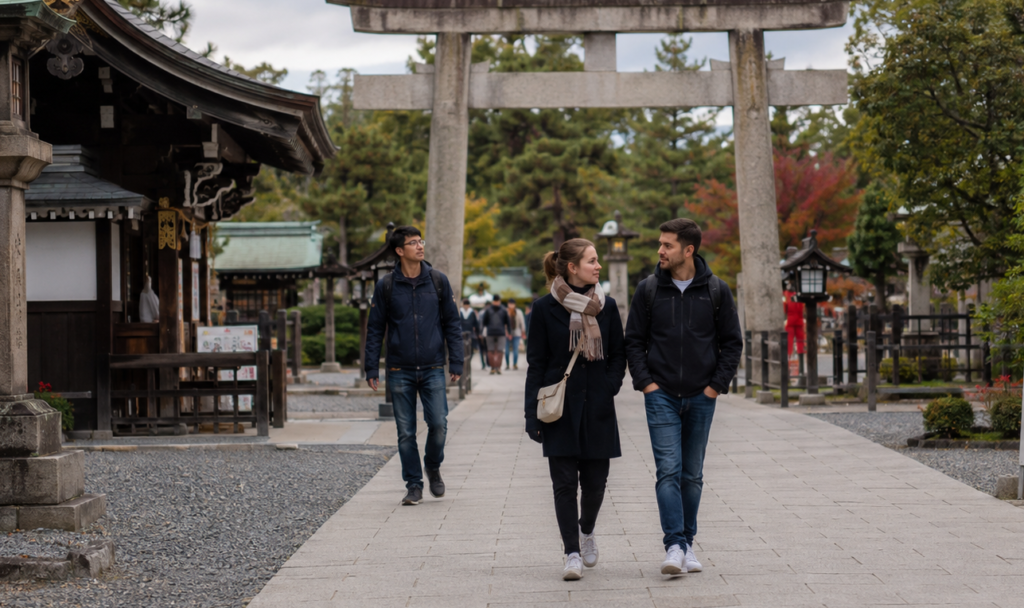
Usually, yes, while the grounds are open to visitors.
You do not need to pray simply because you passed through the torii.
You may want to look at:
- the shrine buildings,
- ema,
- sacred trees,
- statues,
- seasonal decorations,
- gardens,
- or other features around the grounds.
Just remember that the shrine is not quite the same as an ordinary public park.
Some areas may be restricted.
Some buildings are not open to visitors.
Photography may be prohibited in certain places.
And people around you may be in the middle of worship or religious ceremonies.
Enjoy the space—but pay attention to what kind of space it is.
Can You Visit Just to Get a Goshuin or Omamori?
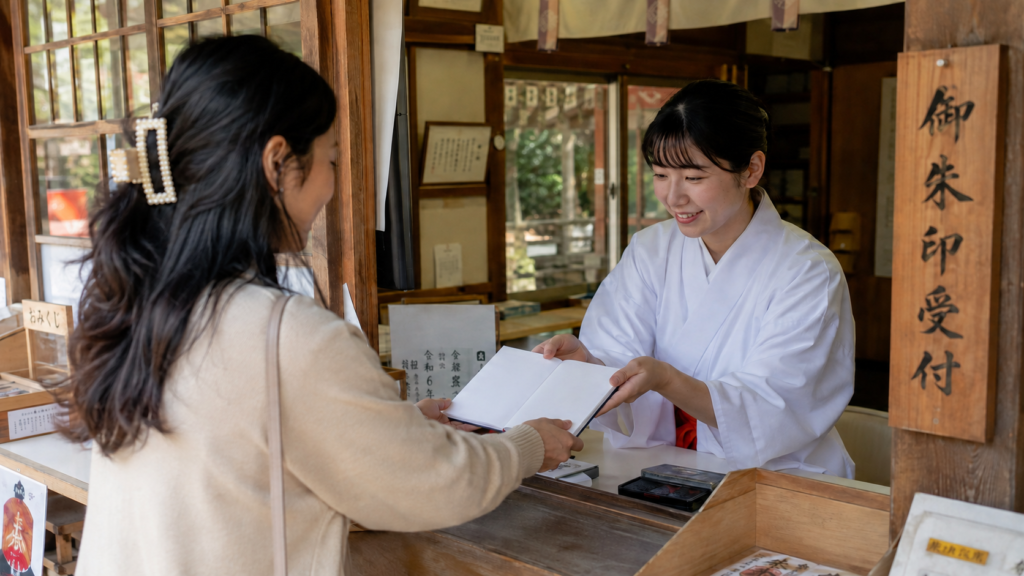
You can certainly be interested in visiting a shrine because you want to receive a goshuin or omamori.
But there is an important cultural difference between the two.
A goshuin is traditionally received as a record or commemoration of your visit and worship at the shrine. For that reason, the usual practice is to first visit the worship hall, offer your prayer, and then go to the shrine office to receive the goshuin.
It is not simply a tourist stamp collected separately from the shrine visit itself.
An omamori, on the other hand, is a sacred protective item associated with the kami. You may visit a shrine because you are looking for a particular type of omamori, but it should still be treated as something connected to the religious life of the shrine rather than as an ordinary souvenir.
So if receiving a goshuin or omamori is one of the main reasons you came, that is fine.
Just remember that they are not separate from the shrine itself.
For a goshuin especially, praying first and receiving it afterward is the usual and more respectful order.
For more:
Do You Have to Put Money in the Offering Box If You Are Not Praying?
No.
If you are not making an offering or praying, you do not need to put money into the saisen box simply because you entered the shrine.
Even when you do pray, there is no prescribed amount that must be offered.
The offering is not an entrance fee.
You are not buying permission to be there.
If you are curious about the famous 5-yen coin tradition, see:
Do You Really Need a 5-Yen Coin at a Shrine?
You Still Need to Be Respectful
This is the important part.
“You do not have to pray” does not mean “anything goes.”
A shrine is still a sacred place.
If you are there for the architecture, the festival, the photos, the food, or simply because you were curious, that is fine.
But remember where you are.
That can mean simple things:
- follow signs and shrine instructions,
- do not enter restricted areas,
- avoid disturbing people who are praying,
- respect photography restrictions,
- do not treat sacred objects as props,
- keep noise appropriate to the situation,
- and behave considerately toward shrine staff and other visitors.
At a lively festival, the atmosphere may be loud and relaxed.
During a quiet morning prayer or ceremony, the atmosphere may be completely different.
Respect the situation you actually find yourself in.
That matters more than forcing yourself to perform a prayer you did not come to make.
You Do Not Need to Pretend to Be Religious
This is another point worth saying clearly.
You do not need to pretend that Shinto is your religion in order to enter a shrine.
You also do not need to perform a prayer merely because you think tourists are expected to.
If you are curious about Japanese culture, history, architecture, festivals, or the atmosphere of shrines, you can visit respectfully without making a personal religious commitment.
If you are unsure whether entering at all is appropriate, see:
Is It Disrespectful to Visit a Shrine If You’re Not Shinto?
Sometimes Just Being There Is Part of the Experience
Not every meaningful shrine visit has to involve asking the kami for something.
Sometimes you might enter because autumn leaves look beautiful around the shrine.
Sometimes you might hear festival drums from down the street and follow the sound.
Sometimes you may sit quietly for a few minutes.
Sometimes you might watch a procession you did not know was happening.
And sometimes you may simply walk through, look around, and leave.
Shrines in Japan are religious places.
But they are also living parts of their communities.
Understanding both sides is probably more useful than thinking of them only as places where tourists must follow a prayer checklist.
Visiting Shrines in Japan for the First Time?
Shrine etiquette can feel simple when you read about it at home—but much harder when you are actually standing at the shrine, wondering what to do next.
How should you pass through a torii gate?
How do you use the temizuya?
What is the proper way to pray?
When is it okay to take photos?
And what should you know about goshuin, omamori, and common mistakes visitors sometimes make?
I created a Japanese Shrine Etiquette Guide for first-time visitors to make these customs easier to understand before and during your trip.
It includes simple visual explanations of torii gate manners, temizu, prayer steps, photography etiquette, goshuin, omamori, and common mistakes to avoid.
You can keep it on your phone while traveling in Japan, so you do not have to remember everything at once.
Shrine Etiquette Guide
Keep the basics with you while traveling in Japan.
This English PDF guide gives you a simple visual overview of shrine etiquette, so you can quickly review the basics before or during your visit.
See the Japanese Shrine Etiquette Guide on EtsyFrequently Asked Questions
Can you visit a Shinto shrine without praying?
Yes. You can enter shrine grounds without making a formal prayer. People visit shrines for festivals, cultural interest, seasonal scenery, goshuin, omamori, and many other reasons. The important thing is to behave respectfully because the shrine remains a sacred place.
Can you go to a shrine just for a festival?
Yes. Shrine festivals are community events as well as religious observances, and many people attend to enjoy food stalls, performances, processions, games, and the atmosphere. Their religious foundation remains important: shrine festivals traditionally offer gratitude and prayers to the kami.
Do Japanese shrine festivals have food stalls?
Many do. Food stalls, or yatai, are a familiar feature of numerous Japanese festivals. JNTO highlights festival food stalls at events including Kanda Matsuri and other local matsuri.
Do modern shrine festivals have live music or DJs?
Some do. Festival programs differ by shrine, but contemporary entertainment can be part of modern matsuri. For example, the 2026 Daikai Natsumatsuri at Ikuta Jinja in Kobe included stage entertainment and a DJ booth.
Can tourists attend Shinto festivals?
Many public shrine festivals welcome visitors, including international travelers. However, individual rituals or areas may have restrictions, so always follow the shrine’s own instructions.
Is it disrespectful to take photos if I am not praying?
Not automatically, but photography rules vary. Some areas, ceremonies, or sacred spaces may prohibit photography. Always check signs and avoid photographing people at worship in a way that intrudes on them.
Do I need to make an offering if I only want to look around?
No. Saisen is an offering, not an admission fee. You do not need to put money into the offering box simply because you entered the shrine grounds.
Final Thoughts
You do not need to pray every time you visit a Shinto shrine.
You might go because you want to understand the culture.
You might go for a goshuin.
You might wander in because the shrine grounds are beautiful.
Or you might follow the sound of music down a street and discover that a local matsuri is happening.
And yes—sometimes that matsuri may involve traditional rituals, food stalls, live music, and even a DJ in the same evening.
That does not make the shrine any less sacred.
Shrines are not frozen museum pieces.
They are religious places that continue to exist inside real communities, and the way people gather around them has continued to evolve.
So you do not need to force yourself to pray simply because you entered through a torii.
Enjoy the festival.
Look around.
Learn something.
Have some food.
Just remember one thing:
You are still at a shrine.
Enjoy it—and keep the respect.
Before Your Shrine Visit
You do not have to pray — but it helps to know the basics.
Whether you visit a shrine to pray, enjoy a festival, receive a goshuin or omamori, take photos, or simply walk through the grounds, a little etiquette can make the experience feel much easier.
Jin-journey’s English shrine etiquette PDF gives first-time visitors a simple visual guide to torii gate manners, temizu, prayer steps, photography etiquette, goshuin, omamori, and common mistakes to avoid.
See the Shrine Etiquette Guide on EtsyContinue Your Journey
A shrine visit does not have to begin and end with prayer.
If you’d like to understand more about the beliefs, customs, and experiences you may encounter while visiting a Japanese shrine, these guides are a good place to continue your journey.