
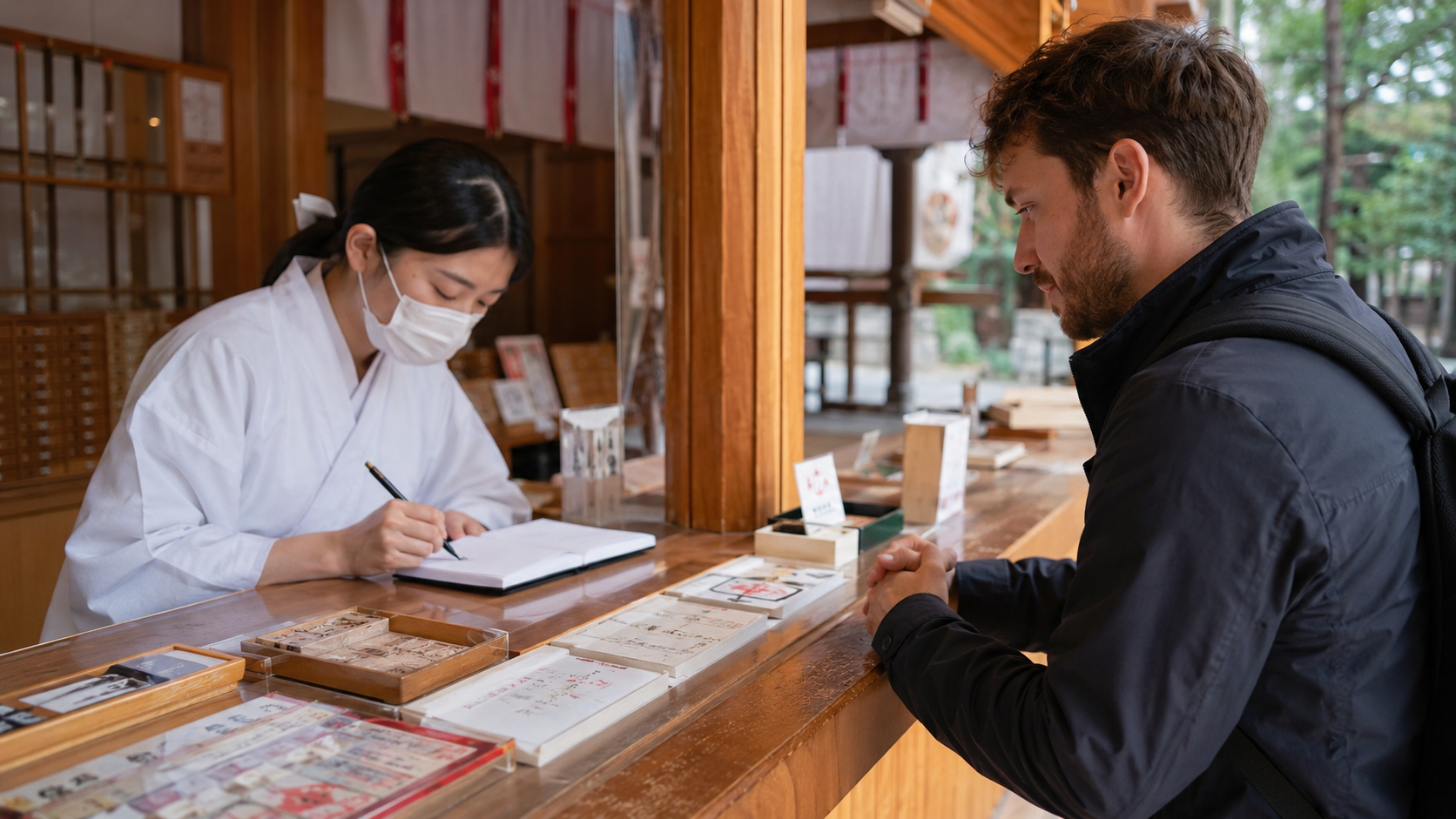
Can Someone Else Get a Goshuin for You?
You may have seen services online offering to collect goshuin from shrines and temples on someone else’s behalf.
Sometimes the service is simple:
Someone visits a shrine for you, receives the goshuin, and sends it afterward.
Other times, a person may arrive at a shrine carrying many goshuincho at once and ask staff to write in all of them.
So is that allowed?
The answer is not completely black and white.
There is no single nationwide rule saying that another person can never receive a goshuin for you.
But there is an important cultural point to understand:
A goshuin is traditionally received as a record of having visited and worshipped at the shrine.
That is why commercial proxy collection can become controversial—especially when dozens of books are involved, or when the goshuin is being collected mainly for resale or profit.
A Goshuin Is a Record of Worship

The most important thing to understand is what a goshuin actually represents.
The Association of Shinto Shrines describes a goshuin as something received as a record of having visited a shrine.
The custom developed from earlier religious practices in which written scriptures were offered to shrines and temples, and a written receipt was given in return. Over time, the practice changed, and goshuin came to be received as a record of shrine or temple worship.
That meaning still matters today.
A goshuin is not simply a decorative stamp or souvenir. It is connected to the act of visiting and worshipping at a sacred place.
If you are new to the custom, What Is a Goshuin? explains its meaning, history, and how to receive one in more detail.
That is why the usual order is:
Visit the shrine.
Offer your prayer.
Then receive the goshuin.
The Miyagi Prefecture Association of Shinto Shrines states this very clearly: visitors should pray first, and receiving a goshuin should not become the sole purpose of the visit.
So Can Someone Else Receive One for You?

Sometimes, yes.
There are situations where another person may receive something on behalf of someone who cannot visit personally.
For example, age, illness, disability, distance, or other circumstances may make a personal visit difficult.
Individual shrines may also have their own policies for mailed applications, proxy requests, or special circumstances.
So it would be inaccurate to say:
“Receiving a goshuin through another person is always forbidden.”
It is not that simple.
The key question is usually why the proxy is being used, and whether the shrine itself accepts it.
Proxy Worship Has Existed in Japan for a Long Time
There is another important distinction.
Having someone visit a sacred place on your behalf is not necessarily a modern invention.
Japan has long had traditions of daisan, or proxy pilgrimage and worship, in which someone visits a shrine or temple on behalf of another person.
So the idea of one person praying for another is not inherently disrespectful.
But that is quite different from treating goshuin as products that can be collected in bulk and distributed commercially.
The intention matters.
So does the policy of the shrine.
What About Commercial Goshuin Proxy Services?
This is where things become more complicated.
There are businesses in Japan that advertise shrine and temple visits on behalf of customers, sometimes including goshuin.
However, the existence of a business does not mean every shrine approves of that business model.
Some shrines may accept proxy requests.
Some may limit the number of goshuincho one person can submit.
Some may refuse requests that appear to be for resale or commercial distribution.
And some may stop accepting goshuin altogether during especially busy periods.
There is no single policy shared by every shrine.
Why Can Bringing Dozens of Goshuincho Be a Problem?
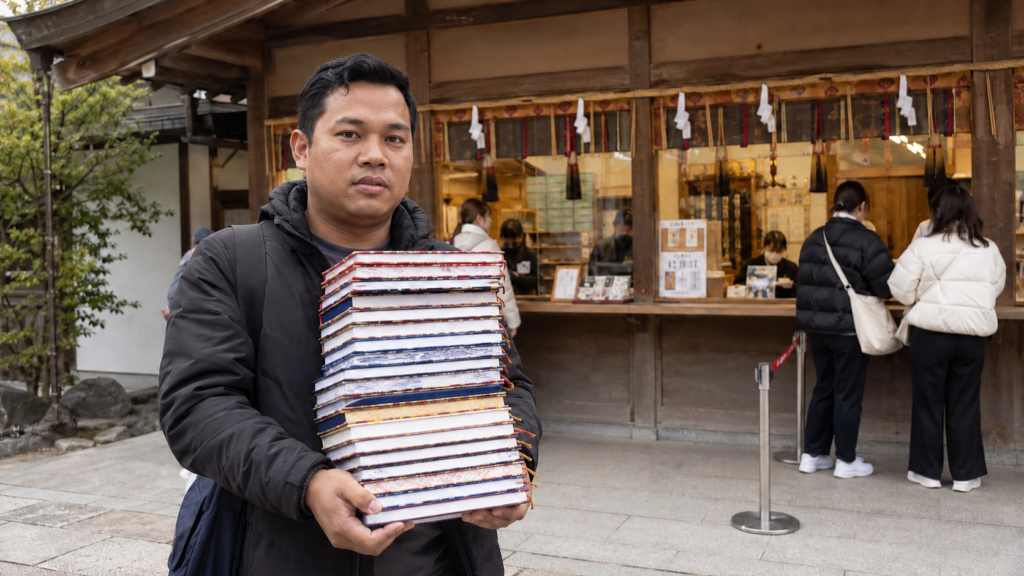
This is something visitors may not realize until they see the work happening behind the counter.
At many shrines, goshuin are still written or stamped individually.
Some shrines offer only one goshuin.
Others have several designs, seasonal versions, or goshuin connected with auxiliary shrines.
One person bringing one or two books may be simple.
One person bringing dozens can be a very different situation.
It can mean:
- a large amount of writing concentrated into one request,
- longer waits for everyone else,
- more pressure on shrine staff,
- difficulty keeping ordinary reception moving,
- and, at smaller shrines, one request occupying much of the available staff time.
This is especially significant because shrine staff are not working only on goshuin.
They may also be handling omamori, inquiries, prayers, ceremonies, phone calls, administrative work, and other shrine duties at the same time.
So even where there is no formal rule saying “one goshuincho per person,” a very large bulk request can create a real practical problem.
A Shrine Office Is Not a Goshuin Factory
The popularity of goshuin has brought many new visitors to shrines, and that can be a wonderful thing.
But it can also create a strange misunderstanding.
The person writing your goshuin is not simply operating a tourist-stamp counter.
The Miyagi Prefecture Association of Shinto Shrines specifically asks visitors to remain quiet while a goshuin is being written because the writer is concentrating on the work.
It also notes that shrine schedules, festivals, and staffing may sometimes mean goshuin cannot be offered at all.
In other words:
Receiving a goshuin depends on the shrine being able and willing to offer it at that moment.
It is not an automatic commercial service that visitors are entitled to demand.
Is Goshuin Resale Different From Proxy Collection?
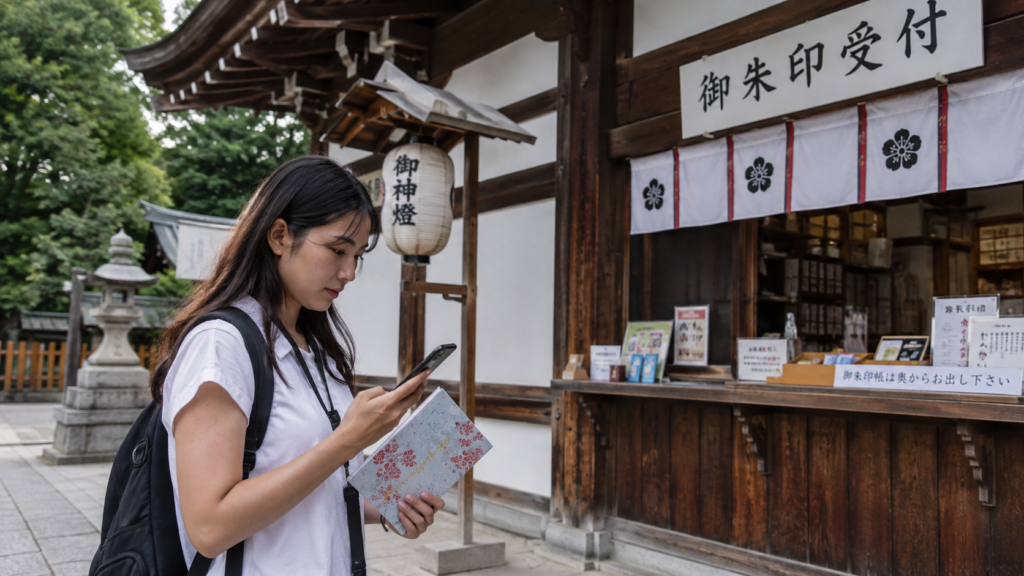
Yes.
These issues overlap, but they are not identical.
Someone receiving a goshuin for an elderly family member is very different from someone collecting large numbers of goshuin specifically to sell them.
Several shrine organizations have spoken clearly about resale.
The Miyagi Prefecture Association of Shinto Shrines says that collecting goshuin for resale is beyond ordinary bad manners and that buying them online is also inconsistent with their meaning.
Some individual shrines go further.
Hokkaido’s Yahiko Jinja states that goshuin are received as evidence of shrine worship and should not be treated simply as goods bought for money. It specifically asks people not to use them as a way to make profit.
So:
Proxy reception is not automatically the same thing as resale.
But once the purpose becomes commercial collection and resale, many shrines take a much stronger position.
What About Omamori Proxy Services?
A similar issue exists with omamori.
You may see online services offering to visit shrines, photograph the available omamori, take orders, receive them at the shrine, and ship them to customers.
Again, there is no single nationwide policy covering every shrine.
But some major shrines explicitly prohibit this kind of commercial activity.
Kanda Myojin states that commercial proxy sales and agency services involving its ofuda and omamori are prohibited.
Omiwa Jinja similarly states that while omamori should ideally be received directly at the shrine, it may send them to people who cannot visit under certain circumstances.
At the same time, the shrine explicitly prohibits commercial proxy sales, agency services, and bulk distribution for profit.
That distinction is important.
The shrine itself helping someone who cannot visit is not necessarily the same thing as an unrelated business reselling sacred items for profit.
Why Does This Matter?
Because omamori and goshuin are not ordinary merchandise.
An omamori is a sacred item connected with the kami.
A goshuin is connected with shrine worship and the act of visiting.
That does not mean there can never be mailing, proxy worship, online applications, or other modern forms of access.
Shrines themselves are adapting in different ways.
But it does mean that treating these things exactly like collectible products from a shop can miss the religious meaning behind them.
If You Cannot Visit a Shrine Yourself
The best option is usually to check the shrine’s official website or contact the shrine directly.
Some shrines offer:
- official mail applications,
- online jyuyo services,
- special arrangements for people unable to travel,
- or written goshuin that can be received under specific conditions.
Others do not.
Do not assume that a third-party proxy service has been approved simply because it exists online.
If the shrine itself offers a way to receive something from a distance, that is the clearest option.
If You Are Receiving a Goshuin for Someone Else
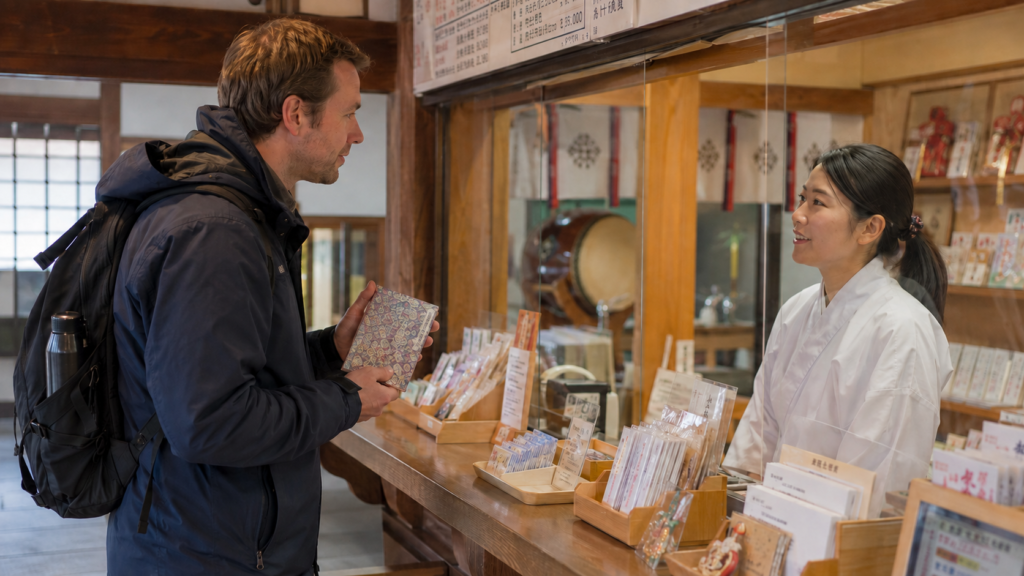
A small personal request is different from running a bulk collection business.
Still, the safest approach is simple:
Check the shrine’s rules.
If you are unsure, ask.
Do not arrive with a large stack of books and assume the shrine must accept them.
Do not pressure staff if they limit the number they will write.
And remember that shrine offices may be extremely busy even when they do not look busy from the visitor side of the counter.
A little consideration makes a big difference.
The Same Rule Applies to Omamori
Buying an omamori for a family member or friend is common.
That is not automatically the same thing as operating an omamori proxy business.
The concern is more likely to arise when sacred items are being acquired in large quantities for resale, commercial agency services, or other profit-driven uses—especially where the shrine has explicitly prohibited it.
Again:
Check the individual shrine.
Policies differ.
Frequently Asked Questions
Can someone else get a goshuin for me?
Possibly. There is no nationwide rule that absolutely prohibits another person from receiving a goshuin on your behalf. However, a goshuin is traditionally a record of shrine worship, and individual shrines may have their own restrictions on proxy requests.
Is a goshuin supposed to be received after praying?
Yes, that is the usual and more respectful order. Official shrine guidance describes the goshuin as a record of worship and advises visitors to pray before receiving one.
Are goshuin proxy services illegal?
There is no general nationwide law or Shinto rule making all goshuin proxy services illegal. Shrine policies vary. Some shrines may allow certain proxy arrangements, while others may restrict bulk requests, resale, or commercial use.
Is it okay to bring several goshuincho to one shrine?
That depends on the shrine. A small number may be accepted, but some shrines limit how many books or goshuin one person can request, especially during busy periods. Always follow the shrine’s own rules.
Why might a shrine refuse a large goshuin request?
Goshuin are often prepared individually, and a large bulk request can create long delays and interfere with the shrine’s other duties. Shrines may also restrict requests where commercial resale or agency activity is suspected.
Can I buy an omamori through a proxy service?
Some third-party services offer this, but individual shrine policies differ. Some shrines explicitly prohibit commercial proxy sales or resale of their omamori. If you cannot visit yourself, check whether the shrine offers an official mail or online service.
Is buying a goshuin online the same as receiving one at a shrine?
No. A goshuin is traditionally connected to shrine or temple worship. Some shrine organizations specifically discourage buying resold goshuin online because doing so removes the goshuin from its original meaning as a record of worship.
Final Thoughts
There is no simple rule that says:
“No one may ever receive a goshuin for another person.”
Life is more complicated than that.
Some people genuinely cannot travel.
Some shrines offer mail or online arrangements.
Japan also has a long history of people worshipping on behalf of others.
But there is an equally important point:
A goshuin is not just a collectible product.
It is traditionally connected with visiting and worshipping at the shrine.
And when one person arrives with dozens of goshuincho, or when goshuin and omamori are collected primarily for resale or commercial proxy services, the issue is no longer just personal shrine etiquette.
It can place a real burden on shrine staff.
It can disrupt service for other visitors.
And depending on the shrine, it may directly conflict with the shrine’s own rules.
So if you want a goshuin or omamori but cannot visit yourself, start with the shrine—not with a reseller.
Check the official website.
Ask what options are available.
And remember that these are not simply products being handed across a counter.
Their meaning begins with the shrine itself.
Before Your Shrine Visit
Understand the visit before collecting the memories.
Goshuin and omamori are meaningful parts of a shrine visit, but they make more sense when you understand the basic manners around the shrine itself.
Jin-journey’s English shrine etiquette PDF gives first-time visitors a simple visual guide to torii gate manners, temizu, prayer steps, photography etiquette, goshuin, omamori, and common mistakes to avoid.
See the Shrine Etiquette Guide on EtsyContinue Your Journey
Goshuin and omamori are some of the most visible parts of a shrine visit, but their meaning goes deeper than collecting souvenirs.
If you’d like to understand how they fit into Japanese shrine culture, these guides are a good place to continue your journey.