
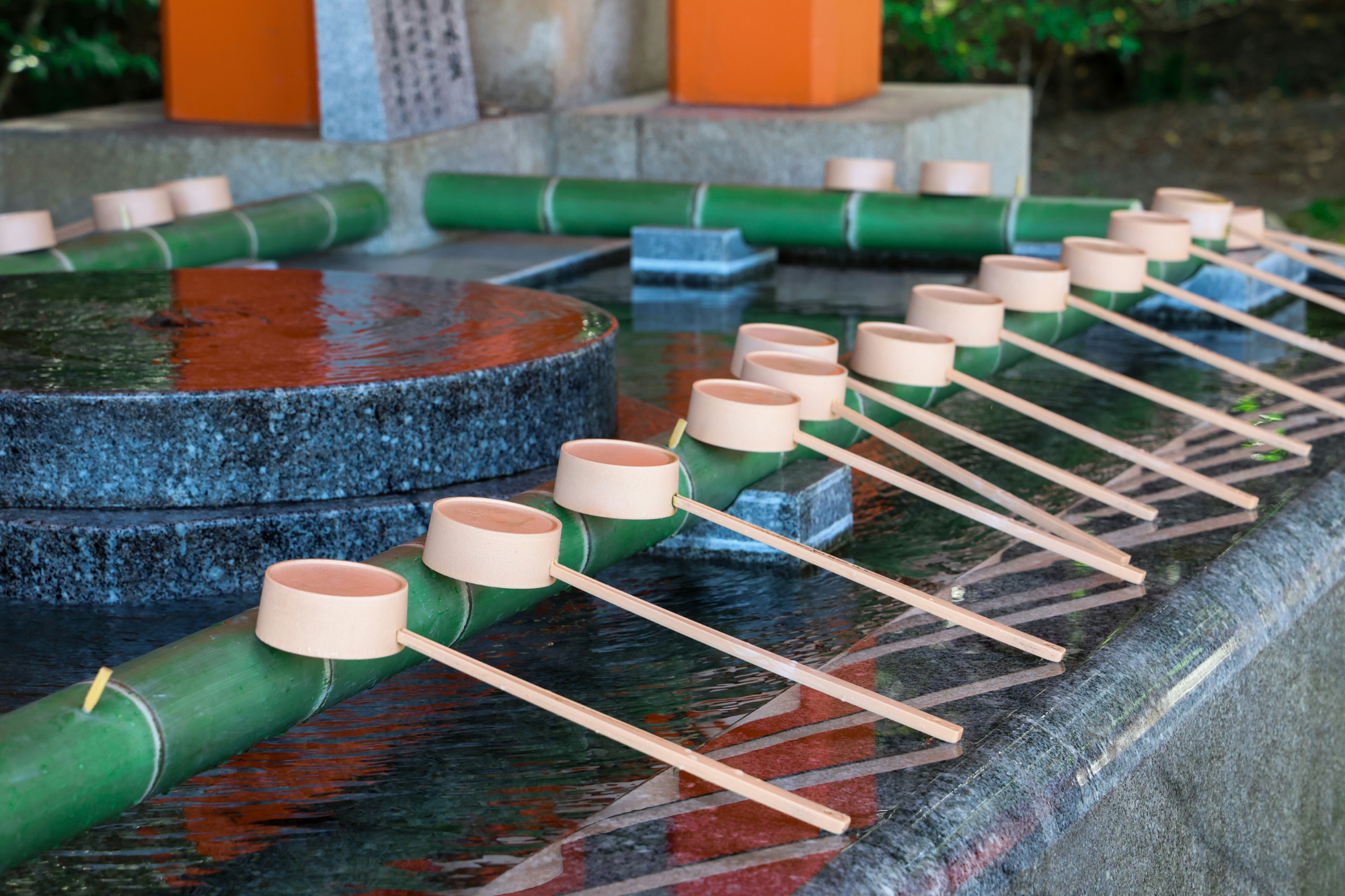
What Is a Temizuya? A Guide to the Purification Pavilion at Japanese Shrines
When visiting a Japanese shrine, you may notice a small pavilion with a basin of clear water before reaching the main hall.
Visitors quietly rinse their hands and mouth there before offering their prayers.
This place is called a temizuya (also known as a chozuya), and it plays an important role in Shinto worship.
If it’s your first time visiting a shrine, you might wonder:
- Why do people wash their hands?
- Why do they rinse their mouths?
- Is it rude if I skip this step?
In this guide, we’ll explain what a temizuya is, why it matters, and how to perform the purification ritual with confidence.
What Is a Temizuya?
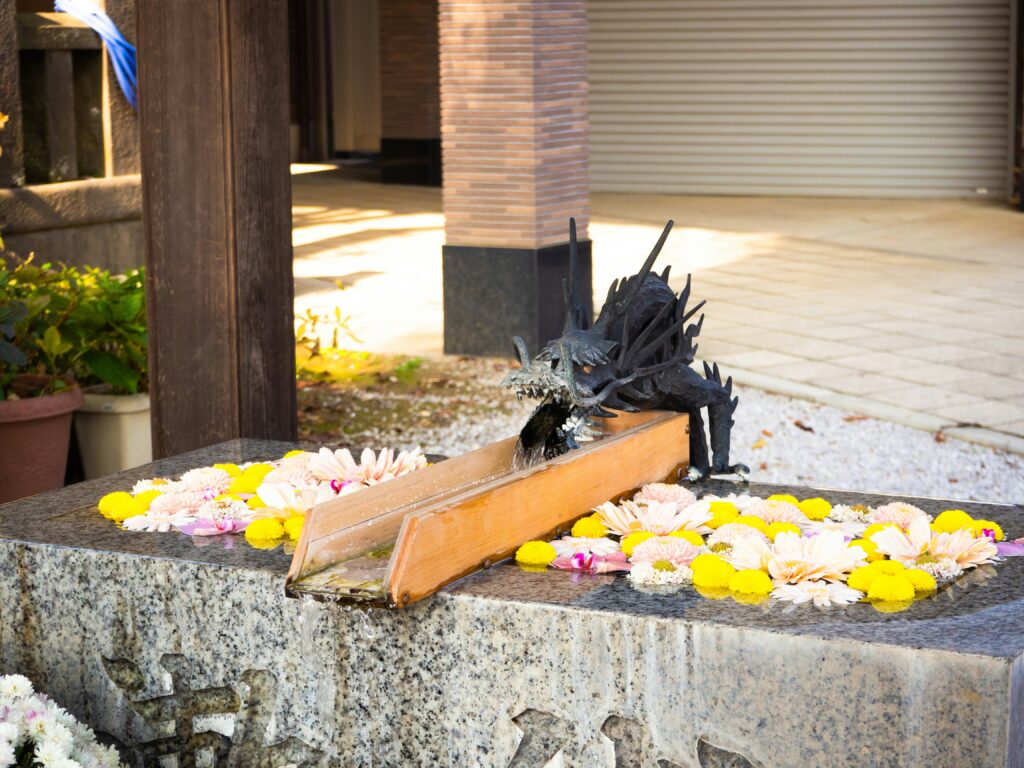
A temizuya is a purification pavilion found at Japanese Shinto shrines.
Before approaching the main hall to pray, visitors traditionally cleanse their hands and mouth using fresh water provided at the temizuya.
The word temizu literally means “hand water,” referring to the act of ritual purification before worship.
At most shrines, you’ll find the temizuya shortly after passing through the torii gate and before reaching the worship hall.
Why Do People Purify Themselves?
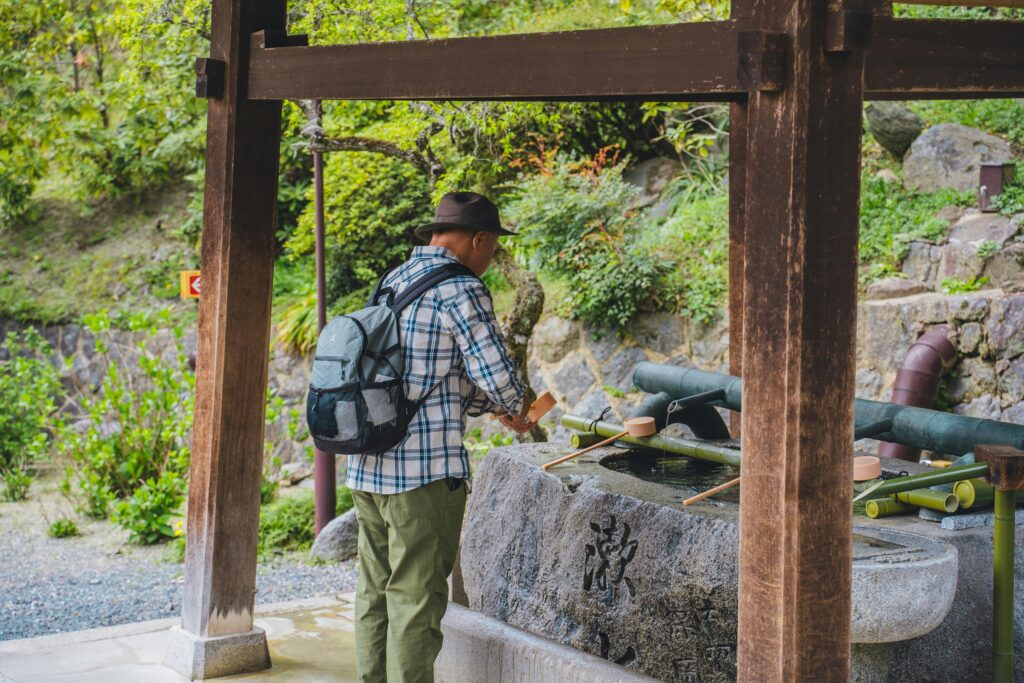
The purpose of the ritual is not simply to wash away dirt.
In Shinto, purification represents preparing both the body and the mind before standing before the kami.
By quietly cleansing yourself with water, you leave behind the distractions of everyday life and approach the shrine with respect and a calm state of mind.
At a Japanese shrine, you do not need to worry about performing every step perfectly. What matters most is showing respect to the kami and approaching the shrine with a sincere heart.
How to Use a Temizuya
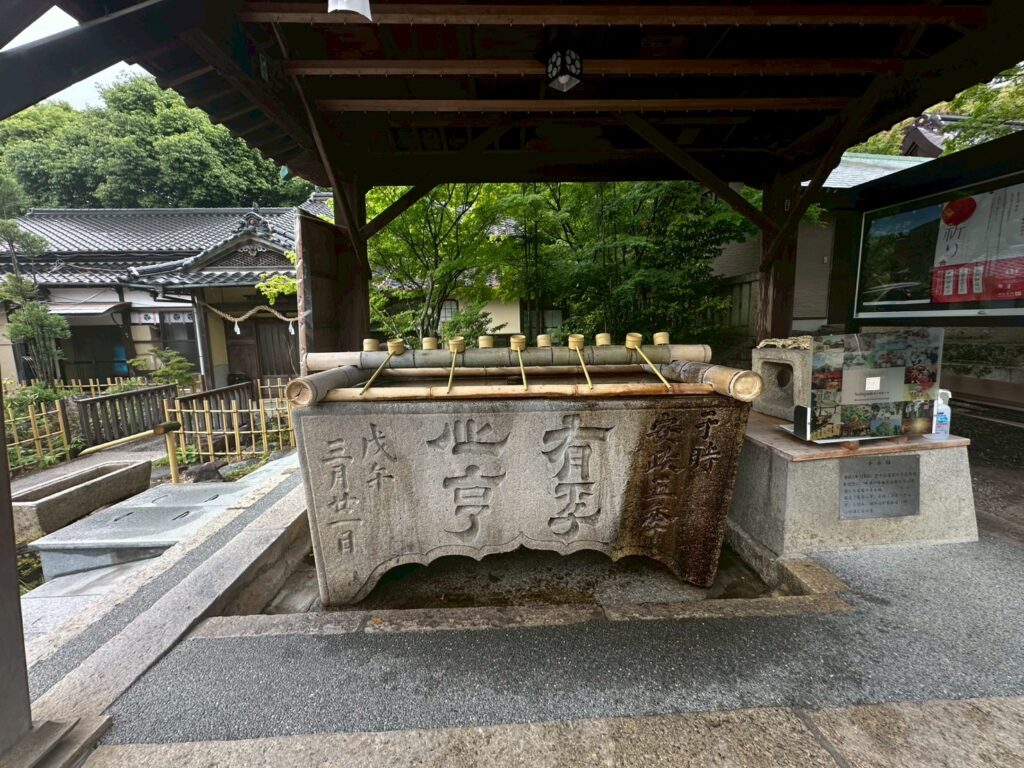
The traditional procedure is simple.
- Take the ladle and rinse your left hand.
- Switch hands and rinse your right hand.
- Pour a little water into your left hand and use it to rinse your mouth.
- Rinse your left hand once more.
- Hold the ladle upright so the remaining water flows down the handle before returning it.
Never place your mouth directly on the ladle.
Many shrines now have updated purification facilities or may not provide ladles at all. If so, simply follow the signs or the instructions provided by the shrine.
Is It Required?
No.
Purification at the temizuya is a long-standing tradition, but it is not something visitors should feel anxious about.
If the facility is unavailable, if you’re unable to perform the ritual, or if you’re unsure of the exact procedure, you can still visit the shrine respectfully.
Your attitude matters far more than performing every movement perfectly.
Where Is the Temizuya Located?
At most Japanese shrines, the temizuya is located along the approach to the main shrine building.
Visitors usually stop there after entering through the torii gate and before offering their prayers.
If you’re unsure, simply follow the flow of other visitors or look for the stone basin and wooden ladles.
Related Articles
If you’re new to Japanese shrines, you may also enjoy:
- How to Pray at a Japanese Shrine
- What Is a Shinto Shrine?
- What Is a Torii Gate?
- What is Shinto?
- What Is an Omamori?
- What Is an Omikuji?
Frequently Asked Questions
Do I have to use the temizuya?
No. While it is a traditional part of shrine etiquette, visitors are not expected to perform it perfectly.
Can foreigners use the temizuya?
Absolutely. Anyone visiting a shrine respectfully is welcome to participate.
Why do people rinse their mouths?
The mouth is symbolically cleansed as part of preparing oneself before approaching the kami.
What if there are no ladles?
Some shrines have replaced traditional ladles with flowing water systems or temporarily removed them. In that case, simply follow the shrine’s guidance.
A Moment to Prepare Your Heart
Before offering a prayer, the temizuya gives visitors a chance to slow down and prepare both body and mind.
The ritual of purification is not about following rules perfectly—it is about approaching the kami with respect and sincerity.
If you’re unsure what to do, don’t worry. Shrine staff understand that many visitors are experiencing these traditions for the first time. A respectful attitude is always appreciated more than perfect etiquette.
Whether you perform every step correctly or not, the most important thing is to visit the shrine with a grateful and respectful heart.