Who Are the Kami? Meaning of Kami in Shinto & Famous Examples
When you visit a Shinto shrine in Japan, you may see people bowing, clapping, and offering a quiet prayer in front of the main worship hall.
But who are they praying to?
The sacred beings worshipped in Shinto are called kami (神).
Kami is often translated into English as “god,” “deity,” or “spirit.”
None of those translations is completely wrong.
But none of them explains the whole idea either.
Kami may include deities from Japanese mythology, sacred powers associated with nature and particular places, ancestral figures, and even historical people who came to be worshipped after their deaths.
That is why understanding kami is one of the most important steps toward understanding what a Japanese shrine actually is.
This guide explains what kami means, whether kami are the same as gods, what people mean by the famous phrase “eight million kami,” how nature and human beings can be connected with kami, and some of the kami you may encounter while traveling in Japan.
If you are new to Japanese shrines, start with What Is a Shinto Shrine? for a broader introduction to the places where kami are worshipped.
What Are Kami?
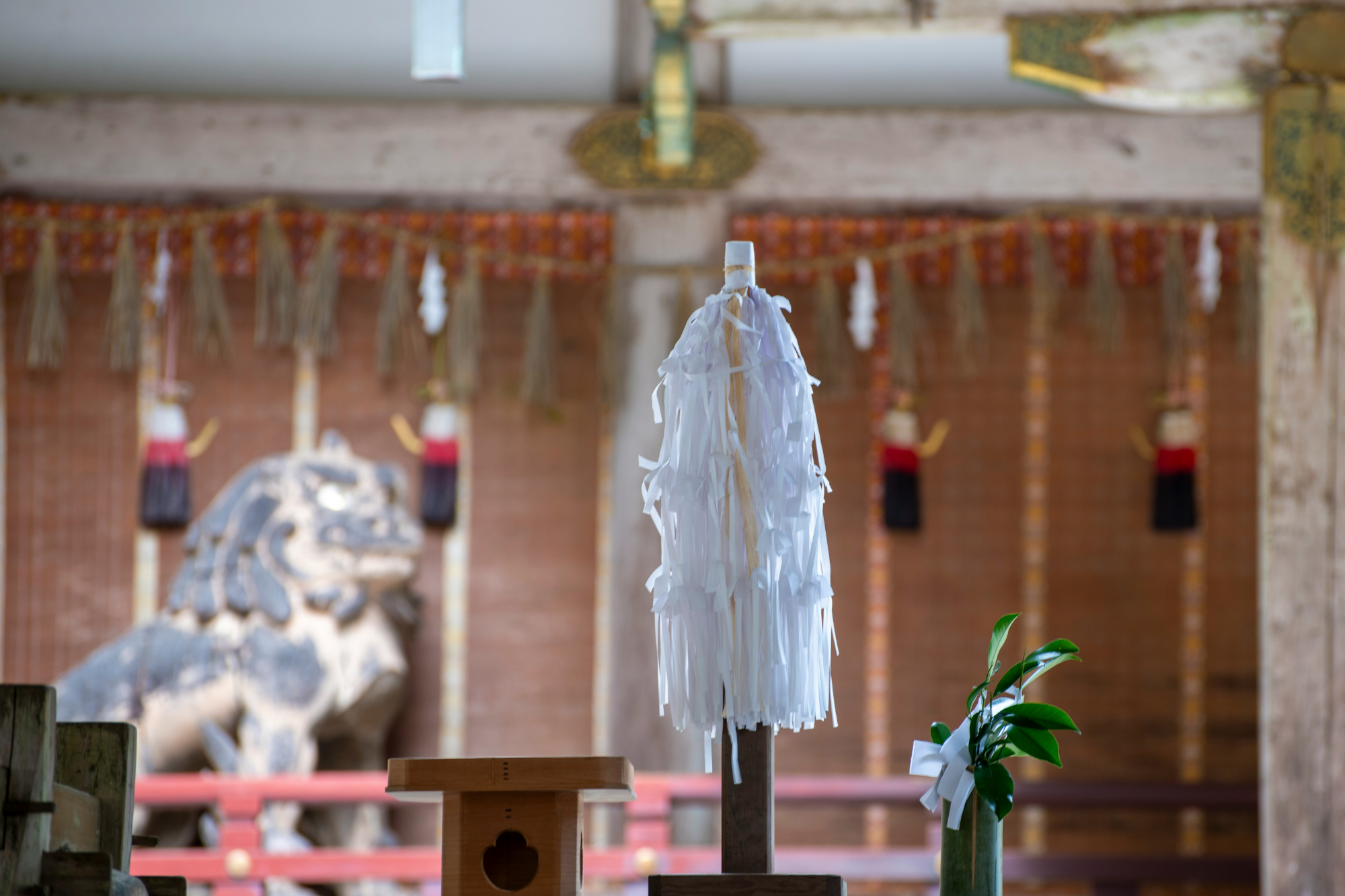
Kami are the sacred beings or divine presences worshipped in Shinto.
But that simple definition covers a surprisingly wide range of things.
Kami may be associated with:
- Deities appearing in Japanese mythology
- Mountains and other natural places
- The sun, sea, wind, or other natural forces
- Particular regions or communities
- Agriculture and everyday livelihoods
- Ancestors
- Historical people
- Specific forms of protection or blessing
There is no single type of being that all kami must fit into.
That is one reason the Japanese word kami is often left untranslated in English.
Calling every kami a “god” can make people imagine something much narrower than the Shinto concept actually is.
What Does “Kami” Mean?
Kami is written:
神 — kami
Depending on the context, English translations may include:
- God
- Deity
- Divinity
- Spirit
- Sacred being
But the meaning is broader than any one of those words.
One influential interpretation from the Edo-period scholar Motoori Norinaga described kami as beings or things possessing extraordinary qualities that inspire awe and reverence.
Importantly, that did not refer only to beings that were perfectly good or kind.
The idea of kami includes something that is sacred, extraordinary, powerful, or worthy of reverence.
So instead of trying to replace kami with one English word every time, it is often easier simply to learn:
Kami are kami.
Once you understand the idea, the Japanese word becomes more useful than the translation.
Are Kami the Same as Gods?
Not exactly.
Calling a kami a “god” can sometimes be useful.
For example, Amaterasu Omikami, worshipped at Ise Jingu, is commonly described in English as the sun goddess.
That translation makes sense.
But the word becomes less useful when talking about:
- A kami associated with a mountain
- A local protective kami
- An ancestral kami
- A historical person worshipped as a kami
Shinto also does not center on one single all-powerful creator deity.
There are many kami with different identities, stories, relationships, and roles.
So when you see:
“Shinto gods”
in an English travel guide, it is useful shorthand.
Just remember that kami is a broader concept than the English word “god” usually suggests.
What Can Be a Kami?
This is where the idea becomes especially interesting.
There is no short checklist that says:
“These things are kami. Everything else is not.”
Kami appear in several different forms and traditions.
A useful way to understand them is through examples.
Kami From Japanese Mythology
Many well-known kami appear in Japan’s early mythological traditions.
These include figures such as:
- Amaterasu Omikami
- Susanoo no Mikoto
- Okuninushi no Kami
Their stories appear in ancient Japanese texts and remain connected with major shrines today.
Kami Connected With Nature
Kami may also be associated with:
- Mountains
- Rivers
- Seas
- Waterfalls
- Rocks
- Trees
- Thunder
- Agriculture
- The natural forces that sustain life
This is one reason natural landscapes can play such an important role at Shinto shrines.
A mountain may not simply be scenery behind a shrine.
It may itself have deep sacred significance.
Kami Connected With Places and Communities
Some kami are strongly connected with a particular region, village, shrine, or community.
Historically, many kami were known through the places where they were worshipped rather than through one universally recognized mythological identity.
This local character remains an important part of shrine culture in Japan.
Ancestors and Human Beings
Kami do not have to begin as supernatural beings.
Ancestors may be revered within Shinto traditions.
Historical human beings can also come to be worshipped as kami.
One of Japan’s most famous examples is Sugawara Michizane, a scholar and government official who lived from 845 to 903.
After his death, he came to be worshipped as Tenjin, the kami of learning, culture, and the arts.
Today, students visit Tenjin shrines throughout Japan to pray for academic success.
Does Shinto Believe That Everything Has a Spirit?
You may have heard Shinto explained like this:
“Japanese people believe everything has a spirit.”
That is catchy.
But it is too simple.
Shinto certainly recognizes sacredness in nature, and kami may be associated with mountains, trees, rocks, rivers, animals, natural phenomena, and many other aspects of the world.
That does not mean every ordinary rock, tree, cup, chair, and grain of sand is automatically worshipped as a kami.
Certain natural features may be regarded as sacred because of their extraordinary character, local tradition, history, or relationship with a kami.
So instead of saying:
“Everything in Japan has a god inside it.”
a more accurate way to understand the idea is:
Shinto allows the sacred to be recognized in many parts of the natural and human world.
That is a much broader—and much more flexible—idea.
Are Mountains and Trees Actually Kami?
Sometimes the distinction is not as simple as:
“The mountain contains a kami.”
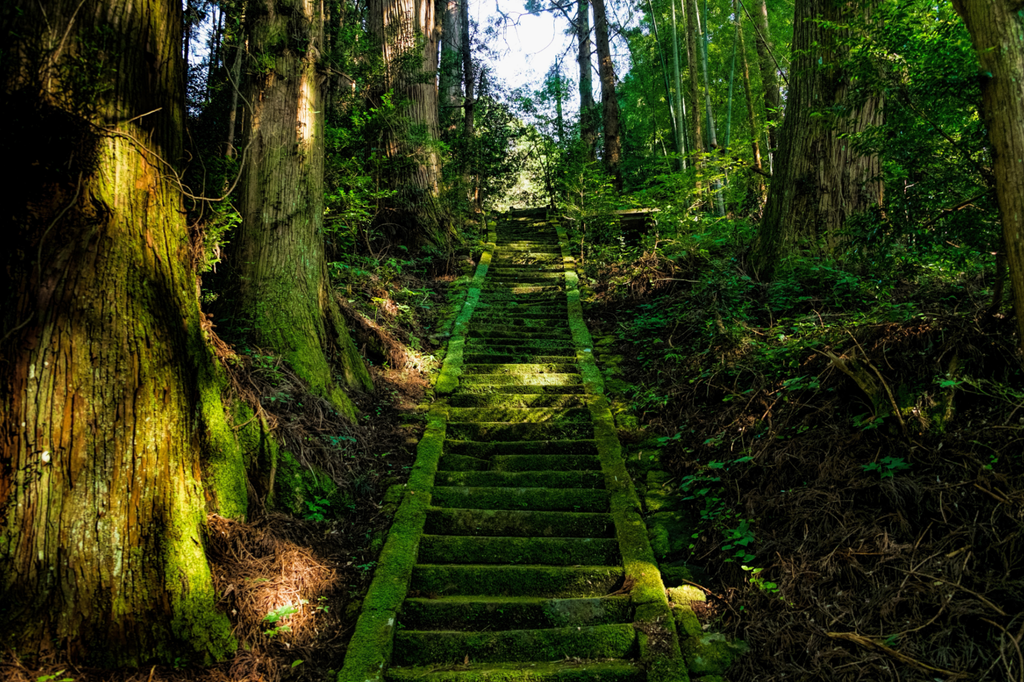
In some traditions, the mountain itself may be regarded as sacred.
In others, a particular natural feature may be understood as a place where a kami is present or through which the sacred is approached.
This is why you may encounter a shrine where the most important sacred feature is not an enormous building.
It may be:
- A mountain
- A rock
- A waterfall
- An ancient tree
- A forest
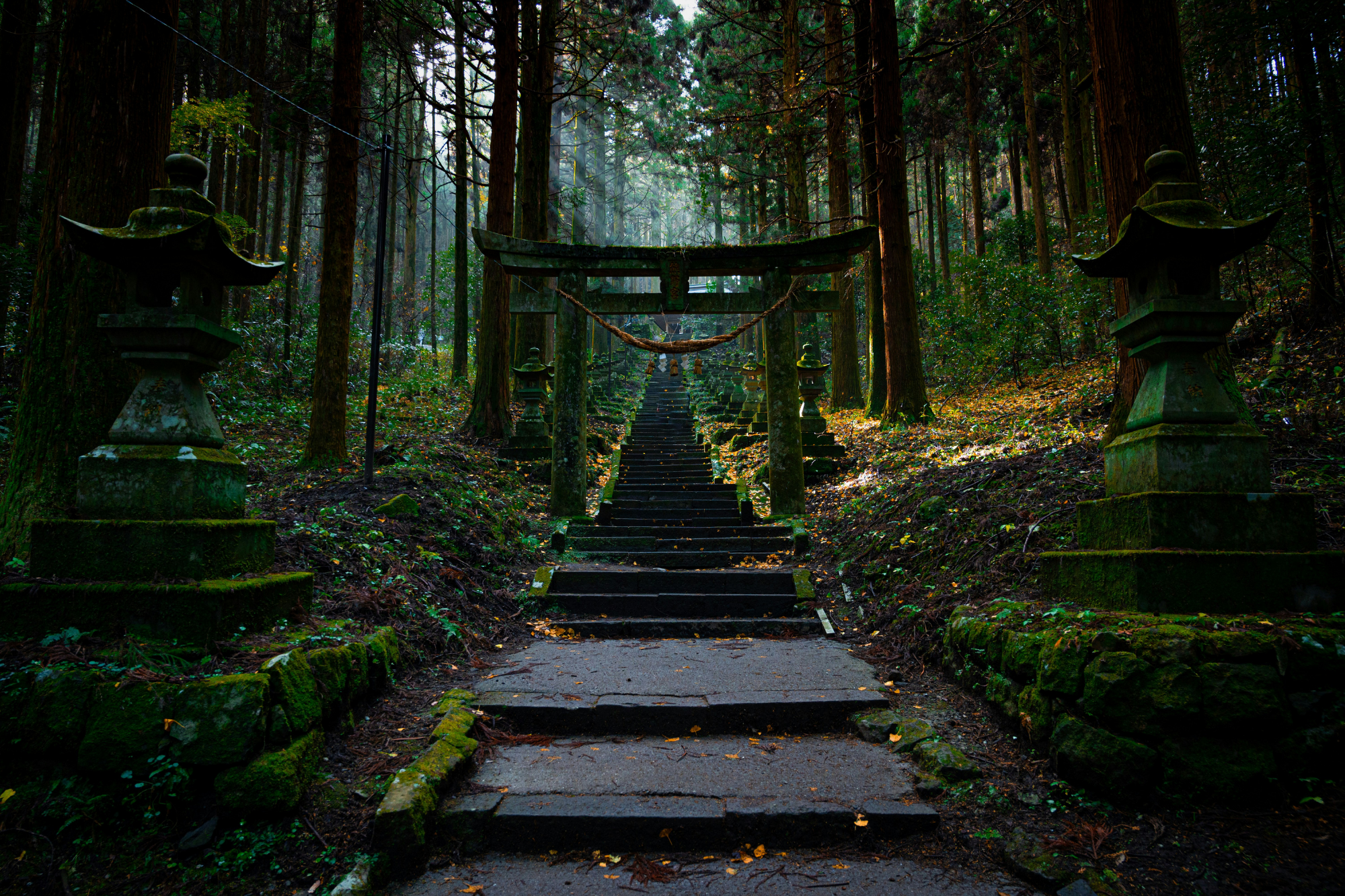
A torii gate may stand before such a sacred place even when there is no large shrine building immediately behind it.
If you want to understand why torii mark these boundaries, read What Is a Torii Gate?.
Can Humans Become Kami?
Yes.
This is one of the clearest examples of why simply translating kami as “nature spirits” does not work.
Historical human beings can be enshrined and worshipped as kami.
Sugawara Michizane → Tenjin
Sugawara Michizane (845–903) was a scholar, poet, and government official.
After his death, he came to be deified as Tenjin.
Today, Dazaifu Tenmangu in Fukuoka enshrines Michizane as Tenjin, the kami associated especially with:
- Learning
- Culture
- The arts
This is why Tenjin shrines are especially popular with students preparing for important examinations.
Emperor Meiji and Empress Shoken
Meiji Jingu in Tokyo provides another clear example.
The kami enshrined there are the souls of Emperor Meiji (1852–1912) and Empress Shoken (1850–1914).
So a kami does not have to come from ancient mythology.
A person who actually lived in documented Japanese history can also become the focus of shrine worship.
Are Ancestors Kami?
Ancestor reverence is also part of Shinto tradition.
But it would be too simple to say:
“Every person automatically becomes a kami after death.”
Different families, communities, periods, and traditions approach ancestors in different ways.
What can be said more safely is that ancestral spirits and historical human beings can be treated as kami within Shinto traditions.
This is another reason the category of kami is much wider than a Western-style pantheon of mythological gods.
What Does “Eight Million Kami” Mean?
You may hear the Japanese expression:
八百万の神 — yaoyorozu no kami
It is often translated literally as:
“eight million kami”
But Japan does not have a religious census listing exactly 8,000,000 kami.
The expression communicates the idea of an immense, countless, or ever-increasing number of kami.
In other words:
Eight million does not mean exactly eight million.
It expresses abundance.
Kami can be associated with mythology, nature, places, occupations, communities, ancestors, historical figures, and many other aspects of life.
That enormous variety is what yaoyorozu no kami is trying to express.
Does “Eight Million Kami” Mean Every Kami Is Separate?
Not necessarily.
The phrase emphasizes the vast number and diversity of kami, but Shinto traditions also connect kami through myths, family relationships, shared functions, local traditions, and forms of worship.
Some shrines enshrine one principal kami.
Others enshrine several.
And the same kami may be worshipped at many different shrines across Japan.
For example, Inari shrines can be found throughout the country, all belonging to the wider tradition of Inari worship.
So Shinto is not simply a giant list of millions of completely unrelated gods.
Are Kami Always Good?
Another common assumption is:
“Kami are gods, so they must always be good.”
That does not quite fit the traditional concept either.
Classical explanations of kami are not limited only to beings that are gentle, kind, or morally perfect.
Kami may inspire:
- Gratitude
- Reverence
- Wonder
- Awe
- Fear
Nature itself makes this easy to understand.
The same sea that feeds people can also become dangerous.
Rain allows crops to grow.
Too much rain can destroy them.
A mountain can sustain a community and also inspire fear.
The sacred in Shinto is not necessarily reduced to a simple:
good vs evil
division.
This sense of awe is an important part of understanding kami.
Famous Kami You May Encounter in Japan
You do not need to memorize a list of hundreds of kami before visiting Japan.
But knowing a few famous examples can make shrine visits much more interesting.
Amaterasu Omikami — 天照大御神
Amaterasu Omikami is one of the best-known kami in Shinto.
She is associated with the sun and is worshipped at Ise Jingu in Mie Prefecture.
Ise Jingu describes Amaterasu as the ancestral kami of the Imperial family and a guardian of Japan.
She also plays a central role in Japanese mythology.
If you encounter references to:
- The sun
- The Imperial family
- Ise
- Japanese creation and mythology
you are likely to come across Amaterasu.
Inari Okami — 稲荷大神
Inari Okami is among the most familiar kami traditions in Japan.
Fushimi Inari Taisha in Kyoto is the head shrine of the Inari tradition.
According to Fushimi Inari Taisha, Inari worship has historically been associated with rice and the necessities that sustain people’s lives.
Today, people also pray to Inari Okami for things such as:
- Business prosperity
- Prosperity of industries
- Household safety
- Traffic safety
- Success in the performing arts
This broad history helps explain why Inari shrines are found all over Japan.
And one useful thing to remember:
Inari is the kami. The fox is not simply “the Inari god.”
Foxes are strongly associated with Inari worship, which is why fox statues are common at Inari shrines.
Tenjin — 天神
Tenjin is the deified form of the historical scholar Sugawara Michizane.
He is especially associated with:
- Learning
- Scholarship
- Culture
- The arts
Dazaifu Tenmangu is one of the most important shrines dedicated to Tenjin.
Because of Michizane’s reputation as a scholar, students commonly visit Tenjin shrines to pray for success in their studies and examinations.
This is one of the easiest examples to remember because it clearly shows how:
a historical person → became worshipped as a kami → developed a particular association that remains alive today.
Okuninushi no Kami — 大国主神
Okuninushi no Kami is the principal kami worshipped at Izumo Oyashiro, also widely known as Izumo Taisha.
He appears prominently in early Japanese mythology and is associated with the development of the land.
Today, he is especially famous for en-musubi.
This is often translated simply as “romantic relationships” or “matchmaking.”
But the meaning is broader.
It refers to connections and bonds between people, including relationships:
- At home
- At work
- In the community
- Between partners
That broader meaning is why Izumo is so closely associated with human connections.
Does Every Shrine Worship the Same Kami?
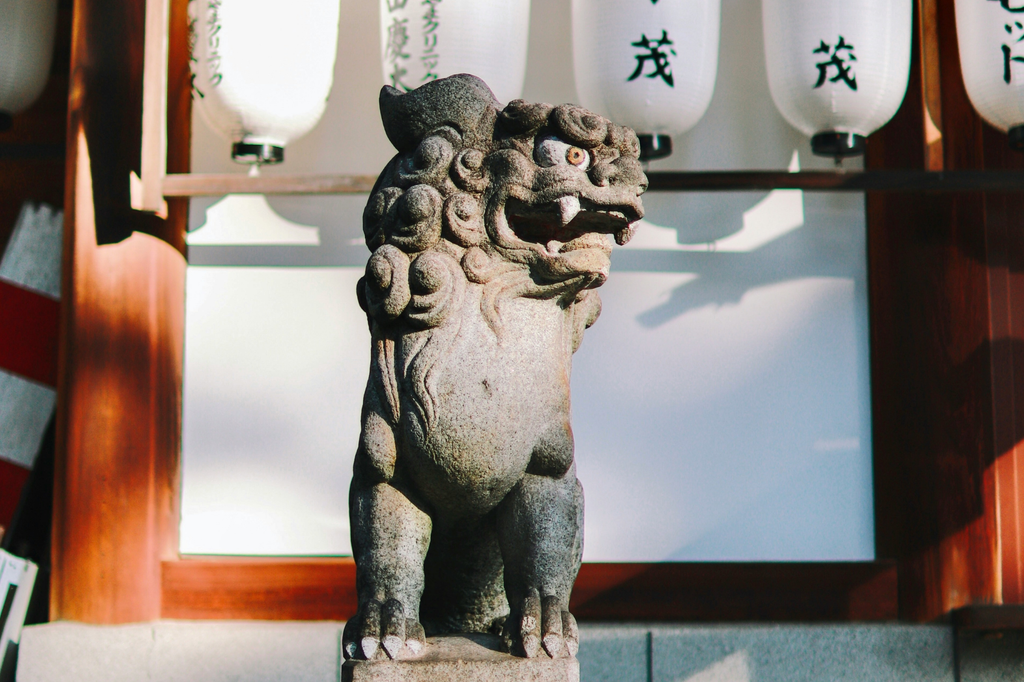
No.
This is one of the most useful things to understand before visiting shrines in Japan.
Different shrines enshrine different kami.
For example:
Ise Jingu
→ Amaterasu Omikami is central to the Inner Shrine.
Fushimi Inari Taisha
→ Inari Okami.
Dazaifu Tenmangu
→ Sugawara Michizane as Tenjin.
Izumo Oyashiro
→ Okuninushi no Kami.
Meiji Jingu
→ Emperor Meiji and Empress Shoken.
A shrine may also enshrine more than one kami.
So visiting two Shinto shrines does not necessarily mean that you are visiting two temples dedicated to the same “Shinto god.”
Each shrine has its own history, enshrined kami, traditions, and local character.
How Do I Know Which Kami a Shrine Worships?
This is a surprisingly useful question when traveling in Japan.
The kami worshipped at a shrine are often called its saijin (祭神)—the enshrined kami.
At a major shrine, you can often find this information:
- On the shrine’s official website
- On signs or information boards
- In an English pamphlet
- Near the shrine office
- In information about the shrine’s history
You may see English expressions such as:
- Enshrined deity
- Enshrined kami
- Principal deity
- Main deity
If you want to understand a shrine rather than simply photograph it, finding out who is enshrined there is one of the best places to start.
It explains why people visit.
It may explain the shrine’s festivals.
And it often explains the omamori and prayers offered there.
Do Different Kami Have Different Blessings?
Different shrines and kami often become associated with particular forms of divine virtue, protection, or prayer.
For example:
- Tenjin → learning and study
- Okuninushi → connections and en-musubi
- Inari → prosperity and everyday livelihoods
But avoid turning this into a video-game system where every kami has exactly one “special power.”
Religious traditions develop over centuries.
The same kami may be connected with several forms of protection or blessing.
And local traditions can differ.
So instead of asking only:
“What does this god do?”
it can be more useful to ask:
“Why is this kami worshipped at this shrine?”
That question usually leads to a much more interesting story.
How Are Kami Worshipped at a Shrine?
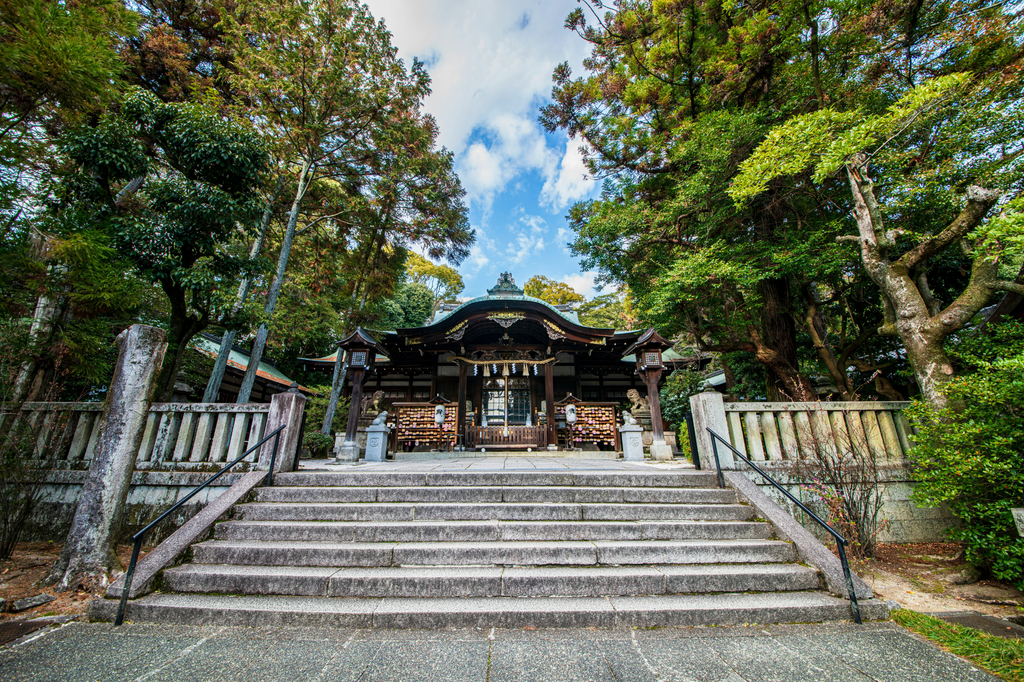
Visitors generally offer their prayers in front of the shrine’s worship hall or designated place of worship.
A common shrine prayer sequence is:
- Make an offering
- Bow twice
- Clap twice
- Offer your prayer or gratitude
- Bow once
Individual shrines may have different customs, so follow local instructions when provided.
You do not need to know the entire mythology of the kami before praying.
And you do not need to prepare an elaborate speech.
Many visitors simply express:
- A wish
- Gratitude
- A personal hope
- Thanks for a safe journey
- Respect
For the full process from entering the torii to offering your prayer, read How to Pray at a Japanese Shrine.
What Do People Pray to Kami For?
People visit shrines for many reasons.
Common prayers may concern:
- Health
- Family
- Safe travel
- Relationships
- Academic success
- Work
- Business
- Safe childbirth
- Protection from misfortune
- Personal goals
But a shrine visit is not only about asking:
“Please give me something.”
Gratitude is also important.
People may return to a shrine after something has gone well to express thanks.
They may also visit without a major request at all.
Sometimes the prayer is simply:
Thank you.
That relationship between asking and gratitude is an important part of shrine culture.
Omamori, Ema, and Omikuji Are Also Connected With Kami
Once you understand kami, many things you see at a shrine make more sense.
Omamori
Omamori are protective amulets associated with prayers and particular wishes.
They allow people to carry a connection with the shrine’s protection into everyday life.
Ema
Ema are wooden plaques on which people write prayers, wishes, or words of gratitude.
They are then left at the shrine.
Omikuji
Omikuji are written fortunes that offer a result together with advice or guidance.
These are different practices.
But understanding who the kami are helps explain the religious context behind all of them.
Are Kami Only Found Inside Shrines?
No.
A shrine is a place where particular kami are enshrined and worshipped.
But the concept of kami is not limited to shrine buildings.
Kami may be associated with:
- Mountains
- Natural places
- Communities
- Families
- Agriculture
- Particular aspects of everyday life
This is why some Shinto sacred spaces can feel inseparable from the landscape around them.
At Fushimi Inari Taisha, for example, the entire Mount Inari is regarded as part of the shrine’s sacred precinct.
The idea of kami is therefore larger than:
“a god living inside a building.”
The shrine gives people a place and ritual structure through which they can approach and worship the sacred.
Kami in Everyday Japanese Life
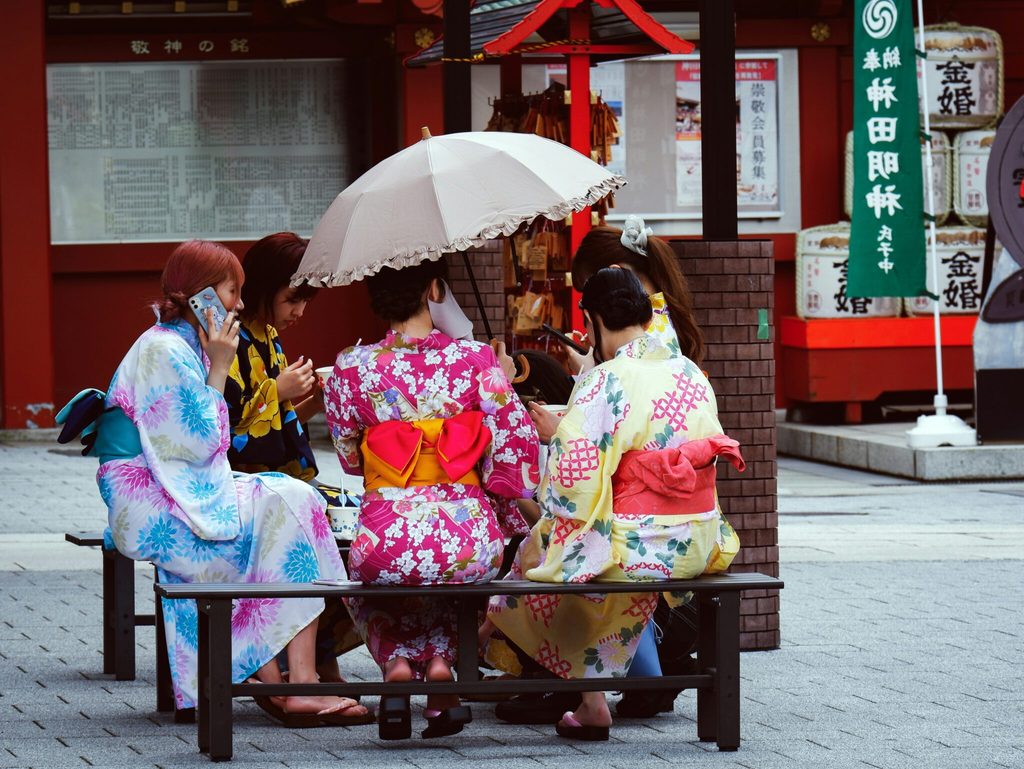
Kami belong to religion.
But Shinto traditions are also deeply connected with Japanese customs, seasonal events, family milestones, and community life.
A person does not need to spend every day thinking explicitly:
“I believe in kami.”
to participate in shrine customs.
People may visit shrines:
- At New Year
- Before an examination
- During pregnancy
- With a newborn child
- Before or after an important life event
- During local festivals
- While traveling
- Simply because they have visited that shrine for years
For some people, this is clearly religious.
For others, it may feel equally connected with family tradition, local culture, habit, gratitude, or a particular moment in life.
There is no need to force every Japanese person’s relationship with kami into one definition.
If you want to understand the wider tradition behind shrine worship, read What Is Shinto?.
Do You Need to Believe in Kami to Visit a Shrine?
No.
Shrines that are open to the public welcome many different kinds of visitors.
You do not need to convert to Shinto before entering.
You also do not need to pretend to believe something you do not.
What matters is understanding that you are visiting a religious space where other people may be worshipping.
You can:
- Observe
- Learn
- Offer a respectful prayer
- Express gratitude
- Or simply visit quietly
Understanding who the kami are can make the visit more meaningful.
But you do not need perfect religious knowledge before taking your first step through a torii.
Kami FAQ
What is a kami in Shinto?
A kami is a sacred being or divine presence worshipped in Shinto.
Kami may include mythological deities, beings associated with nature and particular places, ancestors, or historical people who have been enshrined.
Does kami mean “god”?
Sometimes.
“God” or “deity” can be useful translations, especially for famous mythological figures.
But kami is a broader concept and does not correspond perfectly to the English idea of a god.
Is “kami” singular or plural?
The Japanese word kami can refer to one kami or to multiple kami depending on context.
In English, it is also common to use kami for both singular and plural.
How many kami are there?
There is no fixed number.
The expression yaoyorozu no kami (八百万の神) is often translated as “eight million kami,” but it expresses the idea of countless or innumerable kami rather than exactly 8,000,000.
Does Shinto believe everything has a spirit?
That is an oversimplification.
Kami may be associated with many parts of nature, but this does not mean every individual object is automatically worshipped as a kami.
Can a tree be a kami?
A particular tree can be regarded as sacred or connected with a kami.
But that does not mean every tree in Japan is automatically a kami.
Can mountains be kami?
Yes.
Mountains have long played important roles in Japanese religious traditions, and particular mountains may themselves be regarded as sacred or associated with kami.
Can humans become kami?
Yes.
Historical human beings have been enshrined as kami.
Sugawara Michizane, now worshipped as Tenjin, and the souls of Emperor Meiji and Empress Shoken at Meiji Jingu are clear examples.
Are ancestors kami?
Ancestors may be revered as kami within some Shinto traditions.
But it is too broad to say that every deceased person automatically becomes a kami.
Are kami always good?
Not necessarily.
Traditional ideas of kami include beings and forces regarded with awe or even fear as well as gratitude and reverence.
Kami are not simply divided into a Western-style category of perfectly good gods.
Who is the most famous kami in Japan?
There is no official ranking.
But Amaterasu Omikami, worshipped at Ise Jingu, is one of the most important and widely recognized kami in Shinto.
Is Inari a fox?
No.
Inari Okami is the kami.
Foxes are strongly associated with Inari worship and are commonly seen as messengers or related sacred figures at Inari shrines.
That is why you see so many fox statues at places such as Fushimi Inari Taisha.
Which kami am I praying to at a shrine?
It depends on the shrine.
Look for the shrine’s saijin, or enshrined kami, on its official website, signs, or visitor information.
Some shrines worship one principal kami, while others enshrine several.
Understanding Kami Changes the Way You See a Shrine
At first, a shrine can look like a collection of beautiful things.
A torii.
A forest.
A worship hall.
Omamori.
Ema.
People bowing and clapping.
But all of those things begin to connect once you understand the kami.
The torii marks the entrance to sacred space.
The shrine exists as a place of worship.
The prayer is addressed to the enshrined kami.
The omamori carries protection into daily life.
The ema holds someone’s wish or gratitude.
And suddenly the shrine is no longer simply:
“a beautiful Japanese place.”
It becomes easier to understand why it is there.
You do not need to memorize every kami in Japanese mythology.
You do not need to decide on a perfect English translation.
And you do not need to understand Shinto completely before visiting.
Start with one simple idea:
Kami are the sacred beings and presences at the heart of Shinto.
Then, when you visit a shrine, ask:
Who is enshrined here?
That one question can completely change what you notice.
Continue Your Journey
Understanding kami is one of the best foundations for understanding Japanese shrine culture.
Continue with these guides: