
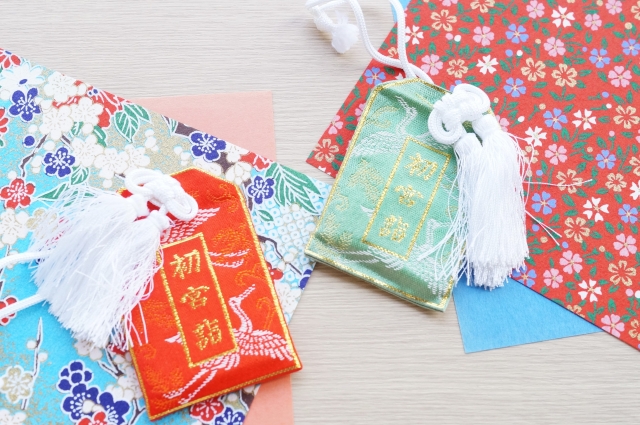
What Is an Omamori? Types, Meanings & How to Choose One
If you visit a Shinto shrine or Buddhist temple in Japan, you will probably see rows of small, colorful charms displayed at the shrine or temple office.
These are omamori (お守り)—Japanese amulets associated with protection, prayers, and specific wishes such as health, safe travel, relationships, study, or good fortune.
They may be beautifully embroidered.
Some feature flowers, animals, or symbols connected with the shrine. Others are simple and traditional.
But an omamori is more than a Japanese souvenir.
It is a sacred item received from a shrine or temple and carried with you in connection with protection or a particular wish.
And choosing one can be harder than it first looks.
A shrine may offer several omamori that all seem to be for “health,” “relationships,” or “safety,” but the Japanese wording may refer to different wishes.
So which one should you choose?
This guide explains what omamori are, what the common types mean, how to choose one in Japan, where to keep it, and the basic etiquette travelers should know.
What Is an Omamori?
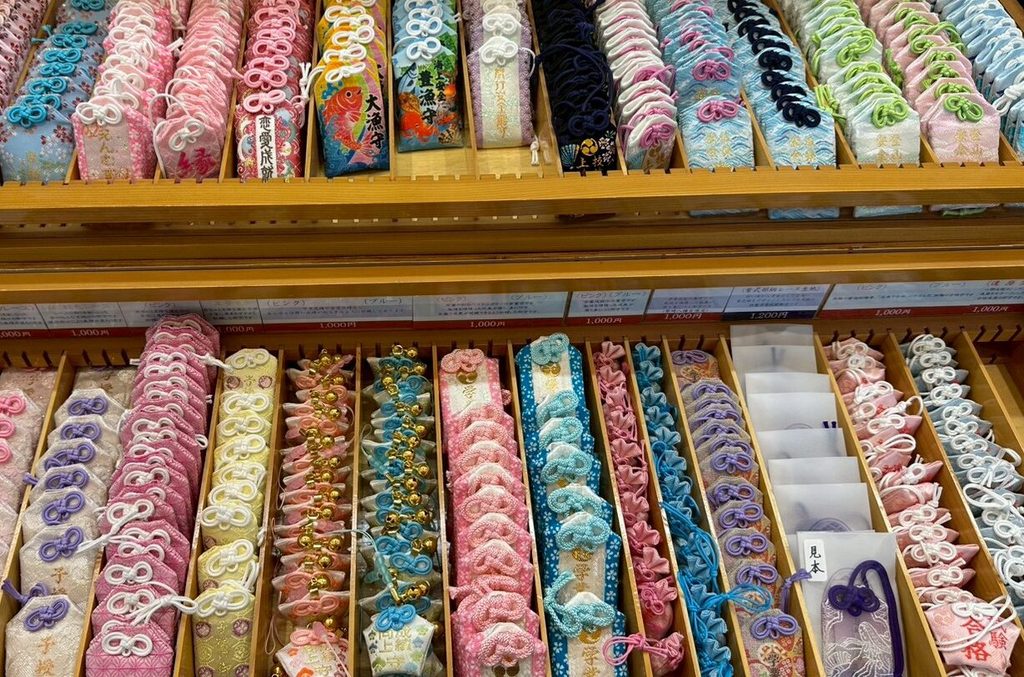
An omamori is a Japanese amulet offered at Shinto shrines and Buddhist temples.
At a Shinto shrine, omamori are associated with the protection and blessings of the kami worshipped there.
They are designed to be carried with you in everyday life.
You might keep one:
- In your bag
- In your purse or wallet
- In a pocket
- In your car
- Attached to something you use regularly
Different omamori are associated with different wishes.
Someone may carry one for health.
A student may receive one for an exam.
A driver may keep one for traffic safety.
Another person may choose one connected with relationships, good fortune, or a particular goal.
The important point is that omamori do not all mean the same thing.
To understand the sacred places where shrine omamori are offered, read What Is a Shinto Shrine?.
What Does “Omamori” Mean?
Omamori is written:
お守り
The verb mamoru (守る) means “to protect” or “to guard.”
The o- (お) at the beginning is an honorific prefix.
That gives you the basic idea behind the word.
But translating every omamori simply as a “lucky charm” can be misleading.
Some omamori are associated with good fortune.
Others are specifically connected with:
- Health
- Recovery from illness
- Traffic safety
- Travel safety
- Academic success
- Passing an exam
- Relationships
- Safe childbirth
- Business prosperity
- Protection from misfortune
- A particular personal wish
So the meaning depends on the purpose of that specific omamori.
Where Do You Get an Omamori?
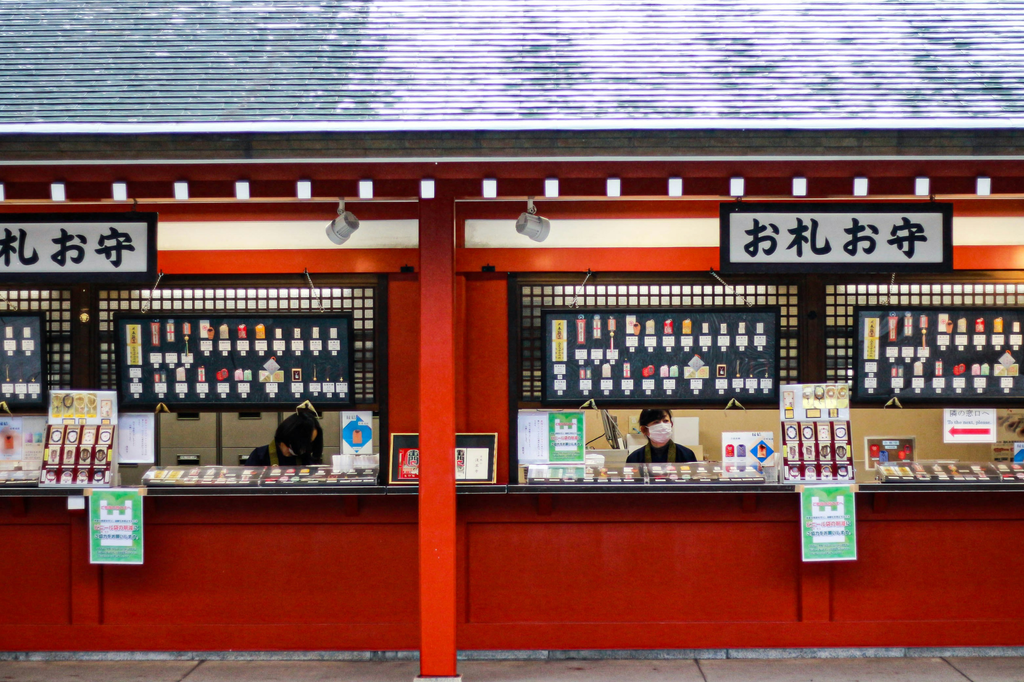
At a shrine, omamori are usually offered at a juyosho (授与所).
This is the area where visitors can receive omamori, ofuda, and other sacred items.
At a large shrine, you may find many different types arranged in display cases or shown on boards.
At a smaller shrine, the selection may be much simpler.
You will usually see some combination of:
- The name of the omamori
- Its purpose
- The amount
- Available colors or designs
If you cannot understand the Japanese, you can ask the shrine staff.
You do not need perfect Japanese to do this.
Showing the Japanese wording for the wish you want can often be enough.
Do You “Buy” an Omamori?
In everyday English, saying that you buy an omamori is perfectly understandable.
In shrine terminology, however, omamori are generally spoken of as something you receive.
In Japanese, you may hear:
お守りを受ける — omamori o ukeru
rather than simply treating the exchange as ordinary shopping.
This is also why the place where omamori are offered is called a juyosho (授与所) rather than a souvenir shop.
You do provide the indicated amount when receiving one.
But culturally, an omamori is regarded as a sacred item rather than ordinary merchandise.
Travelers do not need to worry about using the perfect word every time.
Understanding the idea is more important.
What Do Omamori Look Like?
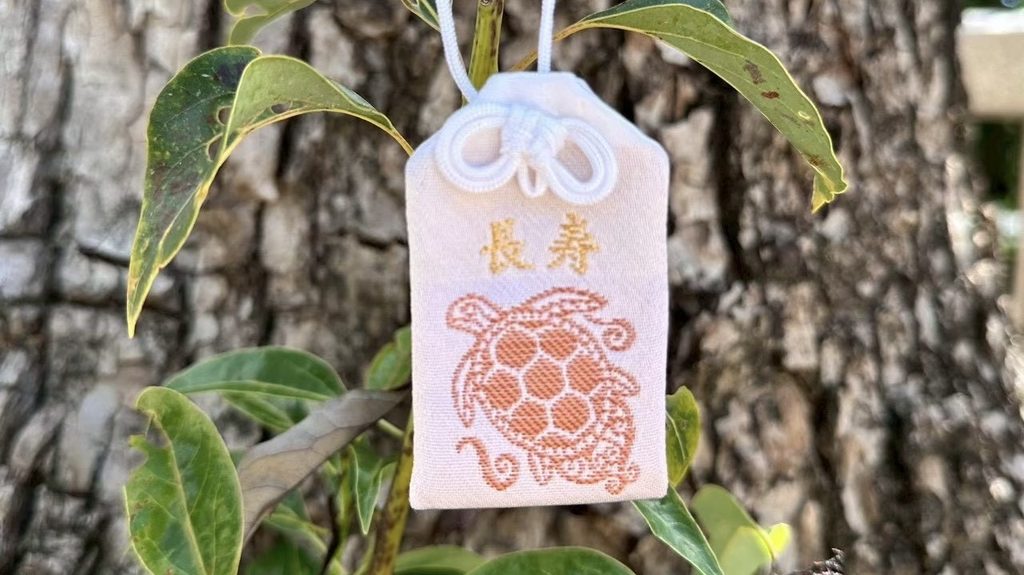
The classic omamori is a small rectangular pouch made from woven or brocade fabric.
But there is no single standard design.
Depending on the shrine, you may see:
- Fabric pouches
- Flat wallet-sized omamori
- Wooden forms
- Cards
- Traffic-safety stickers
- Small bells
- Decorative shapes
- Seasonal designs
- Shrine-specific designs
They may feature:
- Japanese characters
- The name or crest of the shrine
- Flowers
- Animals
- Seasonal motifs
- Symbols associated with the kami
- Local cultural motifs
This is one reason omamori are so interesting to look at.
But the design alone does not tell you what an omamori is for.
A pink omamori is not automatically for love.
A blue omamori is not automatically for travel.
The Japanese wording matters much more than the color.
Common Types of Omamori and Their Meanings
There is no nationwide catalog of omamori.
The names, designs, and specific wishes offered vary from shrine to shrine.
Still, there are several broad categories you are likely to encounter.
Health — 健康 / Kenko
For general health and well-being.
This is a useful choice when the wish is simply to remain healthy.
However, some shrines offer separate omamori for more specific health-related wishes.
For example, an omamori for general health is different from one specifically intended for recovery from illness.
Recovery from Illness — 病気平癒 / Byoki Heiyu
For recovery from illness or injury.
If you are choosing an omamori for someone who is already sick or recovering, this is more specific than a general health omamori.
Traffic Safety — 交通安全 / Kotsu Anzen
For traffic safety and protection from traffic accidents.
These are commonly associated with:
- Cars
- Driving
- Motorcycles
- Commuting
- Road safety
Some traffic-safety omamori are designed specifically to be kept in or attached to a vehicle.
Travel Safety — 旅行安全 / Ryoko Anzen
Some shrines offer omamori specifically associated with safe travel.
This is not necessarily the same thing as 交通安全, which is more directly connected with traffic and road safety.
The exact wording offered depends on the shrine.
Academic Success — 学業成就 / Gakugyo Joju
For success in study and learning.
These are popular with students and may be carried throughout the school year.
Passing an Exam — 合格祈願 / Gokaku Kigan
For passing an entrance examination, qualification test, or another important exam.
This is more specific than general academic success.
A simple way to understand the difference is:
学業成就
Success in study and learning
合格祈願
A prayer for passing a particular exam
Relationships — 縁結び / Enmusubi
Enmusubi is associated with forming good connections and relationships.
It is often translated into English simply as “love”, but that can make the idea sound narrower than it is.
The Japanese concept of en (縁) refers to connections or bonds.
Depending on the shrine, you may also see other wording for relationship-related wishes.
This is one category where knowing exactly what the Japanese says can be especially useful.
Good Fortune — 開運 / Kaiun
For good fortune or improving one’s luck.
This can be a good choice when you do not have one very specific wish.
Protection from Misfortune — 厄除 / Yakuyoke
For protection from misfortune.
You may see this particularly in connection with yakudoshi, traditionally significant ages associated with misfortune.
Some shrines also offer this type of omamori more generally.
Safe Childbirth — 安産 / Anzan
For a safe pregnancy and childbirth.
These may be received by the person expecting a baby or given to them by family or friends.
Business Prosperity — 商売繁盛 / Shobai Hanjo
For prosperity and success in business.
These are especially common at shrines with strong associations with commerce or business.
Victory and Perseverance — 勝守 / Kachimamori
For victory, perseverance, or overcoming a challenge.
This does not necessarily mean defeating another person.
Depending on the shrine, it may relate to:
- Sports
- Competition
- Personal goals
- Perseverance
- Overcoming yourself
The Same Category Can Include Different Wishes
This is where choosing an omamori becomes more interesting—and more confusing.
You might think:
“I want a health omamori.”
But there may be different options for:
- General health
- Recovery from illness
- Longevity
- Safe childbirth
- A child’s healthy growth
Or you may want something for relationships and encounter several different words connected with en.
Safety can also be divided into different purposes.
An omamori for traffic safety is not necessarily the same as one intended for travel safety.
And an omamori for academic success is not quite the same as one specifically for passing an exam.
There is no rule saying every shrine has all of these.
Quite the opposite.
The exact types and wording vary by shrine.
That is why choosing the right omamori starts with the wish—not the design.
How to Choose the Right Omamori
If you are standing in front of a display full of omamori, start with one question:
What am I actually wishing for?
Not:
“Which color do I like?”
You can absolutely care about the design.
But first, identify the purpose.
Step 1: Decide What You Want to Pray For
Maybe it is:
- General health
- Recovery from illness
- Safe travel
- Traffic safety
- Academic success
- Passing an exam
- A relationship
- Good fortune
- Protection from misfortune
- Business success
Once the wish is clear, choosing becomes much easier.
Step 2: Look at the Japanese Wording
If the shrine provides an English explanation, use it.
If not, look for the Japanese wording connected with your wish.
This is much more reliable than guessing based on:
- Color
- Shape
- Embroidery
- Animal designs
Two charms that look similar may have completely different purposes.
Step 3: Ask the Shrine Staff
If you are still unsure, ask.
You do not need to pronounce a complicated Japanese phrase perfectly.
You can show the staff the wording you are looking for on your phone.
That is often much easier than trying to explain:
“The health one, but not that health one. The other health one.”
Step 4: Choose the Design You Like
Once you know you have found the right type, choose the design you prefer if several are available.
Then you get both:
the wish you intended
and
an omamori you enjoy carrying.
For a deeper guide to identifying the Japanese wording at a shrine office, read:
Can’t Read Japanese Omamori? How to Choose the Right One
Why the Japanese Wording Matters
For travelers, this may be the most useful thing to understand about omamori.
You do not need to memorize every possible type.
But broad English categories can hide important differences.
You might arrive thinking:
“Health.”
Then find several health-related options.
You might think:
“Travel safety.”
Then discover that the shrine has different omamori for traffic and travel.
You might want:
“Love.”
But the shrine may use Japanese wording that expresses a more specific kind of relationship-related wish.
And because every shrine has its own selection, there is no universal display you can memorize before your trip.
Knowing the Japanese words for the wish you actually want can make choosing much easier.
Omamori Guide for Travelers
Choosing an Omamori in Japan?
Choosing an omamori can be harder than it first looks. Even within one broad category, there may be several different wishes.
Understand wishes such as enmusubi, ryoen kigan, and other relationship-related omamori.
See the difference between general well-being, recovery from illness, longevity, and more.
Find omamori for study, safety, travel, good fortune, success, protection, and other wishes.
Show the relevant Japanese words at the shrine office when asking for an omamori.
I created a Japanese Omamori Guide for travelers to help you understand these differences and choose the omamori that best matches what you are actually looking for.
Because the Japanese wording for each wish is included, you can show the relevant page directly to shrine staff when asking for an omamori.
You do not need to pronounce the Japanese perfectly. You do not need to rely on camera translation at the counter. And you do not have to choose based only on color or design.
See the Japanese Omamori Guide on EtsyCan Tourists Receive Omamori?
Yes.
Travelers can respectfully receive omamori at shrines and temples that offer them.
You do not need to be Shinto to receive an omamori at a shrine open to visitors.
And you do not need to understand every religious detail before doing so.
If you would like to pray during your visit, you can.
For the basic shrine prayer sequence, read How to Pray at a Japanese Shrine.
If you are concerned about whether taking part in shrine customs is appropriate as a visitor, read Is It Disrespectful to Visit a Shrine If You’re Not Shinto?.
Shrine vs Temple Omamori: What Is the Difference?
Omamori are found at both Shinto shrines and Buddhist temples.
At a shrine, the religious background is Shinto and the omamori is connected with the kami and practices of that shrine.
At a Buddhist temple, the religious background is Buddhist.
For travelers, there is no need to think that one type is somehow more “authentic” than the other.
Both are established parts of Japanese religious culture.
The specific omamori offered depend on the individual shrine or temple.
If you are not sure which type of place you are visiting, read Shrine vs Temple in Japan.
Omamori vs Omikuji: What Is the Difference?
Omamori and omikuji are both commonly encountered at Japanese shrines and temples.
But they serve different purposes.
An omamori is an amulet that you carry with you in connection with protection or a wish.
An omikuji is a fortune that you draw and read.
A simple way to remember the difference is:
Omamori → something you carry
Omikuji → a fortune or message you receive
You can receive both during the same shrine visit.
If you want to know what Daikichi, Kyo, and the other parts of a Japanese fortune mean, read What Is Omikuji?.
Where Should You Keep an Omamori?
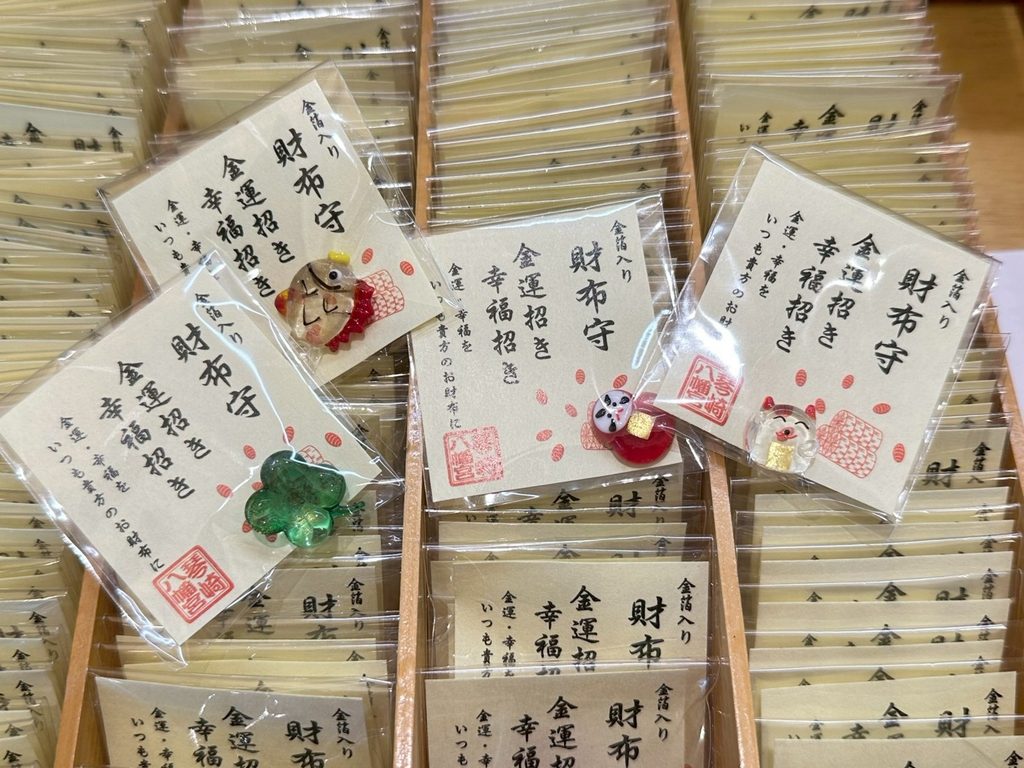
Omamori are generally intended to stay close to you.
Depending on the type and design, you might:
- Attach one to a bag
- Keep one inside a purse
- Carry a flat one in your wallet
- Put one in a pocket
- Keep a traffic-safety omamori in your car
You do not need to put it on display.
Many people simply carry their omamori inside something they use every day.
The important thing is to treat it with reasonable care.
An omamori is meant to accompany ordinary life.
You do not need to build an elaborate ritual around carrying one.
Should You Open an Omamori?
Generally, no.
Omamori are normally kept closed.
The outer pouch is not simply packaging that you are expected to remove.
It is part of the omamori.
You may hear the explanation that opening the pouch causes the blessing to “escape.”
Rather than treating that as a universal rule with one official explanation, the useful etiquette for travelers is much simpler:
Keep the omamori closed as you received it.
There is no need to open it just to find out what is inside.
Can You Have More Than One Omamori?
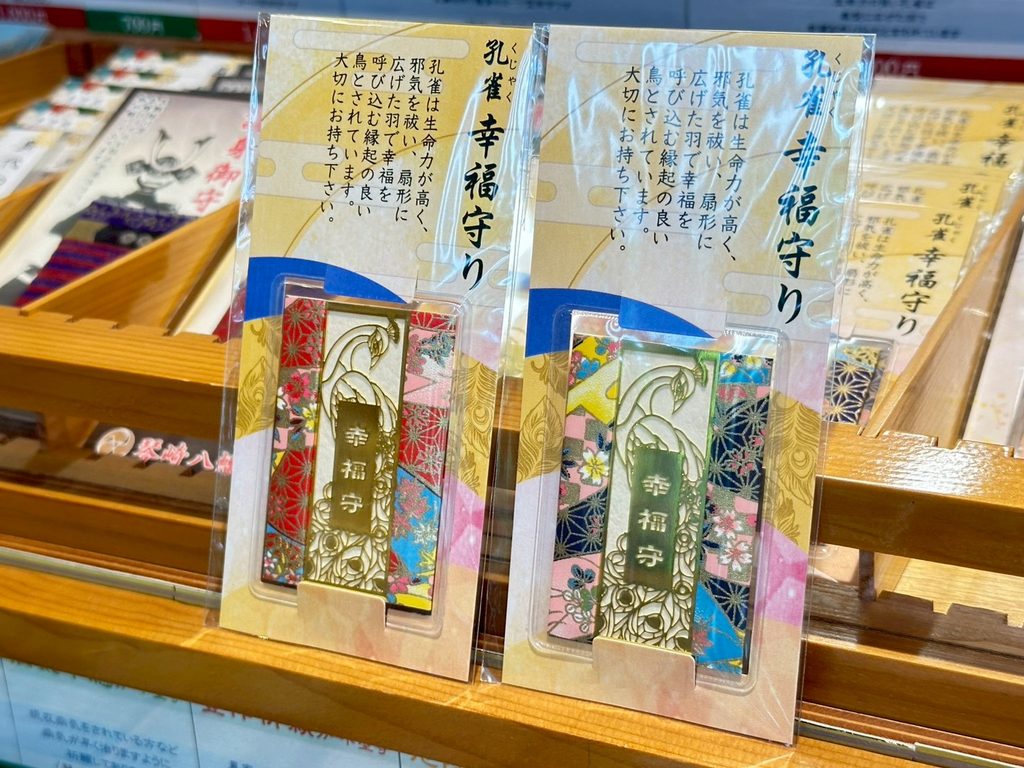
Yes.
You can have more than one omamori.
For example, someone might carry:
- One for health
- One for traffic safety
- One for study
You may also hear the idea that omamori from different shrines should not be carried together because the kami will become jealous or “fight.”
The Association of Shinto Shrines specifically explains that this is not something people need to worry about.
Different kami are understood to have different divine virtues and to work together.
There is therefore no rule saying you must choose only one.
There is much more to this question—including whether there is a limit, carrying omamori from several shrines, and keeping several together.
Read the full guide:
Can You Have More Than One Omamori? Shrine Etiquette Explained
How Long Should You Keep an Omamori?
You will often hear:
“An omamori lasts for one year.”
There is some tradition behind that idea, but it is easy to make it sound more rigid than it actually is.
Renewing omamori around the yearly cycle is a common practice.
However, one year is better understood as a traditional guideline for renewal, not a strict expiration date.
The Association of Shinto Shrines also states that an omamori may continue to be carried until the wish connected with it has been fulfilled.
So your omamori does not suddenly become useless the moment twelve months have passed.
This is especially important for travelers who may not be able to return to Japan every year.
For the fuller explanation—including keeping an omamori for several years and what to do when your wish comes true—read:
Can You Have More Than One Omamori? Shrine Etiquette Explained
What Should You Do With an Old Omamori?
Traditionally, old omamori are returned respectfully.
Ideally, you can return the omamori to the shrine where you received it.
But that may not be practical for a traveler who lives thousands of kilometers away.
If you cannot return to the original shrine, do not automatically assume that every other shrine will accept it.
Policies vary.
It is better to ask.
And if you cannot currently return it anywhere, you do not need to panic simply because a year has passed.
Keep it somewhere appropriate and treat it respectfully until you have another opportunity.
The detailed guide covers:
- Returning an old omamori
- What happens if you cannot return to the same shrine
- What to do if you live outside Japan
- Why there is no need to rush to throw it away
- Keeping a meaningful omamori for longer
Read:
Can You Have More Than One Omamori? Shrine Etiquette Explained
Can You Take an Omamori Home From Japan?
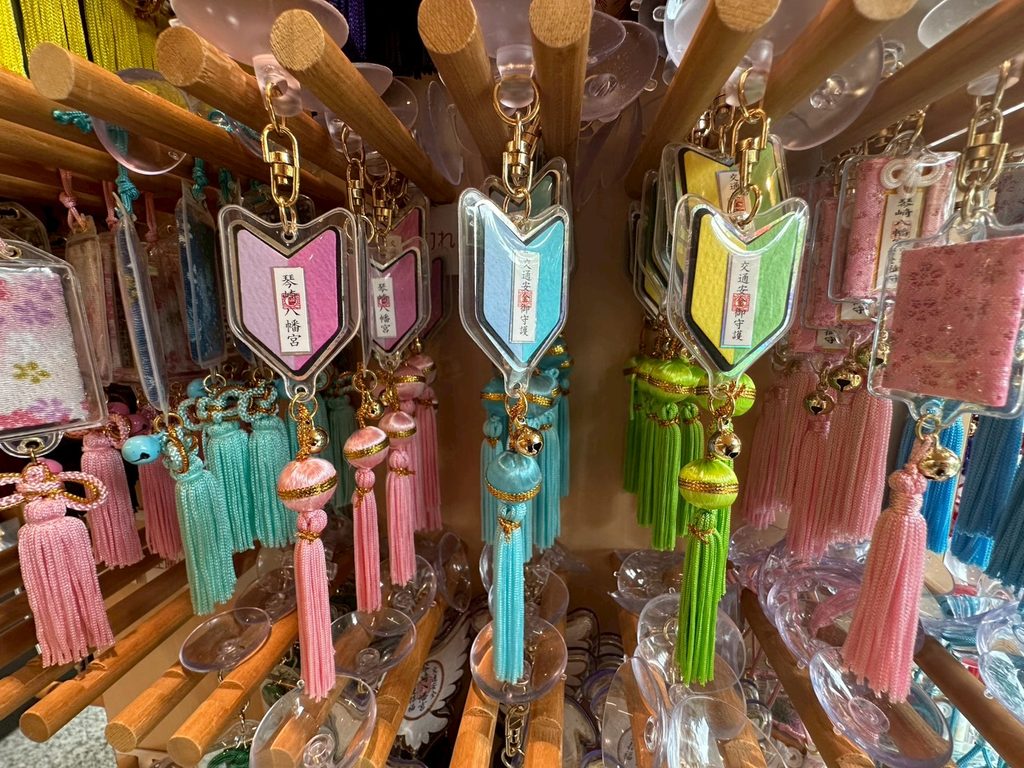
Yes.
Omamori are designed to be carried with you.
There is no reason they need to remain in Japan.
After your trip, you may continue to keep one:
- In your everyday bag
- In a wallet
- In your car
- Somewhere appropriate at home
For international travelers, an omamori can become both a sacred item and a meaningful reminder of a particular place or journey.
Those two things do not have to contradict each other.
Can You Give an Omamori as a Gift?
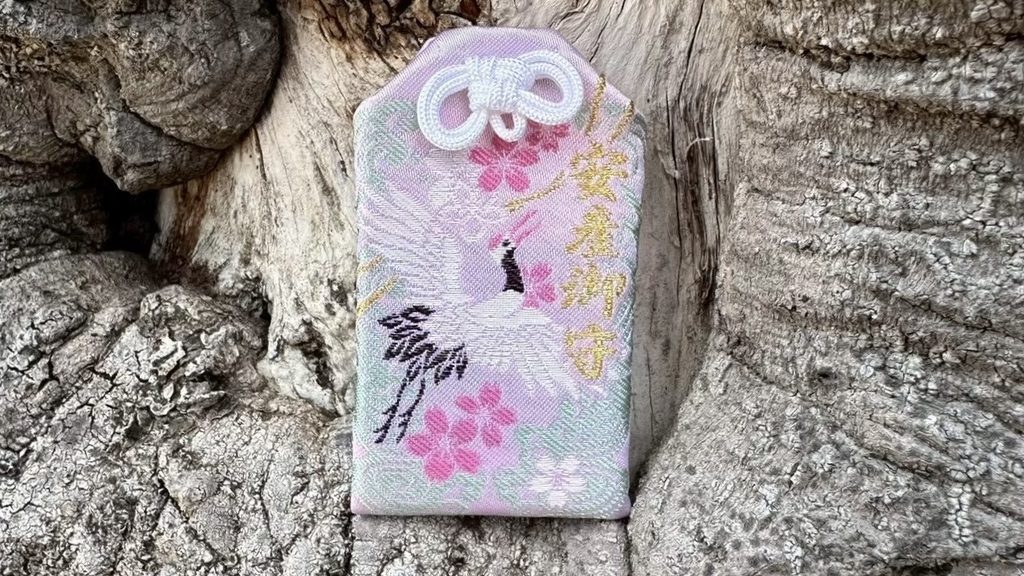
Yes.
Omamori are often chosen with another person in mind.
For example, you might choose one for:
- Someone preparing for an exam
- Someone recovering from illness
- A friend who drives regularly
- Someone expecting a baby
- Someone beginning a new job
- Someone you simply want to wish well
This is where choosing the correct purpose becomes especially important.
A gift becomes much more meaningful when the wording matches what you actually want to wish for that person.
So instead of choosing a charm only because:
“This one looks cute.”
start with:
“What do I want to wish for them?”
Then choose the design.
Are Omamori Souvenirs?
An omamori can certainly become a memorable object from your trip to Japan.
But calling it only a souvenir misses part of what it is.
It is a sacred item received from a shrine or temple.
That does not mean you need to be nervous about owning one.
And there is nothing wrong with appreciating the design.
Many omamori are beautiful.
The difference is simply that an omamori is not the same as buying a magnet or keychain from a gift shop.
It has a purpose.
It is connected with a prayer, protection, or wish.
For many travelers, that meaning is exactly what makes it a special reminder of Japan.
Omamori Etiquette: What Travelers Actually Need to Know
Omamori etiquette does not need to become complicated.
If you remember a few basics, you are already in good shape.
- Choose the omamori based on its purpose, not only its appearance
- Keep it closed
- Carry or keep it with reasonable care
- Having more than one is not automatically a problem
- One year is a common renewal guideline, not a hard expiration date
- Return an old omamori respectfully when practical
- Do not assume every shrine accepts omamori from somewhere else
Most importantly:
Do not turn omamori into a source of anxiety.
If you are a traveler, you may not know every custom.
You may not be able to return to the same shrine next year.
You may not even understand every character written on the charm.
That is okay.
Understand what you can.
Treat it respectfully.
And remember why you chose it.
Omamori FAQ
What does omamori mean in English?
Omamori is commonly translated as amulet, protective amulet, or protective charm.
“Lucky charm” is also used, but it can be too broad because many omamori are connected with specific forms of protection or particular wishes rather than general luck.
What is inside an omamori?
The exact contents depend on the shrine, temple, and type of omamori.
Omamori are normally kept closed, so visitors are not expected to open them to inspect the contents.
Should you open an omamori?
No.
Keep it closed as you received it.
The pouch is part of the omamori, not disposable packaging.
How do I know which omamori to choose?
Start by deciding exactly what you want to pray or wish for.
Then look for the Japanese wording connected with that wish or ask the shrine staff for help.
Read Can’t Read Japanese Omamori? How to Choose the Right One for a more detailed guide.
What is the best omamori?
There is no single best omamori.
The right one depends on what you are looking for.
An omamori for traffic safety has a different purpose from one for academic success, recovery from illness, or relationships.
Can I have more than one omamori?
Yes.
There is no rule saying you must have only one, and there is no need to worry that different kami will automatically “fight.”
For the full explanation, read Can You Have More Than One Omamori?.
Can you carry omamori from different shrines?
Yes.
The Association of Shinto Shrines explains that there is no need to worry about conflict between different kami.
Do omamori expire after one year?
One year is a common traditional time for renewal, but it is not a strict expiration date.
Official shrine guidance also says an omamori may be carried until the associated wish has been fulfilled.
Can I keep an omamori for several years?
You do not need to assume that an older omamori suddenly becomes harmful because more than one year has passed.
For travelers in particular, returning to the original shrine may not be practical.
See Can You Have More Than One Omamori? for the detailed explanation.
What should I do with an old omamori?
Ideally, return it to the shrine where you received it.
If that is difficult, ask another shrine whether it can accept it rather than assuming that it will.
Can foreigners receive omamori?
Yes.
Travelers can respectfully receive omamori from shrines and temples open to visitors.
Can I take an omamori outside Japan?
Yes.
Omamori are intended to be carried, so you can bring one home after your trip.
Can I give an omamori to someone else?
Yes.
Choosing an omamori for another person based on their health, studies, safety, relationships, or another meaningful wish can make it a thoughtful gift.
How much does an omamori cost?
There is no standard amount for all omamori in Japan.
The amount depends on the shrine or temple and the specific omamori.
Check the display at the juyosho or ask the staff.
Are shrine and temple omamori the same?
Both may be called omamori, but their religious backgrounds differ.
Shrine omamori belong to Shinto practice, while temple omamori belong to Buddhist practice.
A Small Thing With a Specific Meaning
An omamori is small enough to disappear inside a bag.
That is part of what makes it special.
It moves into ordinary life with you.
To school.
To work.
Into a car.
Across Japan.
Or onto a plane home.
Maybe you chose it for health.
Maybe you are waiting for an exam result.
Maybe you wanted something for your travels.
Maybe you picked one for someone you care about.
And maybe the hardest part was standing in front of twenty beautiful omamori and realizing:
“I have absolutely no idea what any of these Japanese words mean.”
That is normal.
You do not need to know every type.
You simply need to start with the wish.
Understand what you are carrying.
Choose the one that matches what you actually want.
And then let the design make it yours.
Omamori Guide for Travelers
Keep the Japanese words with you.
If you want to choose an omamori by meaning instead of guessing from color or design, Jin-journey’s English Omamori Guide explains common wishes and includes the Japanese wording you can show at the shrine office.
See the Japanese Omamori Guide on EtsyContinue Your Journey
If you would like to understand omamori and Japanese shrine culture in more detail, continue with these guides: