
Why Do People Clap at Shinto Shrines?
If you visit a Shinto shrine in Japan, there is one sound you will hear again and again.
Clap. Clap.
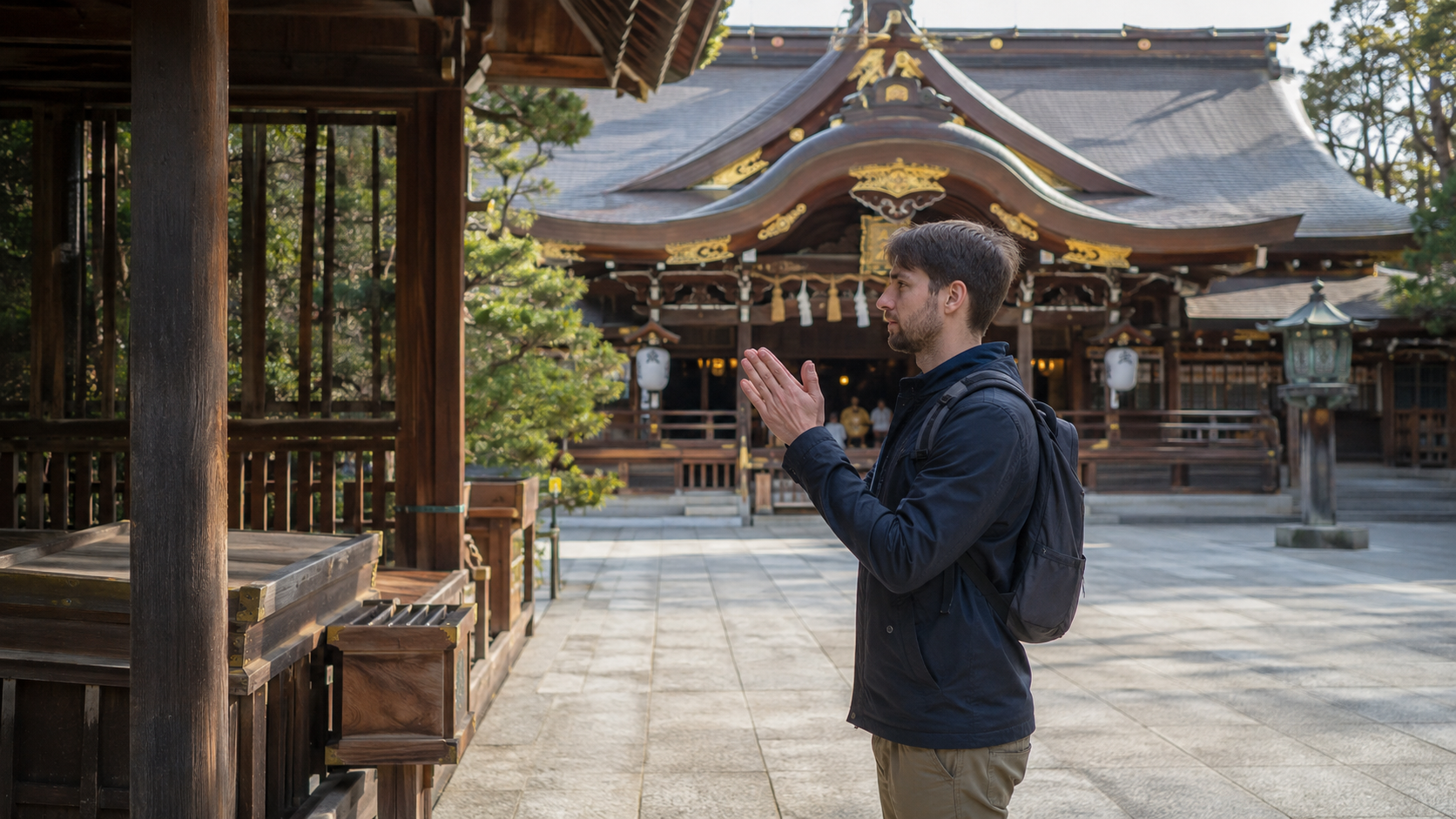
People stand in front of the shrine, bow, clap their hands twice, and then pray.
If you are visiting Japan for the first time, this can seem a little unusual.
Why clap while praying?
Is it meant to get the kami’s attention?
And why do people clap at Shinto shrines but not at Buddhist temples?
The short answer is:
Clapping is a traditional part of Shinto worship and is used to express respect, sincerity, and gratitude toward the kami.
At most shrines, two claps form part of the familiar prayer sequence of two bows, two claps, and one final bow. The Association of Shinto Shrines describes this as the basic form of worship used nationwide, while also noting that some shrines have their own customs.
But the claps themselves have meaning too.
Why Do People Clap Before Praying?
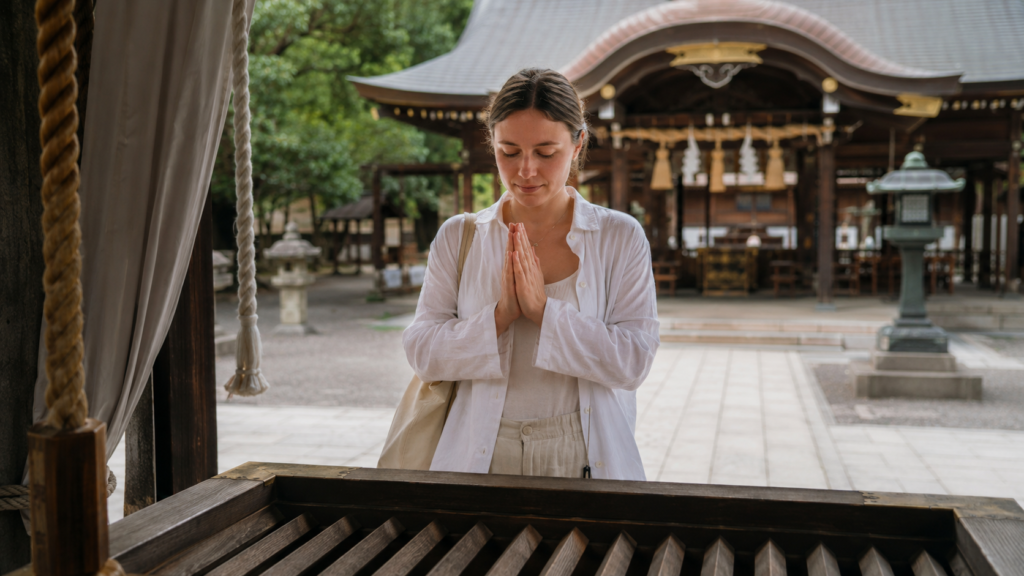
The ritual clapping used in Shinto worship is called hakushu (拍手), and it is also commonly known as kashiwade.
According to the Association of Shinto Shrines, the claps offered before the kami express a sincere heart and gratitude for the divine protection and blessings people receive.
So this is not applause.
You are not congratulating the kami.
The clapping is part of the act of worship itself.
It creates a distinct moment in which you stand before the kami, compose yourself, and offer your prayer with respect.
Are You Clapping to Get the Kami’s Attention?
You may sometimes hear a very simple explanation:
“You clap so the kami know you are there.”
It is an easy way to remember the action, but it is not the main explanation given by the Association of Shinto Shrines.
Official shrine guidance emphasizes sincerity, reverence, and gratitude when explaining the meaning of the claps.
So it is better not to think of them as a spiritual doorbell.
You are not trying to wake the kami up.
The sound is part of a traditional act of reverence.
Why Do You Clap Twice?
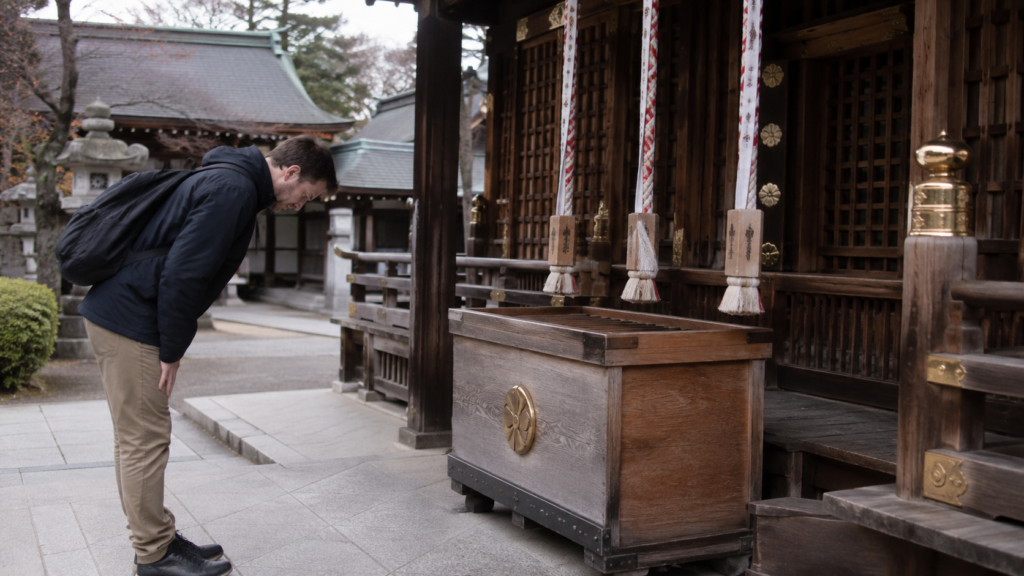
At most Shinto shrines, the basic prayer sequence is:
Two bows.
Two claps.
Prayer.
One bow.
The Association of Shinto Shrines identifies this as the standard form of shrine worship in Japan. JNTO also introduces the same sequence to international visitors.
The two claps therefore belong to a larger ritual form rather than being an isolated gesture.
A simple version looks like this:
- Bow deeply twice.
- Bring your hands together.
- Clap twice.
- Offer your prayer.
- Bow deeply once more.
If you want the whole process explained from beginning to end, see:
How to Pray at a Japanese Shrine
Do All Shinto Shrines Use Two Claps?
No.
This is one of those details that often disappears from simplified shrine etiquette guides.
Two claps are the nationwide basic form, but some shrines have their own traditional worship styles. The Association of Shinto Shrines specifically tells visitors to follow the individual shrine’s procedure when a different form is used.
One famous example is Izumo Taisha.
There, the standard everyday form is:
Two bows.
Four claps.
One bow.
Izumo Taisha confirms this in its official visitor guidance.
So if you arrive at a shrine and see a sign telling you to clap four times—or to follow another specific procedure—follow the shrine’s instructions.
Two claps are the default, not a rule that overrides every shrine tradition.
How Should You Clap at a Shrine?
There is a traditional way to do it.
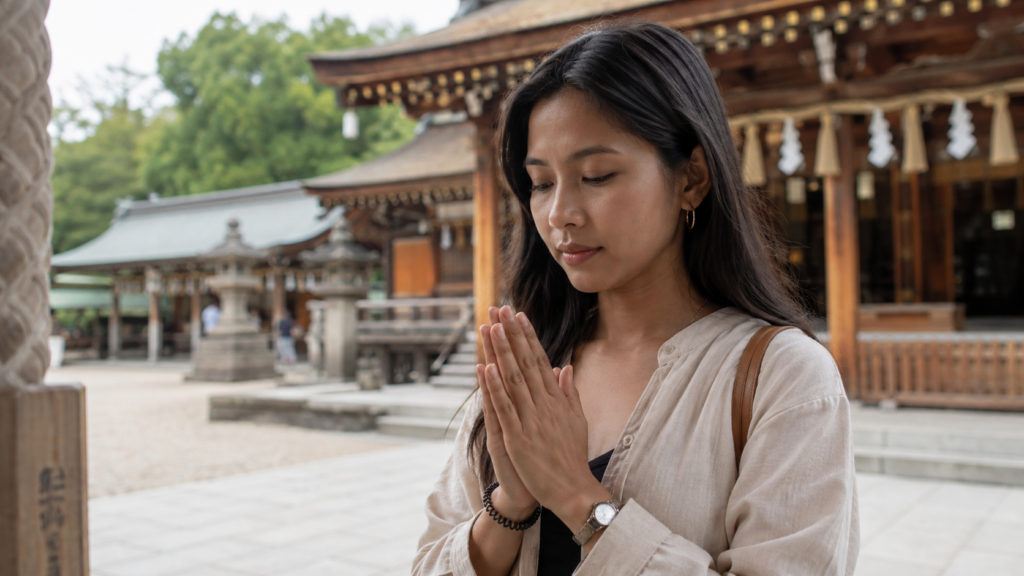
The Association of Shinto Shrines explains the basic movement like this:
Bring your hands together around chest height.
Then move the fingertips of your right hand slightly downward, open your hands to about shoulder width, and clap twice.
After the second clap, bring your fingertips back together before offering your prayer.
You may notice experienced visitors doing this very naturally.
But if your hands are slightly out of position or your claps sound awkward, there is no reason to panic.
It is shrine etiquette, not a hand-position exam.
Do the Claps Need to Be Loud?
No.
You do not need to compete with the person praying next to you.
A natural, clear clap is enough.
The important part is not producing the loudest possible sound.
The meaning lies in the gesture and the attitude with which it is performed.
So there is no need to make the entire shrine grounds hear your prayer.
What If You Forget to Clap?
Just continue.
Perhaps you bow and immediately start praying.
Then halfway through you suddenly think:
Wait. Was I supposed to clap first?
You do not need to walk away, come back, and restart the whole thing.
Learning the traditional form is worthwhile, but making one small mistake does not mean your shrine visit has failed.
If this is the kind of thing you worry about, see:
What If You Pray the Wrong Way at a Japanese Shrine?
The basic idea is simple:
Learn the etiquette.
Do your best.
Do not let fear of doing it imperfectly become the main thing you remember about the shrine.
Do You Clap at Buddhist Temples Too?
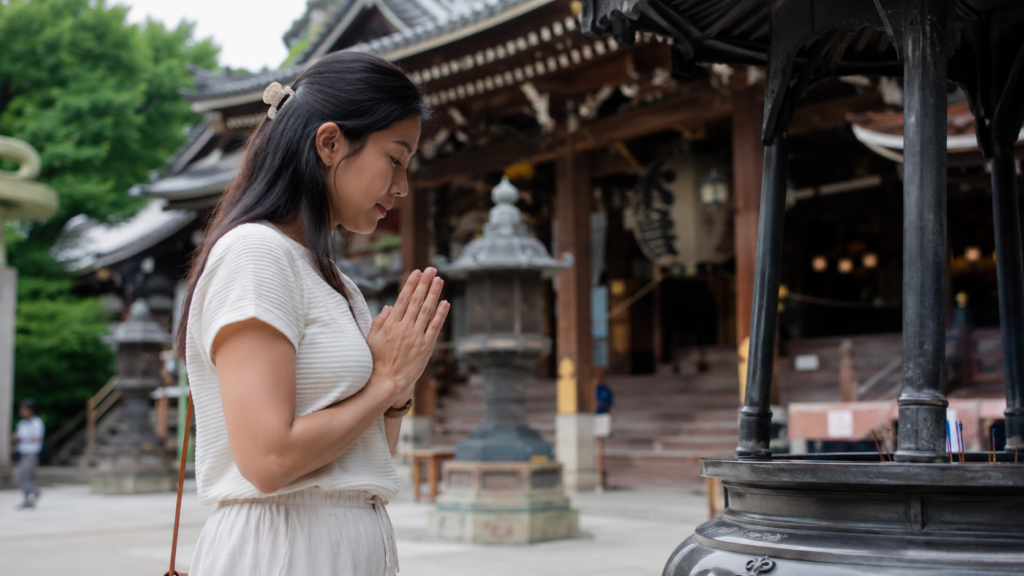
No—normally, you do not.
This is one of the most useful differences to remember when visiting religious sites in Japan.
At a Shinto shrine, clapping is part of the usual worship style.
At a Buddhist temple, visitors generally place their palms together and pray quietly without clapping. JNTO specifically distinguishes temple worship from shrine worship this way.
So the simple version is:
Shinto shrine → clap.
Buddhist temple → do not clap.
If you remember only one practical difference between shrine and temple prayer, this is a good one.
Japanese People Mix Them Up Too
And this is worth knowing if you are worried about getting it wrong as a visitor.
Japanese people sometimes mix up shrine and temple prayer etiquette too.
Shrines and temples are both familiar parts of life in Japan, and people may visit both without necessarily thinking deeply about the religious distinction every time.
Someone may visit a shrine for hatsumode, a Buddhist temple to visit a family grave, another shrine while traveling, and a temple again for sightseeing.
So knowing that one is Shinto and the other is Buddhist does not automatically mean everyone remembers the correct movements every single time.
You may occasionally see someone clap at a temple out of habit.
You may also see someone stand quietly with their hands together at a shrine and forget the claps.
That does not make shrine and temple etiquette interchangeable.
It simply means people make mistakes—even people who grew up in Japan.
So if you are visiting from overseas and accidentally get the two confused once, there is no reason to feel as though you have committed some uniquely foreign mistake.
Just learn the difference and remember it next time.
Why Don’t You Clap at a Buddhist Temple?
Because a Shinto shrine and a Buddhist temple belong to different religious traditions.
The familiar clapping ritual belongs to Shinto worship.
At a Buddhist temple, the usual visitor practice is to bring the palms together in gassho and pray quietly rather than performing the two claps used at a shrine. JNTO describes temple prayer this way in its visitor guidance.
This is also why copying whatever you did at the previous religious site can occasionally get you into trouble.
A day of sightseeing in Japan might include:
Temple.
Shrine.
Another temple.
Another shrine.
By the fourth one, even a Japanese visitor can go on autopilot.
If you are not sure which one you are standing in, this guide may help:
What If You Accidentally Clap at a Temple?
Nothing dramatic happens.
If you realize what you have done, simply continue respectfully.
You do not need to leave.
You do not need to start your visit over.
And there is no need to spend the rest of the day feeling embarrassed.
Just remember:
At the next Buddhist temple, place your hands together and pray without clapping.
The same applies in reverse.
If you accidentally forget to clap at a Shinto shrine, learn from it and continue your visit.
Understanding the distinction matters.
Perfection does not.
A Simple Way to Remember Shrine vs Temple Prayer
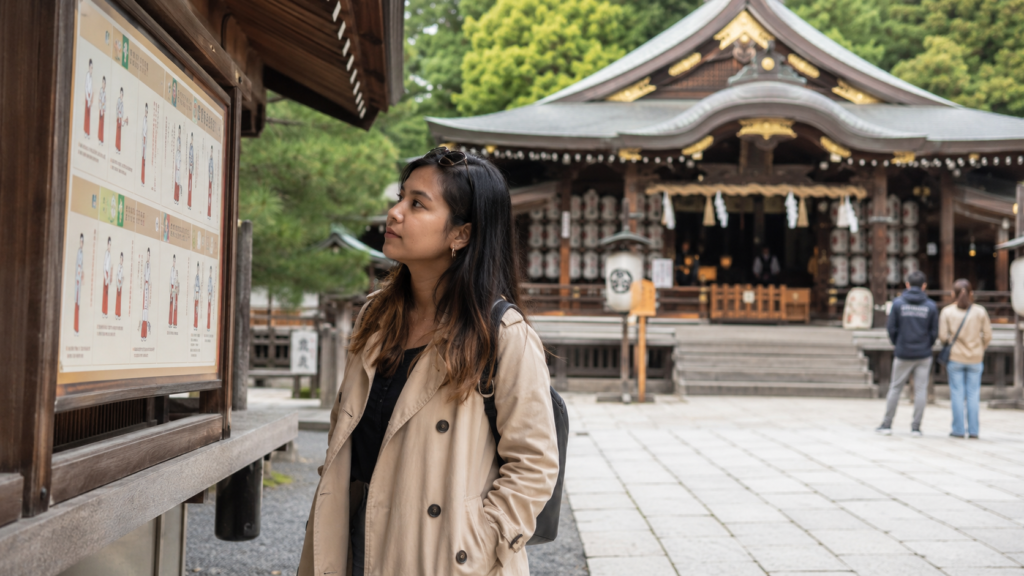
If you are traveling around Japan and visiting both, this is enough for most ordinary situations:
At a Shinto Shrine
Two bows → two claps → prayer → one bow
This is the standard nationwide form, although individual shrines may have different customs.
At a Buddhist Temple
Put your hands together → pray quietly → no clapping
JNTO advises visitors that clapping is not normally part of temple prayer.
And if there are instructions at the specific shrine or temple you are visiting?
Follow those.
Local instructions always beat something you memorized from a travel article.
Visiting Shrines in Japan for the First Time?
Shrine etiquette can feel simple when you read about it at home—but much harder when you are actually standing at the shrine, wondering what to do next.
How should you pass through a torii gate?
How do you use the temizuya?
What is the proper way to pray?
When is it okay to take photos?
And what should you know about goshuin, omamori, and common mistakes visitors sometimes make?
I created a Japanese Shrine Etiquette Guide for first-time visitors to make these customs easier to understand before and during your trip.
It includes simple visual explanations of torii gate manners, temizu, prayer steps, photography etiquette, goshuin, omamori, and common mistakes to avoid.
You can keep it on your phone while traveling in Japan, so you do not have to remember everything at once.
Shrine Etiquette Guide
Keep the basics with you while traveling in Japan.
This English PDF guide gives you a simple visual overview of shrine etiquette, including torii gate manners, temizu, prayer steps, photography etiquette, goshuin, omamori, and common mistakes to avoid.
See the Japanese Shrine Etiquette Guide on EtsyFrequently Asked Questions
Why do people clap twice at Shinto shrines?
Clapping is part of traditional Shinto worship and expresses sincerity, respect, and gratitude toward the kami. At most shrines, two claps are part of the basic prayer sequence of two bows, two claps, and one final bow.
Are you supposed to clap to get the kami’s attention?
You may hear that explanation informally, but official shrine guidance focuses on clapping as an expression of sincerity and gratitude rather than simply a way of attracting the kami’s attention.
Do you always clap twice at a Shinto shrine?
Usually, but not always. Two claps are the standard nationwide form, while some shrines use their own procedures. Izumo Taisha, for example, uses four claps in ordinary worship.
Do you clap at Buddhist temples in Japan?
Normally, no. At a Buddhist temple, visitors generally put their palms together and pray quietly without clapping.
Do Japanese people ever clap at temples by mistake?
Yes, it happens. Shrine and temple etiquette can be mixed up even by Japanese visitors. The correct basic distinction remains the same: the familiar clapping ritual belongs to shrine worship, while ordinary temple prayer is generally performed without clapping.
What if I accidentally clap at a Buddhist temple?
Simply continue respectfully. You do not need to restart your visit. Remember the distinction for next time: shrine prayer normally includes clapping; temple prayer normally does not.
What is clapping at a shrine called?
The ritual clapping is called hakushu (拍手) and is also commonly called kashiwade. The Association of Shinto Shrines uses both terms when explaining shrine worship.
Final Thoughts
Why do people clap at Shinto shrines?
Because the claps are part of a traditional way of showing sincerity, gratitude, and respect toward the kami.
At most shrines, the basic rhythm is easy to remember:
Two bows.
Two claps.
Prayer.
One bow.
But there is another distinction worth remembering just as clearly:
You normally clap at a shrine.
You normally do not clap at a Buddhist temple.
And if you mix them up once?
You will not be the first person to do it—including in Japan.
Learn the difference, follow any instructions at the place you are visiting, and continue respectfully.
The point of shrine etiquette is not to make every visitor nervous about their hands.
It is to help you understand the meaning behind what people are doing.
Before Your Shrine Visit
Want the full shrine visit flow in one simple guide?
Now that you know why people clap at Shinto shrines, you may also want a quick guide to the rest of the visit — from torii gate manners and temizu to prayer steps, photography etiquette, goshuin, omamori, and common mistakes.
Jin-journey’s English shrine etiquette PDF is made for first-time visitors and easy to keep on your phone while traveling in Japan.
See the Shrine Etiquette Guide on EtsyContinue Your Journey
Those two claps are only one small part of the customs you will encounter at a Japanese shrine.
If you’d like to understand more about Shinto worship and the difference between shrines and temples, these guides are a good place to continue your journey.