
What If You Pray the Wrong Way at a Japanese Shrine?
You finally reach the front of a Japanese shrine.
You put a coin into the offering box.
Then suddenly—
Was it two bows first?
Did you clap once or twice?
Were you supposed to pray before clapping?
And now everyone behind you seems to know exactly what they are doing.
If you make a mistake while praying at a Japanese shrine, don’t panic.
There is a traditional way to pray at most Shinto shrines, but shrine etiquette is not meant to turn your visit into a test.
A small mistake does not mean you have ruined your prayer.
Here is what to know if you bow, clap, or pray in the wrong order.
What Is the Usual Way to Pray at a Japanese Shrine?
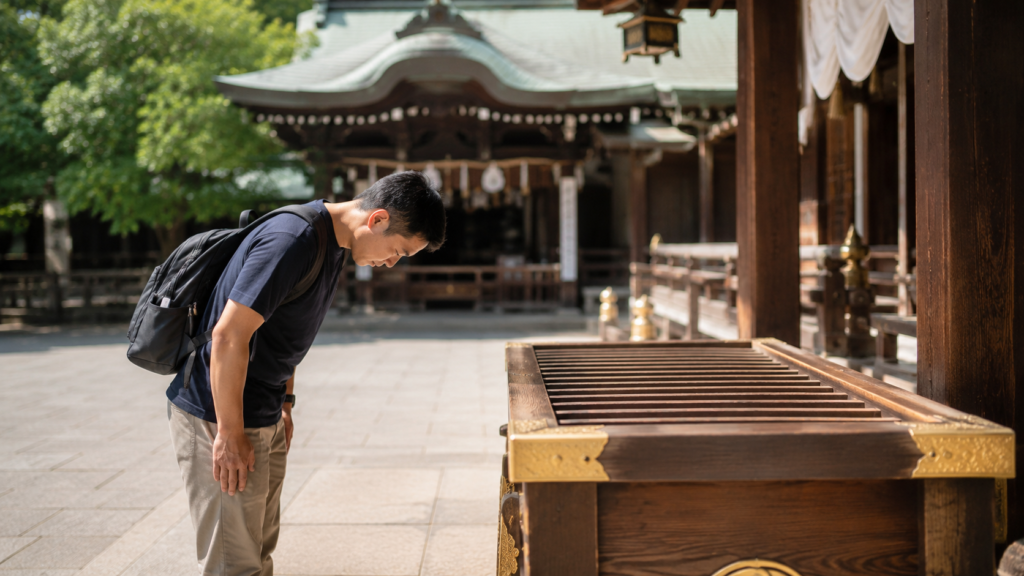
At most Shinto shrines in Japan, the basic form of worship is:
- Bow twice
- Clap twice
- Offer your prayer
- Bow once
The Association of Shinto Shrines describes two bows, two claps, and one final bow as the basic form of worship used nationwide, while also noting that some individual shrines follow different customs.
JNTO similarly introduces the usual shrine prayer sequence as two bows, two claps, prayer, and one final bow.
If you want the complete process from entering the shrine grounds to praying, see:
How to Pray at a Japanese Shrine
But what happens when you forget part of that sequence?
What If You Clap the Wrong Number of Times?
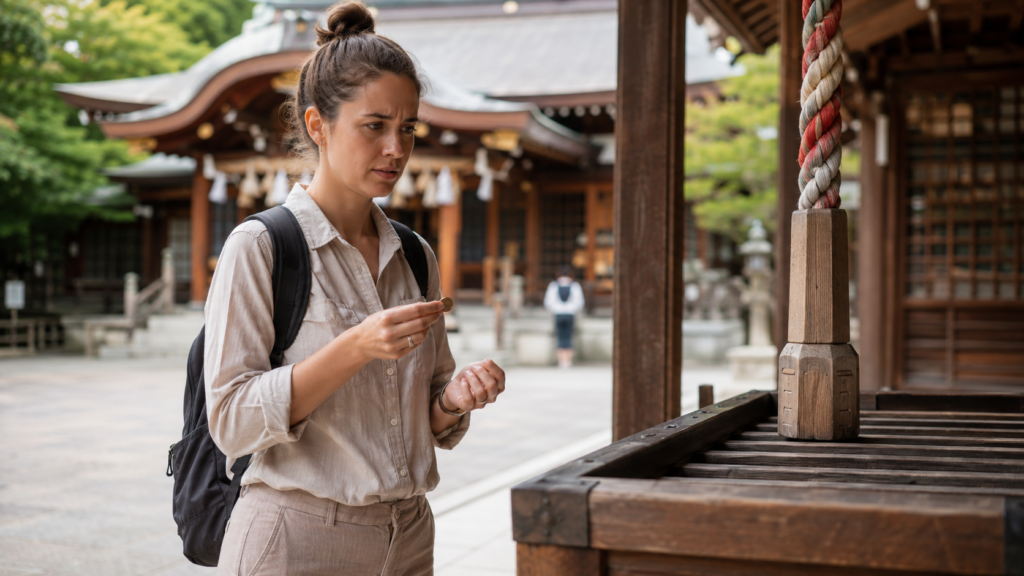
Maybe you clap once.
Maybe you accidentally clap three times.
Maybe you completely forget whether you already did the second clap.
You do not need to turn your prayer into a complicated correction exercise.
The standard practice at most shrines is two claps, but the number of claps is not identical at every shrine. The Association of Shinto Shrines specifically notes that some shrines have their own forms of worship.
One famous example is Izumo Taisha, where the official everyday worship style is:
Two bows, four claps, one bow.
Izumo Taisha itself confirms that four claps, rather than the more common two, are used when worshipping there.
So even the idea that there is one universal number of claps for every shrine in Japan is not quite true.
If you accidentally clap the wrong number of times, simply finish your prayer respectfully and continue your visit.
What If You Forget One of the Bows?
The same idea applies.
At most shrines, the traditional form begins with two deep bows and ends with one more. The Association of Shinto Shrines describes a formal bow in this context as bending deeply from the waist.
But if you accidentally bow once instead of twice, or forget the final bow until you have already stepped away, there is little value in panicking over it.
Shrine etiquette is a way of expressing respect.
It is not a choreography competition.
In fact, Samukawa Jinja tells visitors in its own worship guide that what matters is not perfect technique, but approaching the kami sincerely.
That is a useful thing to remember when visiting any shrine for the first time.
What If You Pray in the Wrong Order?
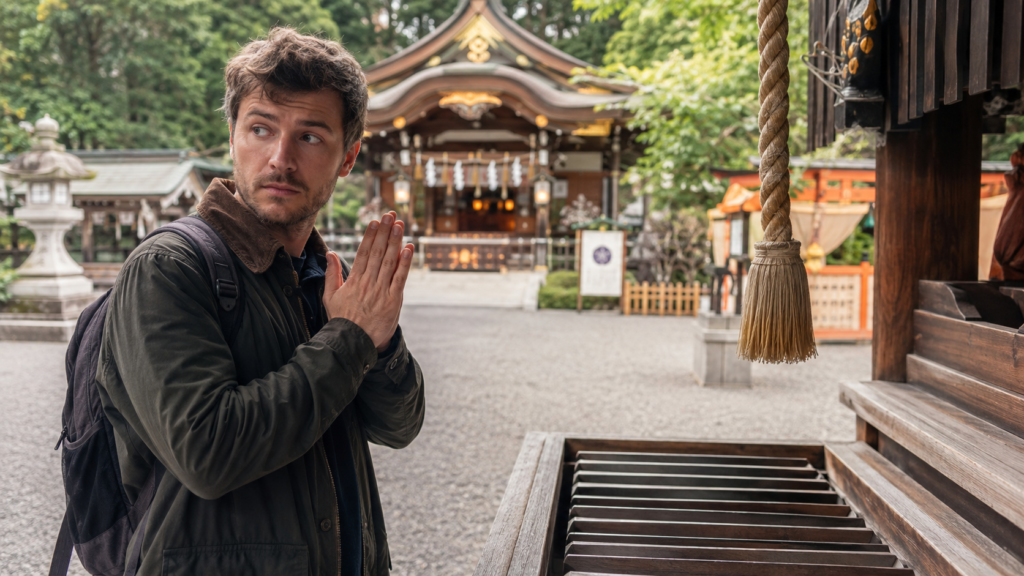
This is probably one of the easiest mistakes to make.
Perhaps you begin your prayer before clapping.
Perhaps you clap and then suddenly realize you forgot to bow first.
Perhaps you watch the person next to you and realize halfway through that you are doing something different.
You do not need to stop everything and restart from the beginning.
The official shrine guides I checked explain the traditional sequence and local variations, but they do not present shrine worship as a process in which a minor sequencing mistake requires the visitor to start over.
If you remember what comes next, simply continue.
The purpose of learning shrine etiquette is to help you approach the space respectfully—not to make you so worried about the sequence that you forget why you came.
What If You Forget to Put Money in the Offering Box?
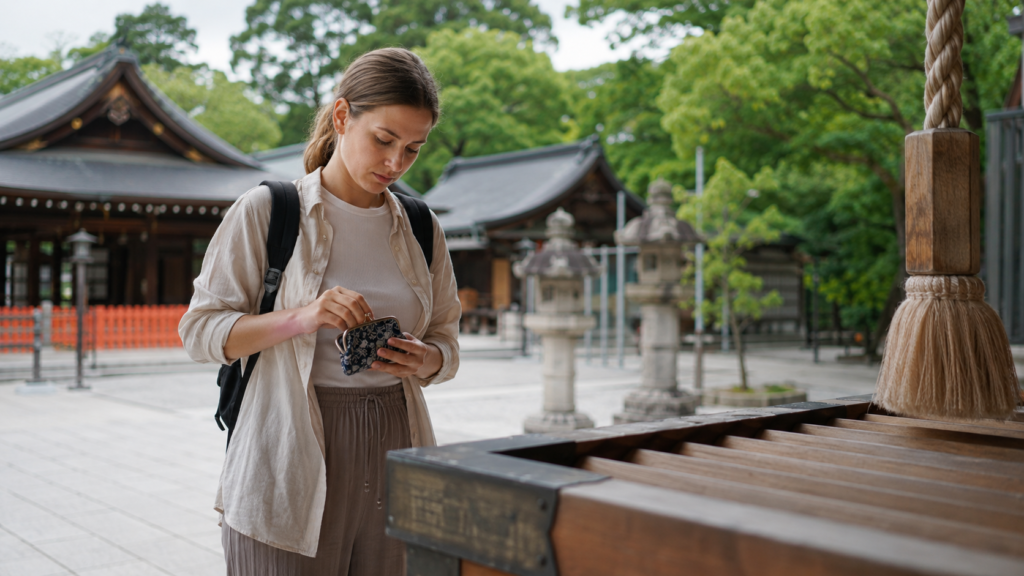
Another common worry is the saisen, or monetary offering.
You will often see people place a coin into the offering box before praying.
But you do not need to think of the coin as an admission fee for speaking to the kami.
Meiji Jingu’s official English worship guide describes putting coins into the offering box as something visitors may do before beginning the bow-and-clap sequence.
So if you reach the shrine and realize you have no coins, you do not need to abandon your visit.
You can still approach respectfully and pray.
And no, you do not need to spend the next ten minutes digging through every pocket because you are convinced that only a particular coin will work.
That is another question worth exploring separately.
What If You Forget to Ring the Bell?
Some shrines have a large bell hanging above the offering box.
Others do not.
The Association of Shinto Shrines explains that bells are found at many shrines and are traditionally rung as part of worship, with their sound connected to purification and reverence toward the kami.
If there is no bell, simply pray without one.
And if there is a bell but you forget to ring it, you can still continue with your prayer.
The bowing and clapping form does not depend on successfully completing every possible element you may encounter at every shrine.
What If You Use Temple Prayer Etiquette by Mistake?
This one happens easily in Japan because travelers often visit Shinto shrines and Buddhist temples on the same day.
At a Shinto shrine, clapping is part of the usual form of worship.
At a Buddhist temple, visitors generally pray quietly without clapping. JNTO specifically distinguishes the two practices this way in its guidance for shrine and temple visits.
So yes, you might eventually find yourself standing at a shrine with your hands quietly together before realizing:
Wait. I was supposed to clap here.
Or perhaps you clap at a Buddhist temple out of habit.
Learning the difference is useful.
Being terrified of confusing them once is not.
For a clearer explanation of how the two places differ, see:
Not Every Shrine Uses Exactly the Same Prayer Style
This point is important because many English shrine etiquette guides make the process look completely universal.
It is not.
Two bows, two claps, and one bow is the nationwide basic form, but individual shrines can have different traditions. The Association of Shinto Shrines explicitly advises visitors to follow the particular shrine’s form when one exists.
Izumo Taisha, for example, uses four claps in its everyday worship.
So when you visit a shrine:
- Look for signs explaining how to pray.
- Follow instructions provided by the shrine.
- Notice whether the shrine has a particular local custom.
- When there are no special instructions, the usual two-bows, two-claps, one-bow form is a good guide.
You do not need to arrive in Japan having memorized the customs of every shrine in the country.
Does Praying “Correctly” Matter?
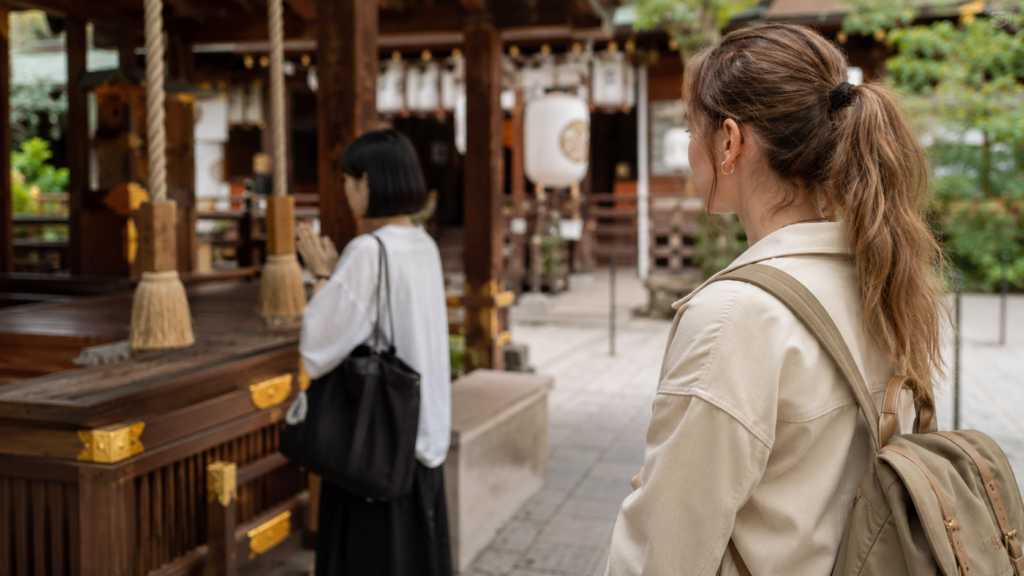
The traditional form matters because it is one way people show respect toward the kami.
The bows and claps are not meaningless tourist gestures.
The Association of Shinto Shrines explains that clapping before the kami expresses sincerity and gratitude, while bowing functions as a traditional form of respect.
But form and intention do not have to be treated as opposites.
You can learn the traditional etiquette without becoming afraid of making a mistake.
Samukawa Jinja puts the idea particularly clearly in its visitor guidance: sincere feeling is more important than perfect form.
For a first-time visitor, that may be the most useful piece of shrine etiquette to remember.
A Simple Rule for First-Time Visitors
If you forget everything else, remember this:
Watch, be respectful, and do your best.
If you lose count of your bows, continue.
If your claps are awkward, continue.
If you realize you did something in the wrong order, continue.
And if a particular shrine has instructions posted nearby, follow those.
Most importantly, do not spend the entire visit worrying about whether you look like someone who already knows what they are doing.
You came to experience a sacred place.
Give yourself enough space to actually experience it.
Visiting Shrines in Japan for the First Time?
Shrine etiquette can feel simple when you read about it at home—but much harder when you are actually standing at the shrine, wondering what to do next.
- How should you pass through a torii gate?
- How do you use the temizuya?
- What is the proper way to pray?
- Can you take photos?
And what should you know about goshuin, omamori, and common mistakes visitors sometimes make?
I created a Japanese Shrine Etiquette Guide for first-time visitors to help you understand the basic flow of a shrine visit before and during your trip.
It includes simple visual explanations of torii gate manners, temizu, prayer steps, photography etiquette, goshuin, omamori, and common mistakes to avoid.
You can keep it on your phone while traveling in Japan, so you have the basics with you when you need them.
Before Your Shrine Visit
Visiting Shrines in Japan for the First Time?
Shrine etiquette can feel simple when you read about it at home—but much harder when you are actually standing at the shrine, wondering what to do next.
And what should you know about goshuin, omamori, and common mistakes visitors sometimes make?
I created a Japanese Shrine Etiquette Guide for first-time visitors to help you understand the basic flow of a shrine visit before and during your trip.
It includes simple visual explanations of torii gate manners, temizu, prayer steps, photography etiquette, goshuin, omamori, and common mistakes to avoid.
You can keep it on your phone while traveling in Japan, so you have the basics with you when you need them.
See the Japanese Shrine Etiquette Guide on EtsyFrequently Asked Questions
What happens if I pray incorrectly at a Japanese shrine?
A small mistake does not mean you need to panic. The standard form at most shrines is two bows, two claps, and one final bow, but some shrines use different forms of worship. If you make a minor mistake, continue respectfully.
Do I need to restart my prayer if I make a mistake?
The official shrine guides reviewed for this article describe the standard prayer form but do not instruct ordinary visitors to restart the entire process after a minor mistake. Simply continue calmly.
What if I clap only once at a shrine?
Two claps are the usual practice at most Shinto shrines. If you accidentally clap once, there is no need to make the situation complicated. Continue your prayer respectfully.
Do all Japanese shrines use two bows and two claps?
No. Two bows, two claps, and one bow are the nationwide basic form, but some shrines have their own customs. Izumo Taisha, for example, officially uses two bows, four claps, and one bow for everyday worship.
Is it disrespectful if a foreign visitor does not know shrine etiquette?
Not knowing every custom is different from deliberately behaving disrespectfully. Traditional shrine etiquette is worth learning because it expresses respect toward the kami, and official shrine guidance also emphasizes sincerity rather than perfect performance.
If this is something you are worried about, see:
Is It Disrespectful to Visit a Shrine If You’re Not Shinto?
Final Thoughts
Praying at a Japanese shrine has a traditional form, but knowing that form should make your visit easier—not more stressful.
At most shrines, remember the basic rhythm:
Two bows. Two claps. Your prayer. One bow.
And remember that there are exceptions.
If you forget a bow, lose count of your claps, or suddenly realize you have done something out of order, you do not need to let that mistake take over the experience.
Learn the customs.
Follow the shrine’s own instructions when they are provided.
Then approach the space with sincerity and respect.
Perfect technique is not the only thing that makes a respectful shrine visit.
Continue Your Journey
Learning how to pray is only one part of understanding what happens during a visit to a Japanese shrine.
If you’d like to understand the traditions and objects you encounter along the way, these guides are a good place to continue your journey.
- What Is a Shinto Shrine?
- What Is Shinto?
- Who Are the Kami?
- Shrine vs Temple in Japan
- What Is a Torii Gate?
- What Is a Temizuya?
- How to Pray at a Japanese Shrine
- What Is an Omikuji?
- What Is an Omamori?
- What Is a Goshuin?
Planning a Shrine Visit?
Keep shrine etiquette close while you travel.
If you want a simple guide to check before or during your shrine visit, Jin-journey’s English PDF guide is available on Etsy.
View the Shrine Etiquette Guide