
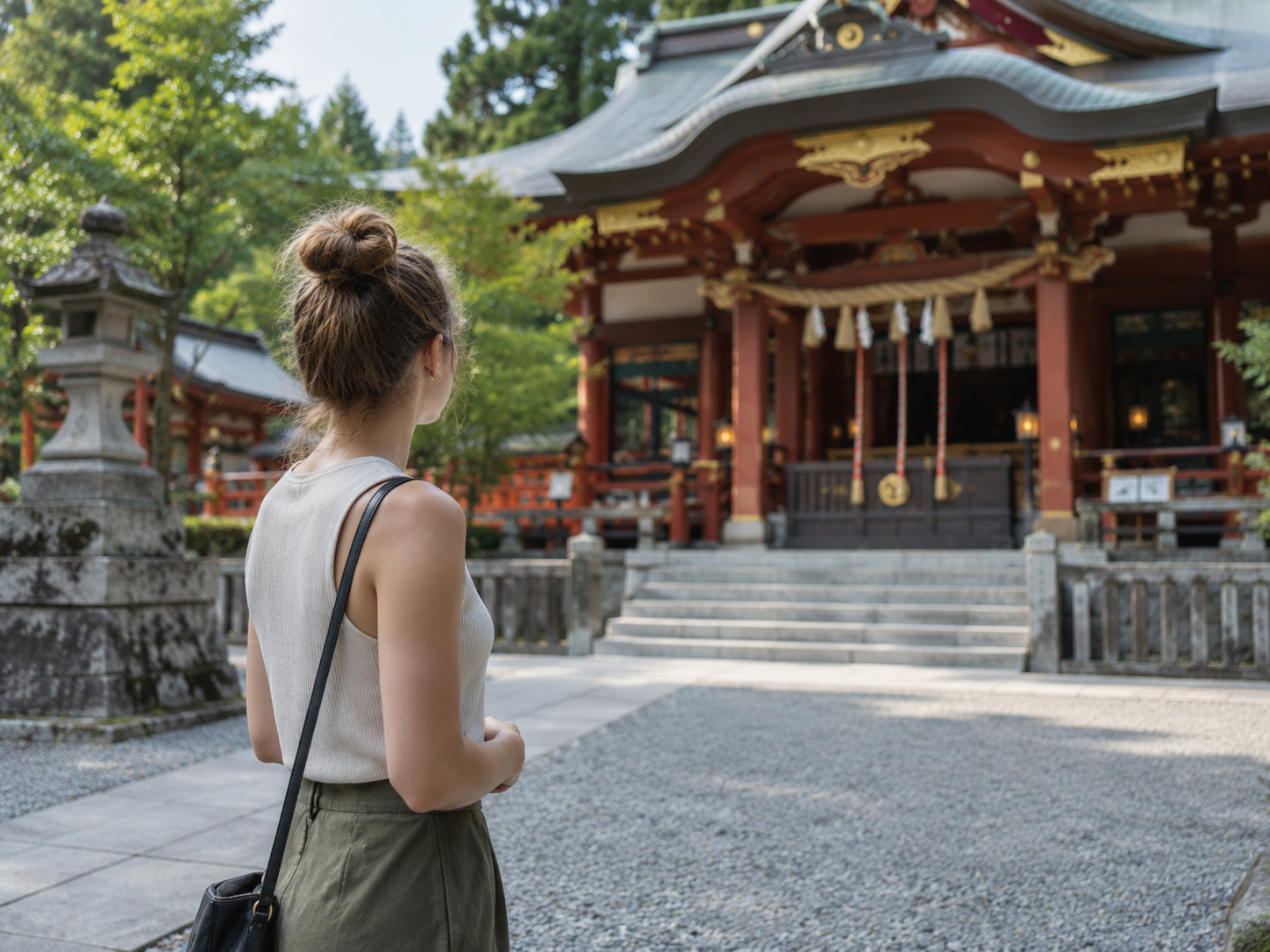
What to Wear to a Shinto Shrine in Japan: Dress Code Explained
If you are visiting a Shinto shrine in Japan, you may wonder whether you need long pants, covered shoulders, or special clothing before you enter.
The short answer is no.
For an ordinary visit to a Shinto shrine, there is generally no strict dress code. Jinja Honcho, which supports Shinto shrines across Japan, states that visitors do not have a strict dress code, while recommending modest clothing out of respect for people who come to worship.
So you do not need to change into formal clothes just because a shrine is on your sightseeing itinerary.
At the same time, a shrine is not only a tourist attraction. It is a place where people come to pay their respects to the kami and pray.
A good rule is simple:
Wear your normal travel clothes, but remember where you are.
There are manners worth following, but visiting a shrine is not an etiquette test.
Shinto Shrine Dress Code at a Glance
| Clothing | Ordinary shrine visit |
|---|---|
| Shorts | Generally fine; there is no general Jinja Honcho rule banning them |
| Sandals | Generally fine outdoors |
| T-shirt | Fine |
| Sleeveless top | No nationwide shoulders-covered rule, but avoid very revealing clothing |
| Hat | Fine around the grounds; removing it when you pray is a respectful choice |
| Long pants | Not generally required |
| Long sleeves | Not generally required |
| Formal prayer / gokito | Dress expectations may be higher; check the shrine |
Individual shrines may have their own rules, especially for formal ceremonies or access to particular buildings. If a shrine provides specific instructions, follow those rather than relying on a general guide.
Is There a Dress Code for Shinto Shrines in Japan?
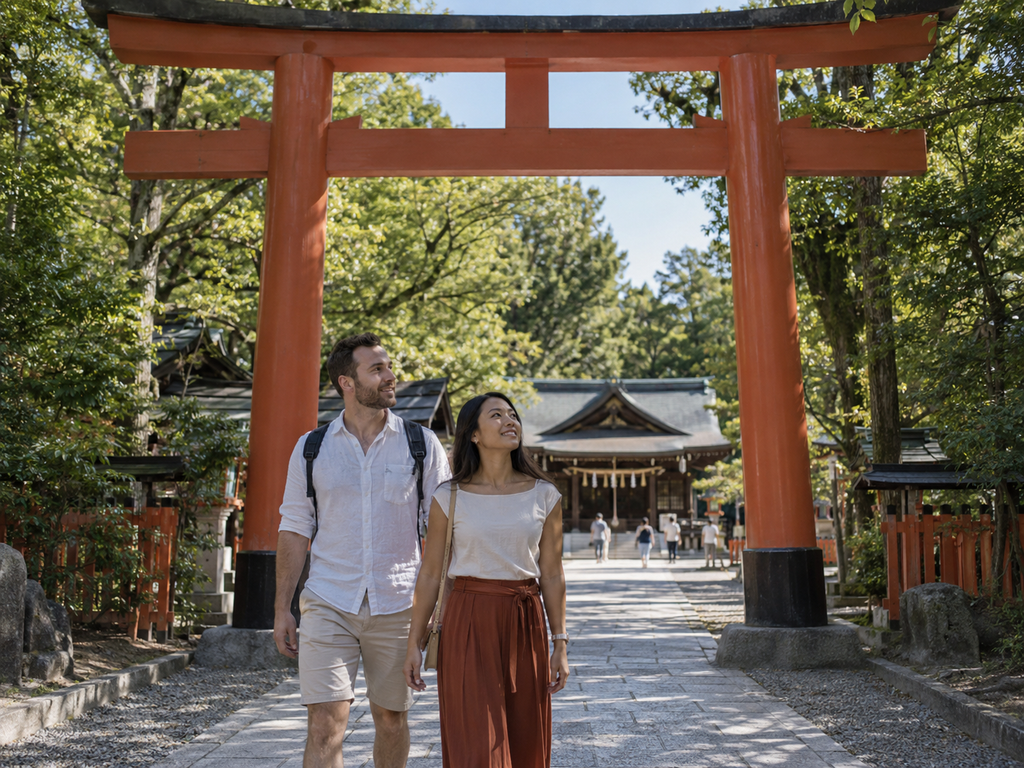
For an ordinary visitor, there is no general strict dress code.
Jinja Honcho’s English FAQ says exactly that, while recommending that visitors dress modestly out of respect for local worshippers.
The Japan National Tourism Organization gives similar advice. It says religious restrictions on clothing are not generally common in Japan, but visitors to shrines and temples should avoid overly revealing clothing and follow local signs and rules.
That distinction matters.
“Dress modestly” should not automatically be turned into an invented nationwide checklist such as:
“Your shoulders must always be covered.”
“You must wear long pants.”
“Sandals are not allowed.”
The official guidance does not establish those as universal rules for an ordinary shrine visit.
Think of the advice less as a clothing formula and more as a reminder that other people may be there to worship.
Can You Wear Shorts to a Shinto Shrine?
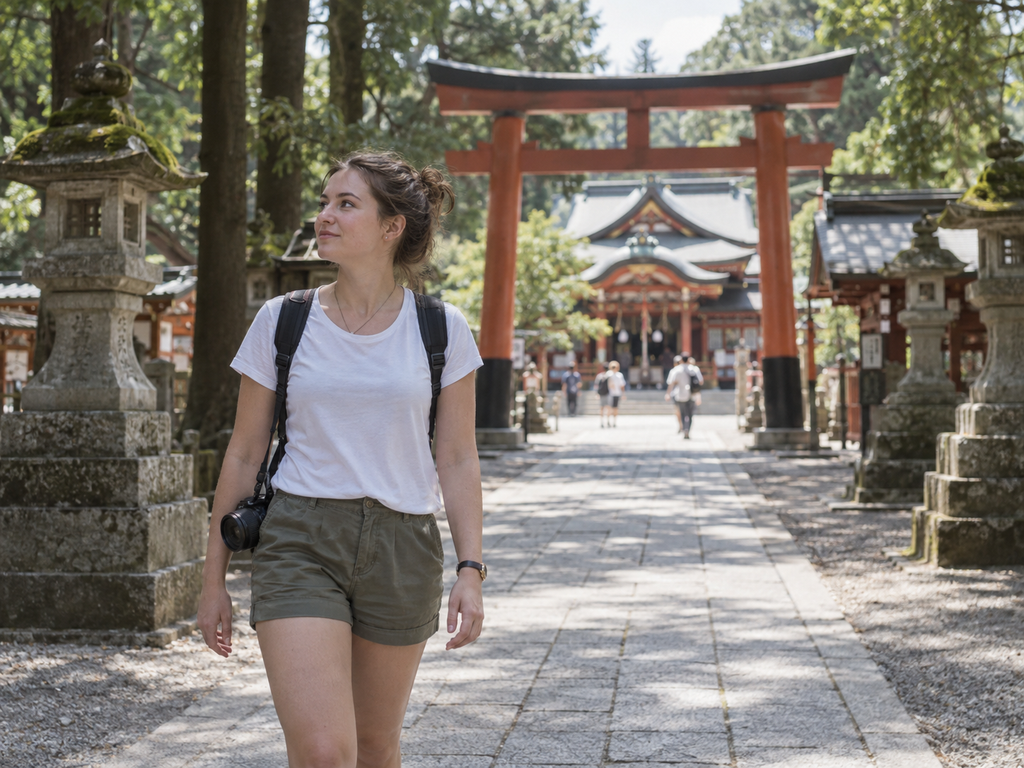
Yes, you can normally visit a Shinto shrine in shorts.
There is no general Jinja Honcho rule banning shorts for ordinary visitors.
In our own experience visiting shrines—and seeing visitors at a shrine in everyday life—it is very common to see Japanese people wearing shorts during hot weather.
That does not mean clothing never matters.
There is a difference between ordinary shorts worn while sightseeing and clothing that is extremely revealing. JNTO advises visitors to avoid overly revealing clothing at religious sites.
Some individual shrines also give more specific advice. Meiji Jingu in Tokyo, for example, asks visitors to wear clothing appropriate for worship and recommends minimizing exposed skin.
So you do not need to worry that wearing normal summer shorts automatically makes you disrespectful.
Just keep the setting in mind.
Can You Wear Sandals to a Shrine in Japan?
For an ordinary visit around the shrine grounds, there is no general Jinja Honcho rule banning sandals.
It is common for people to visit shrines as part of a day of sightseeing, and you do not need a special pair of shoes just for entering the grounds.
There is one practical exception worth knowing.
If you are taking part in a formal prayer or entering a shrine building, you may be asked to remove your shoes. Jinja Honcho notes that footwear may need to be removed at some shrines and recommends wearing socks or stockings when appropriate rather than going inside barefoot.
So if you are wearing sandals and have booked a formal ceremony, carrying a pair of socks can be useful.
For an ordinary outdoor visit, however, there is no need to avoid sandals simply because you are visiting a shrine.
Do You Need to Cover Your Shoulders or Knees?
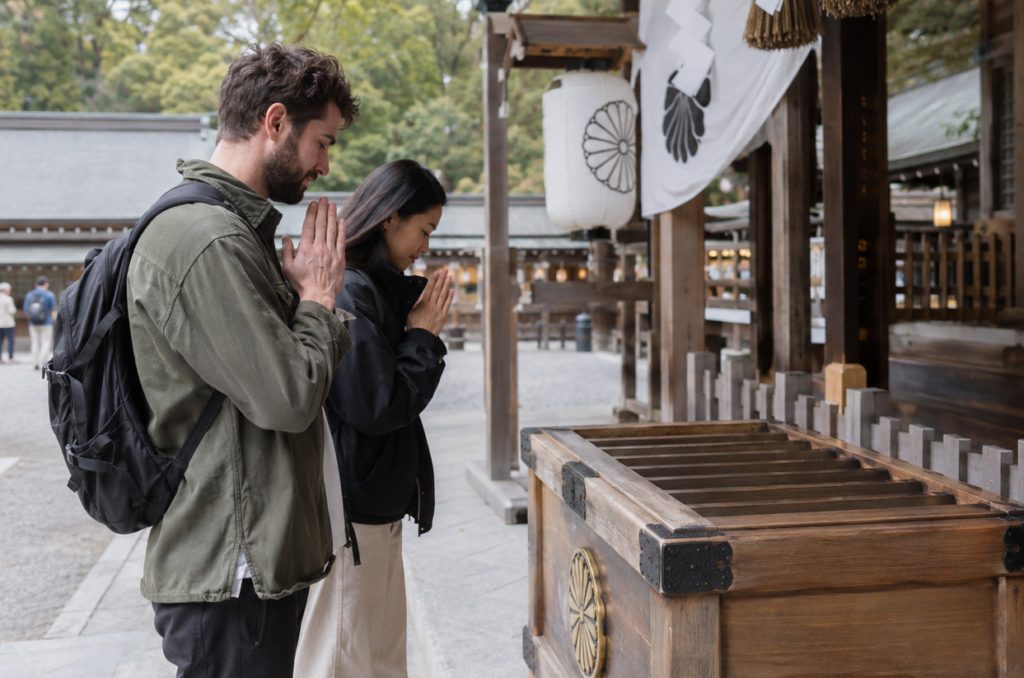
There is no general Jinja Honcho requirement that every ordinary shrine visitor cover both their shoulders and knees.
This is one area where advice for religious sites in different countries can easily become mixed together.
Japan’s official tourism guidance asks visitors to avoid clothing that is overly revealing, but it does not set a universal shoulders-and-knees rule for Shinto shrines.
Individual shrines can take a more conservative approach. As mentioned above, Meiji Jingu recommends limiting exposed skin.
So if you are wearing a normal sleeveless summer top, you do not need to assume that you have broken a nationwide shrine rule.
If your clothing is particularly revealing, covering up a little is a considerate choice.
The important distinction is between respectful advice and a universal prohibition.
They are not the same thing.
Should You Take Off Your Hat at a Shinto Shrine?
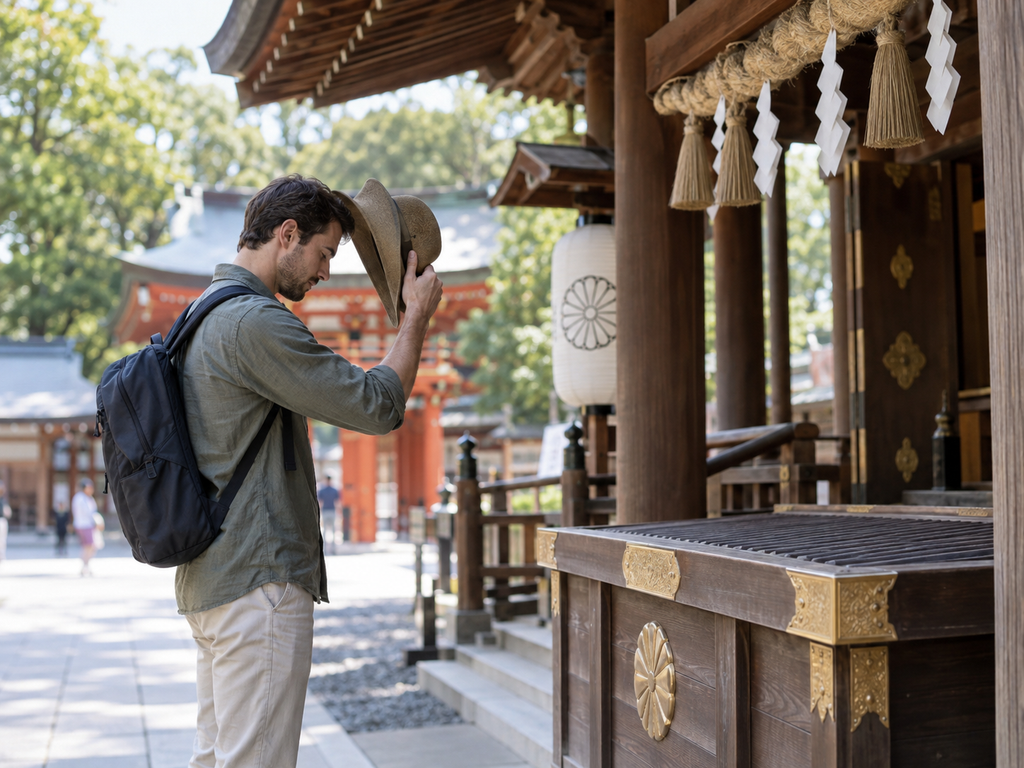
You do not necessarily need to walk around the entire shrine grounds without a hat.
On a hot day, wearing one while sightseeing can be entirely practical.
An official tourism guide from Aichi Prefecture describes removing a hat while paying respects or entering a building as something that is appreciated rather than strictly required.
In our own experience, taking your hat off when you stand in front of the shrine to pray feels more respectful.
Some people may remove it earlier. Personally, we tend to take ours off from the torii gate, but that is not something we would present as a nationwide rule.
If it is very hot, there is no reason to turn walking around the shrine grounds without a hat into another invented test of etiquette.
When it is time to stand before the shrine and pay your respects, removing it is a simple gesture you can make.
Ordinary Shrine Visit vs. Formal Prayer: The Dress Code Is Different
This is probably the most important distinction in the entire article.
Walking into a shrine, looking around, and praying from outside the worship hall is not the same situation as participating in a formal prayer ceremony.
Jinja Honcho explains that most visitors pay their respects from outside the prayer hall.
A more formal prayer ceremony is called gokito. It takes place inside the prayer hall and is performed by a Shinto priest for a particular prayer or request.
For gokito, clothing expectations can be higher.
Jinja Honcho’s English guide says that most shrines prefer participants in a gokito to be smartly dressed, giving long sleeves and trousers or skirts as examples. It also notes that a ceremony may not be possible if someone’s clothing is considered too inappropriate.
However, even here, it is better not to turn one guideline into a universal rule.
Jinja Honcho’s Japanese guidance on yakubarai, a form of ritual purification, says there is generally no specific clothing requirement for visiting, while advising people to avoid clothing that would be disrespectful and to check whether the particular shrine has its own rules.
So if you have booked a gokito, wedding-related ceremony, formal worship, or another event inside a shrine building:
check that shrine’s official guidance before you go.
That is much more reliable than following a generic list of supposed Japanese etiquette rules online.
What Should a Tourist Actually Wear to a Shrine?
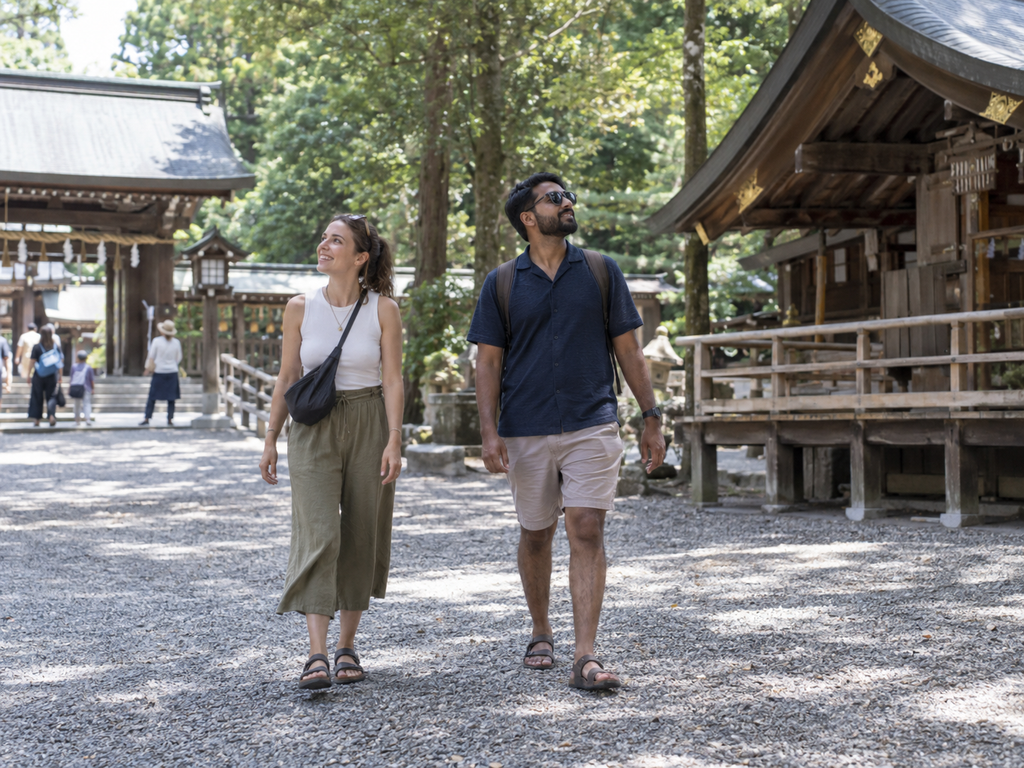
For most travelers, this is much simpler than it may sound.
If you are sightseeing in Japan and decide to visit a shrine, your normal clothes will usually be enough.
A T-shirt with shorts and comfortable shoes, for example, does not suddenly become inappropriate simply because you walk through a torii.
You also do not need to pack long sleeves and long pants specifically for every shrine you plan to visit.
Instead, ask yourself a much simpler question:
Does what I am wearing seem reasonable for visiting a place where other people have come to pray?
If the answer is yes, you probably do not need to worry.
Our own experience is similar. Everyday shrine visits are often casual, and we regularly see Japanese visitors wearing shorts or sandals, particularly in warm weather.
At the same time, when we are deliberately going to a shrine to pay our respects—or especially when taking part in something more formal—we tend to think a little more carefully about how much skin is exposed and how casual the outfit is.
That is a personal approach, not a rule for every Japanese person.
But it illustrates something useful:
The more formal the purpose of your visit, the more appropriate it is to think about your clothing.
Once you know what to wear, the next step is simply knowing what to do when you arrive.
If you are unsure how to approach the worship hall, bow, clap, or pray, our How to Pray at a Japanese Shrine guide walks you through the basic steps.
And if you plan to take pictures during your visit, it is also worth knowing where photography may be restricted and how to avoid disturbing worshippers. See Can You Take Photos at a Shinto Shrine? for a practical guide to shrine photography etiquette.
Shrine Etiquette Guide
Dress code is only one part of visiting a shrine respectfully.
This English PDF guide gives you a simple visual overview of shrine etiquette, so you can quickly review torii gate manners, temizu, prayer steps, photography, goshuin, omamori, and other basics before or during your visit.
See the Japanese Shrine Etiquette Guide on EtsyRespect Matters More Than Memorizing Extra Rules
Shrine etiquette does exist.
But that does not mean every piece of advice you encounter should be turned into another absolute rule.
For an ordinary visit, Jinja Honcho does not require special clothing. What it does emphasize is respect for a sacred place and for the people who come there to worship.
That is a much more useful way to approach a shrine than worrying about whether your shorts are a few centimeters too short or whether you have accidentally missed an unwritten dress rule.
Wear ordinary, respectful clothing.
Follow any instructions posted by the shrine.
If you are attending a formal prayer or ceremony, check whether that shrine has additional requirements.
And then focus on the reason you came.
If you are unsure what to do when you reach the worship hall, see our How to Pray at a Japanese Shrine guide.
FAQ
Can foreigners wear shorts at a Shinto shrine?
Yes. There is no general rule banning shorts for ordinary visitors to Shinto shrines. Avoid very revealing clothing, and follow any specific instructions provided by the shrine.
Are sandals allowed at Japanese shrines?
There is no general rule banning sandals on shrine grounds. If you are attending a formal prayer or entering a building, however, you may need to remove your shoes, so bringing socks can be useful.
Do women need to cover their shoulders at a shrine in Japan?
There is no nationwide Jinja Honcho rule requiring every ordinary visitor to cover their shoulders. Official tourism guidance does recommend avoiding overly revealing clothing, and individual shrines may give stricter instructions.
Do you need formal clothes for a prayer at a Shinto shrine?
Not for an ordinary visit and prayer from outside the worship hall. A formal gokito ceremony may have higher dress expectations, so check the individual shrine before attending. Jinja Honcho says most shrines prefer smart clothing for gokito.
Before Your Shrine Visit
You know what to wear — now keep the rest of the basics with you.
Shrine etiquette does not need to feel complicated. A little context can help you visit with confidence while still remembering that you are entering a place of worship.
Jin-journey’s English shrine etiquette PDF gives first-time visitors a simple visual guide to torii gate manners, temizu, prayer steps, photography etiquette, goshuin, omamori, and common mistakes to avoid.
See the Shrine Etiquette Guide on EtsyContinue Your Journey
Knowing what to wear is only one small part of visiting a Japanese shrine.
If you would like to understand more of what you see and experience there, continue with these guides: