
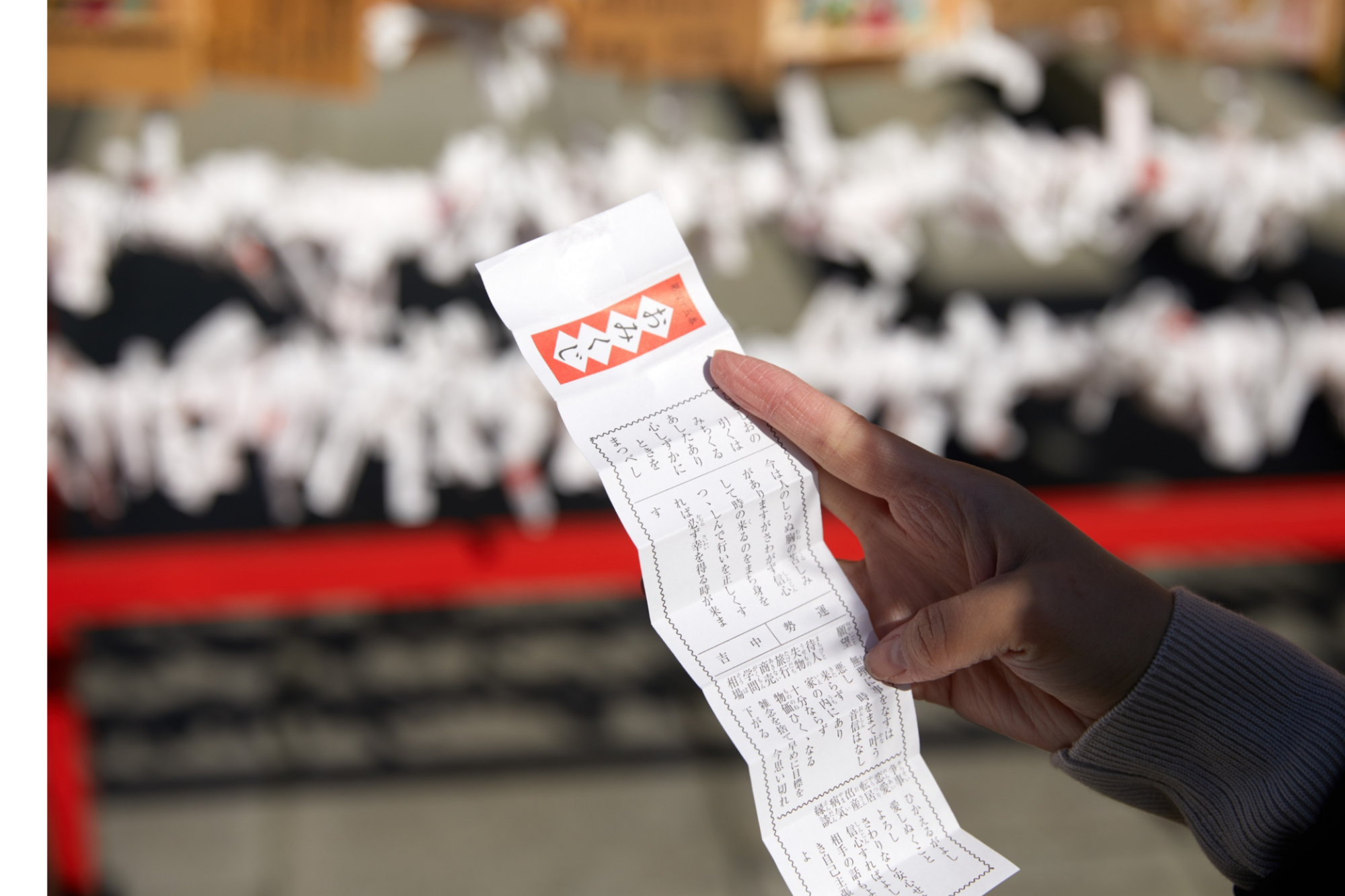
What Is Omikuji? Meaning, Fortune Rankings & How to Read Japanese Fortune Slips
If you visit a Shinto shrine or Buddhist temple in Japan, you may notice small paper slips tied in rows to wooden racks or strings.
These are omikuji—Japanese fortune slips that give an overall fortune, often together with guidance about love, health, travel, study, work, money, and other parts of life.
You may receive Daikichi (大吉) and feel very lucky.
Or you may unfold the paper and find Kyo (凶) staring back at you.
But the large fortune written at the top is only part of the omikuji.
The smaller sections underneath are often just as important.
This guide explains what omikuji are, how to draw one, how Japanese fortune rankings work, what the different sections mean, and what to do if you receive bad luck.
And importantly, there is no single nationwide ranking or rule for every omikuji in Japan.
Each shrine and temple may do things a little differently.
If you are still learning the difference between the two places, read Shrine vs Temple in Japan before your visit.
What Is Omikuji?
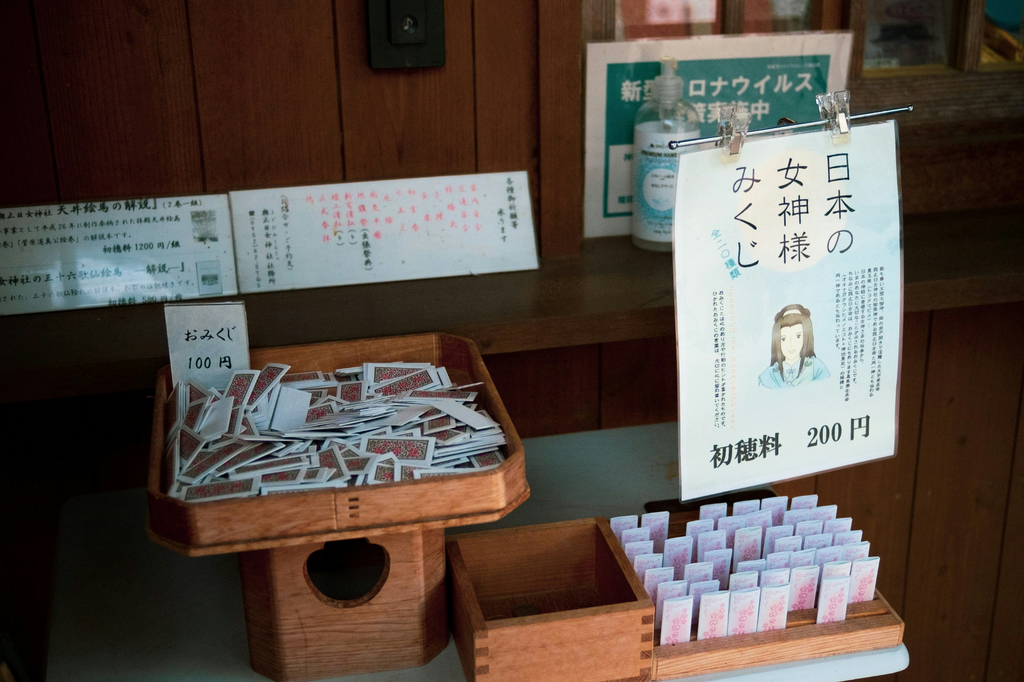
Omikuji (おみくじ) are fortunes drawn at shrines and temples in Japan.
They usually contain two main kinds of information:
- an overall level of fortune, such as Daikichi (大吉) or Kyo (凶)
- more specific advice about different parts of your life
Depending on the omikuji, you may see guidance about:
- Wishes
- Love
- Marriage
- Health
- Travel
- Business
- Study
- Money
- Lost items
- Someone you are waiting for
Some omikuji also contain poems, traditional expressions, or longer messages intended to be read as guidance.
So although many people immediately look for the large 吉 or 凶 on the paper, that is not necessarily the most important part.
The rest of the message matters too.
Is Omikuji Really Predicting Your Future?
Omikuji does tell your fortune.
But it is better not to think of it as a fixed prediction saying:
“This will definitely happen.”
Traditionally, the message can also be read as guidance for how to move forward.
A good fortune does not necessarily mean that everything will succeed without effort.
And a bad fortune does not mean that something terrible is guaranteed to happen.
An omikuji may instead warn you to be patient, reconsider a decision, take better care of yourself, or wait for the right time.
That is why simply checking whether you received good luck or bad luck and ignoring the rest of the paper misses much of the experience.
A Tradition Rooted in Japanese Life
The use of lots to seek guidance has a long history in Japan.
In earlier times, lots could be used when seeking divine guidance for important decisions.
By the Edo period, omikuji resembling the personal fortunes familiar today had become part of everyday religious practice.
Today, people may draw omikuji:
- during a normal shrine or temple visit
- while traveling
- before an important event
- when they have something on their mind
- during the New Year season
One of the most popular times to draw one is during Hatsumode, the first shrine or temple visit of the New Year.
For many people in Japan, drawing an omikuji at Hatsumode is simply part of the New Year experience.
You pray.
You draw your fortune.
Everyone opens theirs at once.
And someone in the group inevitably gets very excited about Daikichi—or very quiet after seeing Kyo.
How to Draw Omikuji in Japan
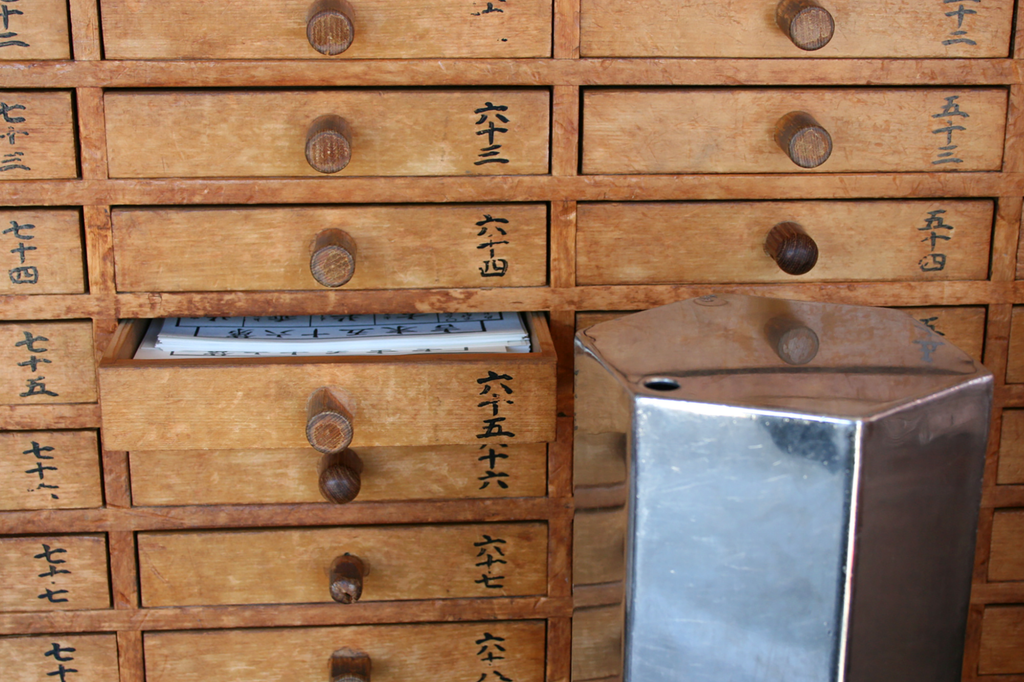
There is no single system used everywhere.
The method depends on the shrine or temple.
Step 1: Find the Omikuji Area
Look around the shrine or temple office, designated omikuji area, or signs near the grounds.
The amount required is usually displayed nearby.
Simple omikuji often cost only a few hundred yen, but the amount varies depending on the location and type.
Some places are completely self-service.
Step 2: Draw Your Fortune
You may encounter several different systems.
For example, you might:
- take a folded paper directly from a box
- shake a container and draw a numbered stick
- receive the paper corresponding to that number
- choose an omikuji from a themed display
- use a mechanical or vending-style system
With the traditional numbered-stick style, you shake the container until one stick appears.
The number on that stick corresponds to your omikuji.
Follow the instructions at that particular shrine or temple rather than worrying about one universal method.
Step 3: Read the Entire Omikuji
First, you will probably notice the overall fortune.
But do not stop there.
Read the other sections too.
They may contain much more useful advice than the ranking itself.
How to Read an Omikuji
This is where omikuji can become confusing for travelers.
You may understand that 大吉 means Daikichi.
Great.
Then you look underneath it and find an entire paper filled with Japanese words.
What are all those sections?
The exact layout differs by omikuji, but here are some common terms you may encounter.
| Japanese | Reading | What It Refers To |
|---|---|---|
| 願望 | Ganbo / Negai-goto | Your wish or hope |
| 待人 | Machibito | A person or news you are waiting for |
| 失物 | Usemono | Something lost |
| 旅行 | Ryoko / Tabi | Travel |
| 商売 | Shobai / Akinai | Business or commerce |
| 学問 | Gakumon | Study or academics |
| 恋愛 | Ren’ai | Romantic relationships |
| 縁談 | Endan | Marriage prospects or matchmaking |
| 病気 | Byoki / Yamai | Illness or health |
| 転居 | Tenkyo | Moving house |
| 争事 | Arasoigoto | Disputes or conflicts |
| 金運 | Kin’un | Financial luck |
You will not necessarily find all of these on every omikuji.
Some use different wording.
Others focus on only a few areas.
What Does 待人 — Machibito Mean?
This one can be especially confusing.
Machibito (待人) literally refers to someone you are waiting for.
It does not necessarily mean a romantic partner.
Depending on the context, it may refer more broadly to a person, contact, news, or arrival you are hoping for.
What Does 願望 — Ganbo Mean?
Ganbo (願望) refers to a wish or something you hope to achieve.
The message might tell you that the wish will be fulfilled, that it will take time, or that you should reconsider how you are pursuing it.
Why You Should Read More Than the Fortune Ranking
Imagine that you receive Daikichi.
Sounds perfect.
But the travel section might still tell you to be cautious.
Or your business fortune may advise patience.
The overall fortune and individual sections do not always say exactly the same thing.
That is why an omikuji is more interesting than a simple:
Lucky / Unlucky
result.
Omikuji Fortune Rankings: From Daikichi to Kyo
This is one of the most confusing parts of omikuji.
There is no single fortune ranking used by every shrine and temple in Japan.
The number of levels can vary.
Their names can vary.
And even their order may vary.
One commonly seen example is:
大吉 → 吉 → 中吉 → 小吉 → 末吉 → 凶
Or:
Daikichi → Kichi → Chukichi → Shokichi → Suekichi → Kyo
Common Omikuji Fortune Levels
| Japanese | Reading | General Meaning |
| 大吉 | Daikichi | Great blessing / excellent fortune |
| 吉 | Kichi | Good fortune |
| 中吉 | Chukichi | Medium blessing |
| 小吉 | Shokichi | Small blessing |
| 末吉 | Suekichi | A more modest level of good fortune |
| 凶 | Kyo | Bad fortune / misfortune |
| 大凶 | Daikyo | Great misfortune; used only by some places |
You may also encounter other categories such as:
- 半吉 — Hankichi
- 末小吉 — Sueshokichi
- 小凶 — Shokyo
And some omikuji do not use a good-to-bad ranking system at all.
So if your fortune does not appear in a standard chart online, that does not mean anything is wrong.
It may simply be using a different system.
Is Kichi Better Than Chukichi?
Sometimes.
But there is no answer that applies to every omikuji in Japan.
In one commonly used ordering:
Daikichi → Kichi → Chukichi → Shokichi → Suekichi → Kyo
So Kichi ranks above Chukichi.
However, rankings vary by shrine and temple.
You may find other systems that arrange the categories differently.
If the location provides its own explanation, use that rather than an online ranking from somewhere else.
This is one of the most important things to remember about omikuji:
There is no universal Japanese omikuji ranking.
Is Daikichi the Best Omikuji?
In many common ranking systems, Daikichi (大吉) is the highest level of fortune.
It is usually translated as something like:
- Great blessing
- Excellent luck
- Great fortune
Getting one is certainly a nice moment.
But even with Daikichi, read the rest of the paper.
A very good overall fortune does not mean every individual section will tell you to rush ahead without caution.
What Does Kyo Mean?
Kyo (凶) is an unfavorable fortune.
Seeing it can be disappointing—especially if everyone else in your group just pulled out Daikichi.
But Kyo should not be treated as a guarantee that something bad is about to happen.
Read the advice beneath it.
The message may tell you to:
- wait
- avoid rushing
- be more careful
- reconsider a decision
- pay attention to your health
- control your emotions
- continue patiently
The important part is what you do with the guidance.
What Should You Do If You Get Bad Luck?
First:
Do not panic.
A bad omikuji does not mean your trip is ruined.
It does not mean something terrible has now been scheduled for later.
And it certainly does not mean you need to cancel everything you planned for the day.
Instead, read the complete fortune.
1. Read the Individual Sections
Your overall result may be Kyo, but some individual areas may still contain useful or encouraging guidance.
Pay attention to what the paper actually says.
2. Treat It as Advice, Not a Sentence
If the omikuji warns you against rushing into something, perhaps that is the part worth remembering.
The point is not simply:
“I got bad luck.”
It is:
“What is this telling me to be careful about?”
3. Decide Whether to Keep It or Tie It
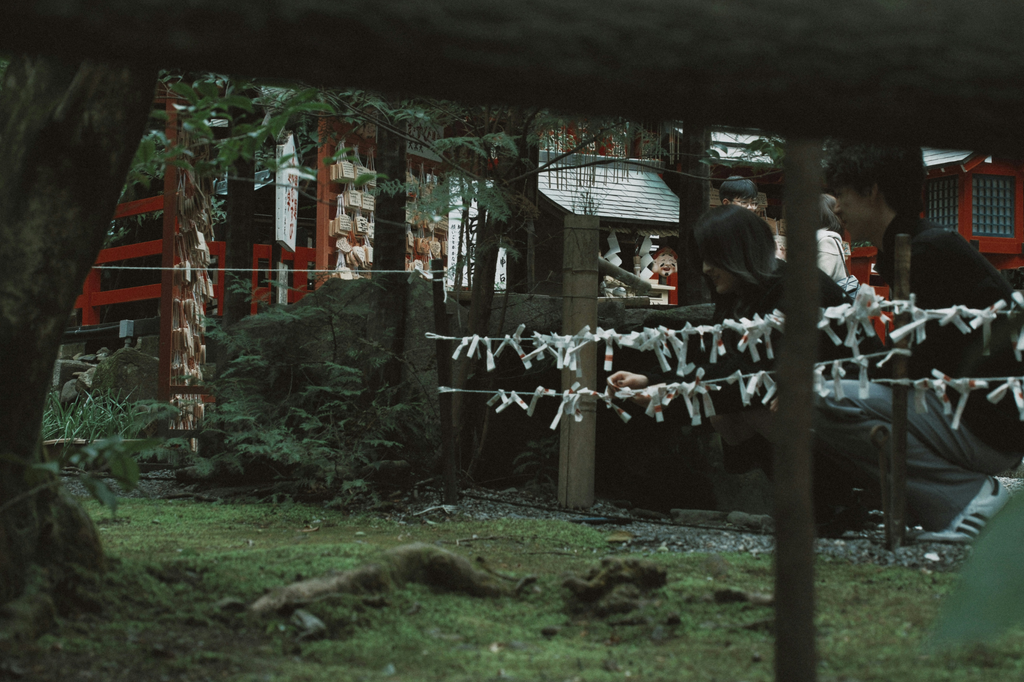
You may see many bad fortunes tied to racks at shrines and temples.
But bad fortune does not universally mean that you must tie your omikuji there.
Depending on the place and custom, you may tie it at the designated area or take it home and keep the message.
Follow any instructions given by the shrine or temple.
Should You Keep Your Omikuji or Tie It?
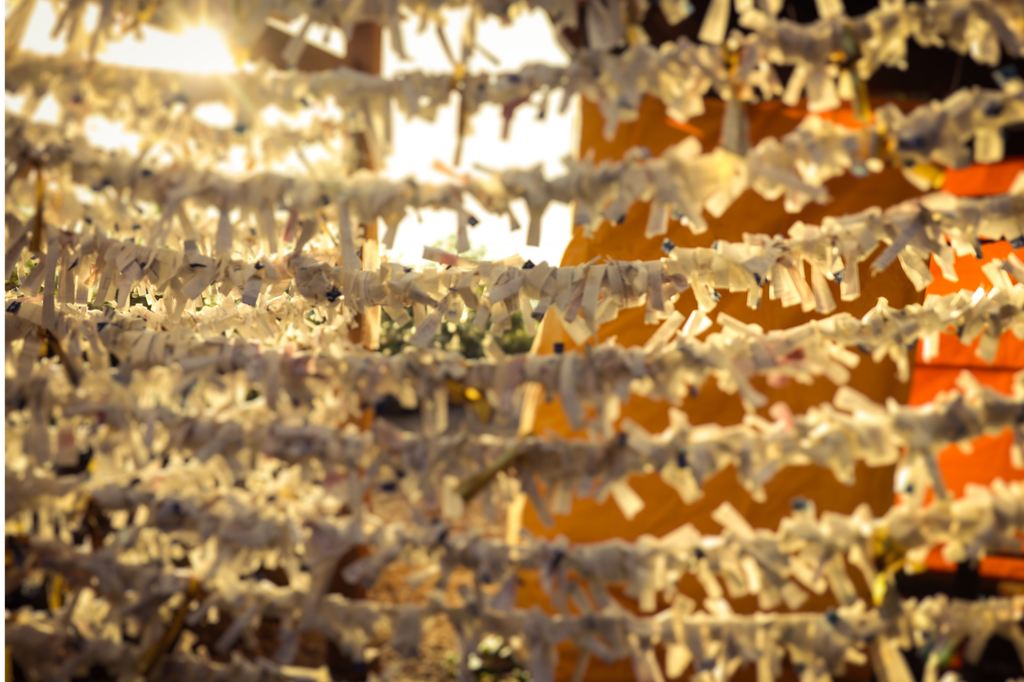
There is a very common explanation online:
Good fortune = take it home
Bad fortune = tie it at the shrine
That is a useful way to understand one familiar custom.
But it is not a nationwide rule.
Can You Take an Omikuji Home?
Yes.
Omikuji may be taken home.
Some people keep theirs:
- in a wallet
- in a bag
- somewhere safe at home
- as a reminder of the advice written on it
Keeping it allows you to read the message again later.
Can You Tie a Good Omikuji?
Depending on the location, you may also be allowed to tie an omikuji regardless of whether it is good or bad.
Again, check the local instructions.
Where Should You Tie an Omikuji?
Only use a designated omikuji rack, string, or tying area.
Do not automatically tie your paper to a tree.
Even if you have seen photos of omikuji tied to branches, some shrines specifically provide racks to prevent damage to trees.
If there is a designated place, use it.
Omikuji and Omamori Are Different
Omikuji and omamori are both commonly found at Japanese shrines, but they serve different roles.
An omikuji gives you a fortune and guidance at that moment.
An omamori is a protective charm associated with a particular prayer or wish and is usually carried with you.
For example, there are omamori for:
- safe travel
- health
- study
- relationships
- traffic safety
- protection from misfortune
If you would like to understand the difference in more detail, read What Is an Omamori?.
Shrine vs Temple Omikuji: Are They Different?
Both Shinto shrines and Buddhist temples offer omikuji.
There is no need for travelers to choose one because one is supposedly more concerned with love, health, everyday luck, karma, or any other particular subject.
That would be too simple.
The format and content depend much more on the individual shrine, temple, and type of omikuji.
Some may use traditional poems.
Some may have many fortune levels.
Some may have only a few.
Some may focus on love or another particular theme.
Some do not even use the familiar Daikichi-to-Kyo ranking.
If you want to understand the larger difference between the religious traditions and places themselves, see Shrine vs Temple in Japan.
Not Every Omikuji Has Daikichi or Kyo
A row of rankings from Daikichi to Kyo may be the image most people have of omikuji.
But omikuji can take many forms.
For example, some focus on poems or words of guidance rather than assigning you a good-or-bad fortune at all.
This is another reason not to assume that every omikuji in Japan follows the same rules.
The individual shrine or temple decides how its omikuji works.
Unique and Modern Omikuji in Japan
Traditional paper fortunes are still common, but omikuji can also be surprisingly creative.
Depending on where you visit, you may find:
- Love omikuji
- Themed omikuji
- Seasonal designs
- Omikuji inside small figurines
- Animal-shaped omikuji
- Mechanical omikuji
- Multilingual omikuji
- English-language fortunes
Some travelers end up remembering the omikuji itself almost as much as the result.
But whether it arrives in a simple folded sheet of paper or inside a tiny ceramic animal, the basic idea is similar:
You receive a message.
Then you decide what to take from it.
Can Tourists Draw Omikuji in Japan?
Yes.
Omikuji are commonly available to visitors at shrines and temples, and you do not need to be able to read Japanese to try the experience.
However, a few things can make it easier.
Look for English Omikuji
Some popular shrines and temples offer English or multilingual versions.
Not every location does.
If there is a choice between Japanese and English, it will usually be indicated nearby.
Use a Translation App If Necessary
If the omikuji is only in Japanese, a camera translation app can help you identify the main sections.
Traditional language, poetry, and religious expressions may not translate perfectly, so treat automatic translations as assistance rather than a definitive interpretation.
Carry Some Cash
Payment methods vary.
Many omikuji are still simple self-service systems using coins or cash, so it is useful to have some with you when visiting shrines and temples.
Follow the Instructions at That Location
There is no need to memorize one perfect omikuji procedure before your trip.
Look at the signs.
Watch how the system works.
And if you are unsure, ask the staff when possible.
Omikuji Etiquette for Visitors
You do not need complicated knowledge to draw an omikuji respectfully.
A few simple points are enough:
- Follow the instructions at the shrine or temple
- Pay the indicated amount
- Return numbered sticks if the system requires it
- Tie your paper only in designated areas
- Do not remove or read other people’s tied omikuji
- Do not damage trees by tying paper where it is not permitted
- Respect any photography rules
- Avoid blocking the omikuji area while translating or taking photos
The most important thing is not performing everything perfectly.
It is remembering that you are participating in a custom inside a religious and cultural space.
If you are unsure about shrine etiquette in general, see How to Pray at a Japanese Shrine.
Can You Draw Omikuji More Than Once?
There is no single rule followed by every shrine.
Some shrines allow people to draw more than one omikuji when they are asking about different matters.
Others encourage you to take the first result seriously rather than repeatedly drawing until you receive a fortune you prefer.
So drawing again is not automatically forbidden.
But repeatedly trying to replace:
Kyo.
Kyo again.
Shokichi.
Still not Daikichi.
One more.
rather misses the point.
If you draw an omikuji, read what it says before deciding that you need another answer.
Omikuji FAQ
What does omikuji mean?
Omikuji are Japanese fortunes drawn at Shinto shrines and Buddhist temples.
They usually provide an overall fortune together with advice about different parts of life.
How much does an omikuji cost?
The amount varies by shrine, temple, and type of omikuji.
Simple omikuji are commonly inexpensive and are often around ¥100–¥300, while special or themed versions may differ.
Always check the amount displayed at the location.
Is Daikichi the best fortune?
In many commonly used omikuji systems, Daikichi (大吉) is the highest fortune.
However, not every shrine or temple uses the same ranking system, and some omikuji do not use fortune rankings at all.
Which is better, Kichi or Chukichi?
There is no universal answer.
In one common ranking, Kichi (吉) is placed above Chukichi (中吉).
Other omikuji may use a different order.
Check the system used by the shrine or temple where you received it.
Is Kyo very bad?
Kyo (凶) is an unfavorable fortune, but it does not mean that something terrible will definitely happen.
Read the detailed advice and treat it as guidance about what to be careful of.
Should I tie my omikuji if I get bad luck?
You can tie it at a designated place if the shrine or temple allows it, but there is no nationwide rule saying every bad fortune must be left behind.
Taking it home is also acceptable at many shrines.
Can I take a good omikuji home?
Yes.
Many people keep their omikuji so that they can read the advice again later.
Can foreigners draw omikuji?
Yes.
Visitors to Japan commonly draw omikuji at shrines and temples.
Some locations also provide English or multilingual versions.
Can I draw omikuji more than once?
Practices differ.
Some shrines allow multiple omikuji for different questions, while others encourage visitors to value the first fortune they receive.
Repeatedly drawing only because you dislike the result is generally not the most meaningful way to approach the custom.
Are shrine and temple omikuji different?
Both shrines and temples offer omikuji, but there is no simple rule saying that shrine fortunes cover one type of subject and temple fortunes another.
The design, wording, rankings, and method depend on the individual location.
What should I do with an old omikuji?
There is no single nationwide disposal rule for every omikuji.
If you kept yours and later want to return it, check whether the shrine or temple accepts omikuji at its designated return area.
If you are unsure, ask the location rather than assuming that every collection box accepts them.
A Small Fortune With More Than One Answer
The first thing everyone looks for on an omikuji is usually obvious.
Daikichi(大吉)?
Kichi(吉?)
Kyo(凶!?)
But that single character is not the whole fortune.
The smaller words underneath may tell you to wait.
To be careful.
To keep studying.
To reconsider something.
Or simply to continue as you are.
That is what makes omikuji more interesting than a piece of paper telling you whether you are lucky today.
You draw it in a few seconds.
But sometimes one small line stays in your mind long after you leave the shrine.
Continue Your Journey
Omikuji is only one small part of visiting a Japanese shrine.
If you would like to understand more of what you see and experience there, continue with these guides: