
What If You Can’t Read the Japanese on an Omamori?
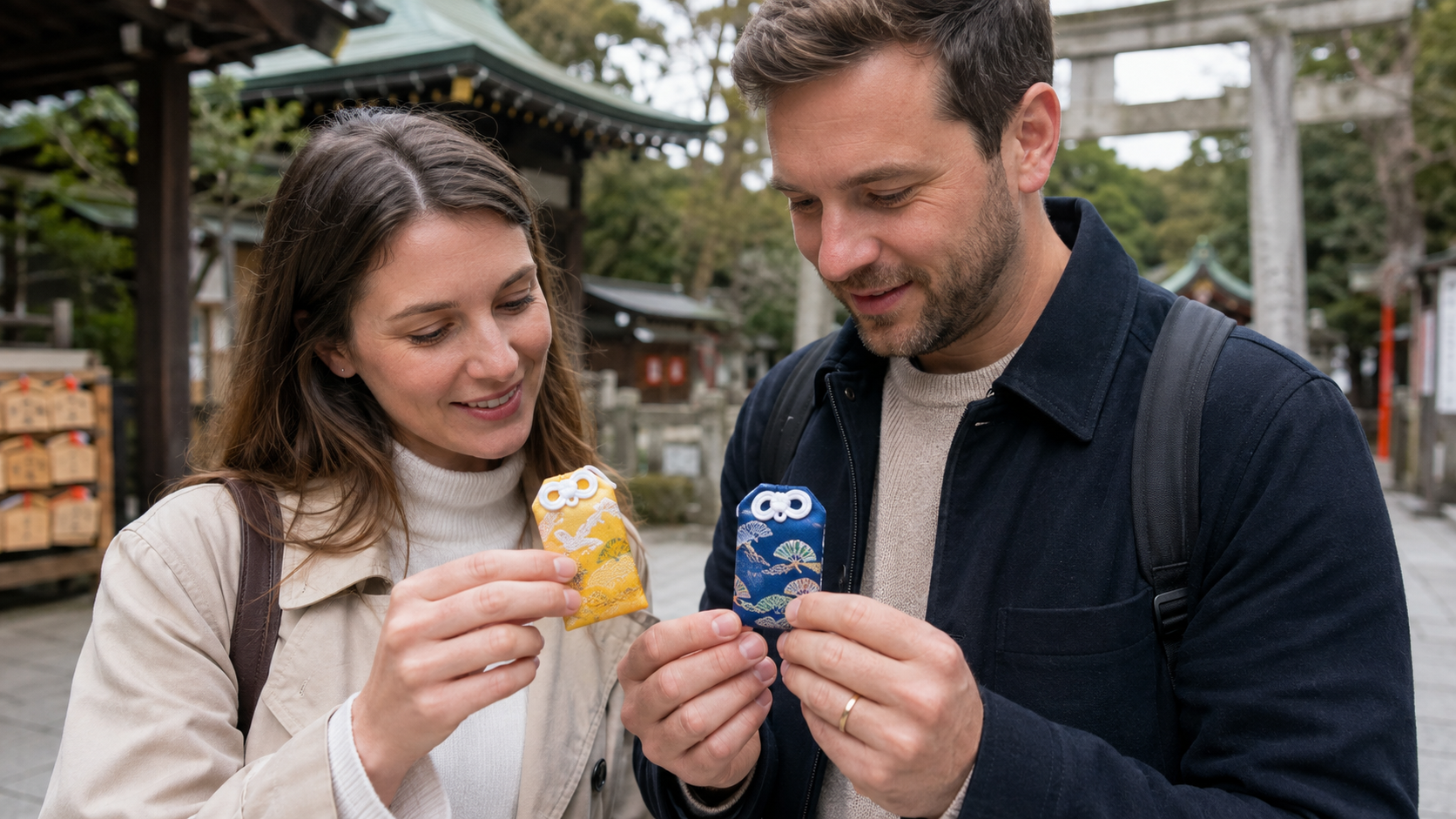
You are standing in front of a shrine office in Japan.
There are rows of beautiful omamori.
Red ones.
Blue ones.
Gold embroidery.
Tiny ones.
Large ones.
You find one you like—but almost everything is written in Japanese.
Is it for travel safety?
Good health?
Love?
Passing an exam?
And even if you manage to translate the word “health,” that may not tell you everything.
Is it for general well-being?
Recovery from illness?
Longevity?
So what should you do if you cannot read the Japanese on an omamori?
The good news is:
You do not need to speak or read Japanese fluently to choose an omamori.
But understanding what kind of wish you are looking for can make the experience much easier.
Because omamori are often more specific than they first appear.
Omamori Are Made for Different Wishes
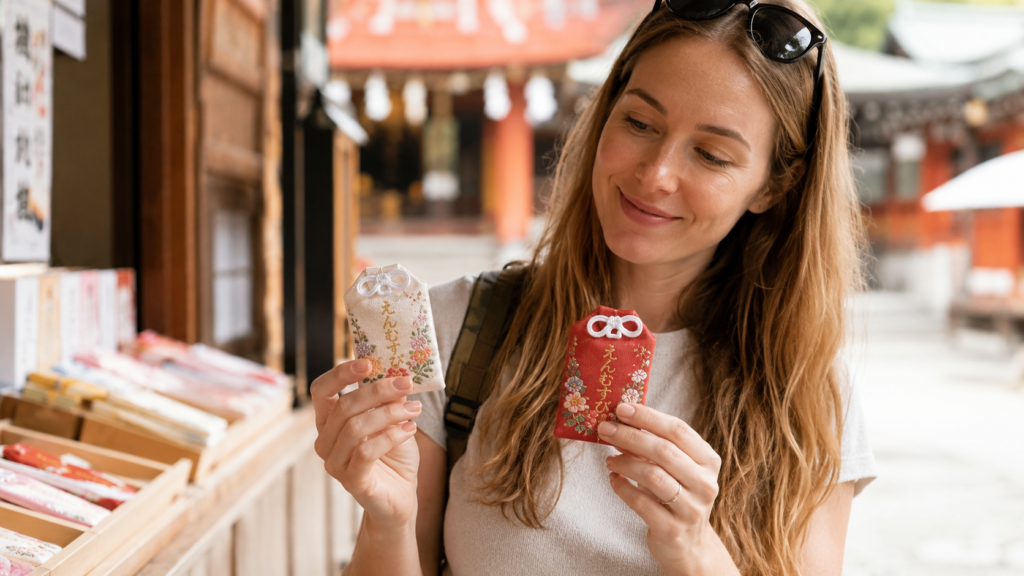
Omamori are not all interchangeable.
Different omamori are associated with different prayers, forms of protection, and wishes.
Official shrine examples include omamori and prayers connected with health, recovery from illness, academic success, passing examinations, traffic safety, relationships, safe childbirth, business prosperity, protection from misfortune, and longevity.
So when you look at a shrine office filled with different omamori, the Japanese wording often tells you what each one is intended for.
If you are new to the custom itself, What Is an Omamori? explains what omamori are and how they are traditionally treated.
“Health” Does Not Always Mean Just One Omamori
This is where choosing an omamori becomes more interesting.
You might think:
“I want a health omamori.”
But there may be several different wishes connected with health.
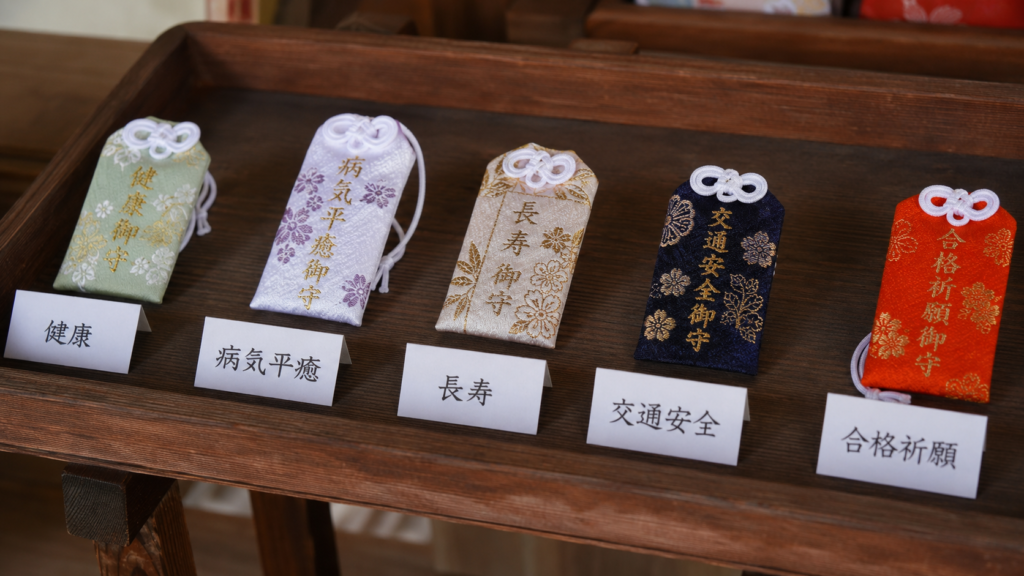
For example, you may encounter wording for:
General health
健康 — kenko
Recovery from illness
病気平癒 — byoki heiyu
Longevity
長寿 — choju
or prayers connected with long life.
These are related, but they are not exactly the same wish.
Shrines themselves may distinguish between health recovery, physical safety, healing from illness, and longevity. Samukawa Jinja, for example, lists health recovery, physical safety, recovery from illness, recovery from injury, mental stability, and longevity within its health-related blessings.
So translating everything as simply “health” can hide useful differences.
Relationship Omamori Can Be More Specific Too
The same thing happens with relationship-related wishes.
Many international visitors recognize:
縁結び — enmusubi
This is often translated as “love” or “matchmaking.”
But en is broader than romance alone. It refers to connections and relationships.
You may also encounter:
良縁 — ryoen
or
良縁祈願 — ryoen kigan
which expresses a wish for good connections or a good relationship.
Depending on the shrine, relationship-related prayers may include romantic relationships, family harmony, human relationships, or other meaningful connections. Samukawa Jinja, for example, groups enmusubi together with family harmony and improvement in human relationships.
So if you simply see the word “love” in a translation app, you may still be missing some of the nuance.
Common Japanese Words You May See on Omamori
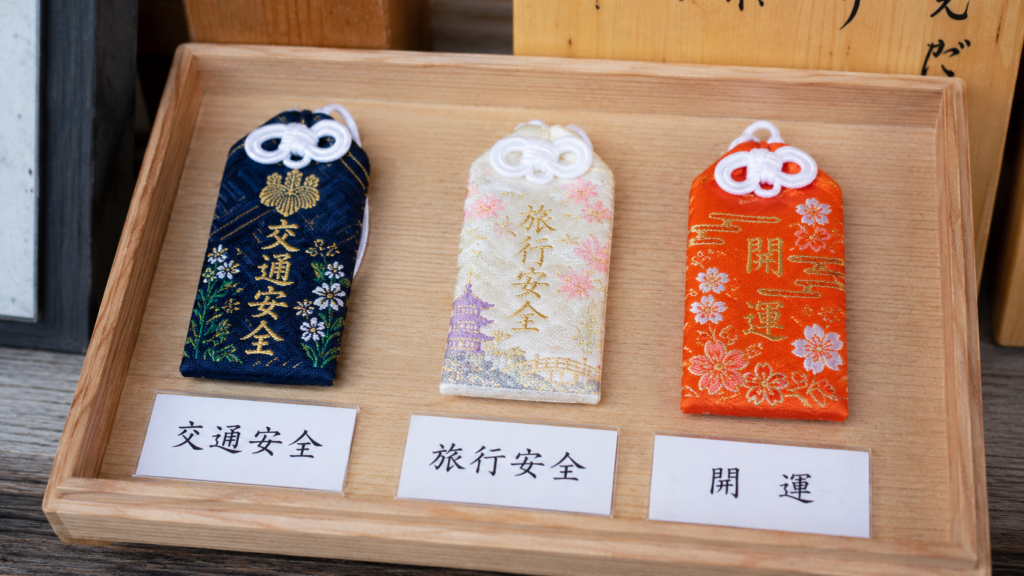
You do not need to memorize every possible phrase.
But recognizing a few common ones can help.
交通安全 — Kotsu Anzen
Traffic safety
This is associated with protection from traffic accidents and safety on the road.
Traffic-safety omamori are among the common types offered at Japanese shrines.
旅行安全 — Ryoko Anzen
Travel safety
This is intended for safety during journeys.
Not every shrine offers an omamori with this exact wording, so you may find another type of general safety protection instead.
健康 — Kenko
Health
A broad term for health and well-being.
病気平癒 — Byoki Heiyu
Recovery from illness
This is more specific than a general health wish.
The term is also used officially for shrine prayers connected with recovery from sickness.
長寿 — Choju
Longevity
A wish for a long life.
Some shrines distinguish longevity from general health or recovery from illness.
学業成就 — Gakugyo Joju
Success in studies
This is associated with academic progress and achievement.
合格祈願 — Gokaku Kigan
Prayer for passing an exam
This is more specifically focused on successfully passing an examination.
Meiji Jingu, for example, separately lists omamori for success in studies and passing examinations.
開運 — Kaiun
Good fortune / improved luck
A broad wish for better fortune.
厄除 — Yakuyoke
Protection from misfortune
This is associated with warding off bad luck or misfortune.
縁結び — Enmusubi
Connections and relationships
Often associated with romance and matchmaking, but the underlying idea of en can extend beyond romantic love.
良縁祈願 — Ryoen Kigan
Prayer for good relationships or connections
This may be useful for someone wishing for a good relationship rather than simply looking for a generic “love charm.”
安産 — Anzan
Safe childbirth
This is connected with prayers for a safe pregnancy and delivery. Safe-childbirth prayers are a long-established part of shrine practice.
家内安全 — Kanai Anzen
Safety and well-being of the household
This is associated with peace and safety within the home and family.
商売繁盛 — Shobai Hanjo
Prosperity in business
A prayer for business success and prosperity.
The Exact Wording Depends on the Shrine
This is important.
There is no single nationwide menu of omamori names that every shrine uses.
One shrine may use kenko.
Another may use kenko kigan or shintai kensyo.
One may offer a broad relationship omamori.
Another may distinguish between enmusubi, ryoen, family harmony, or another specific wish.
Official shrine offerings show just how detailed these categories can become.
So if the wording in front of you is different from something you saw online, that does not mean one of them is wrong.
Shrines have their own kami, traditions, and sacred items.
The Easiest Way: Know What You Want First
If you do not speak Japanese, asking:
“What kind of omamori is this?”
may not always solve the problem.
The shrine staff may simply answer in Japanese—and you may still not know what the omamori is for.
A more practical approach is to decide what kind of wish you are looking for first.
Maybe you want:
- safe travel,
- recovery from illness,
- longevity,
- academic success,
- or a good relationship.
Once you know that, use the Japanese wording from the list above to identify the omamori you need.
And if you cannot find it yourself, you can simply show the Japanese wording to the shrine staff on your phone.
You do not need to pronounce it perfectly.
You do not need to explain the whole situation in Japanese.
Showing the words is often enough to communicate what kind of omamori you are looking for.
Once you know the wish you are looking for, choosing becomes much easier. You are no longer guessing from color or design—you are choosing by meaning.
You Can Ask If You Want To
If you are comfortable speaking a little Japanese, you can also say:
“Kotsu anzen no omamori wa arimasu ka?”
Do you have a traffic-safety omamori?
or
“Byoki heiyu no omamori wa arimasu ka?”
Do you have an omamori for recovery from illness?
But speaking is optional.
Knowing the wish you want—and having the Japanese wording ready—is much more useful than trying to ask an open-ended question and understand the answer in Japanese.
What If You Cannot Say the Japanese?
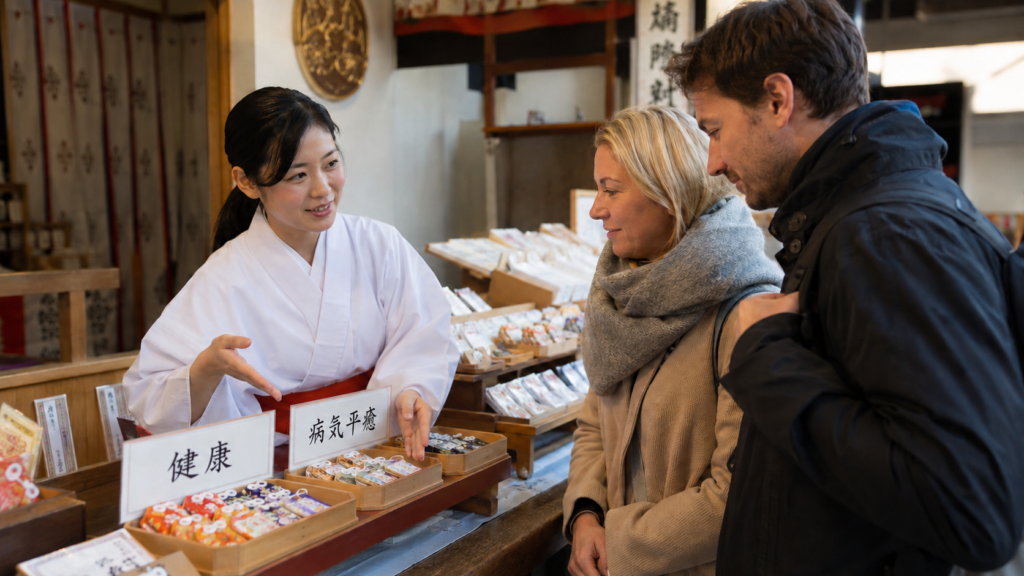
You can show it.
This is probably the easiest option for many travelers.
If you have the Japanese wording for the wish you want on your phone, you can simply show it to the shrine staff.
For example, if you are looking for:
病気平癒 — recovery from illness
you do not necessarily have to pronounce byoki heiyu perfectly.
You can show the Japanese text and ask whether the shrine has an omamori for that wish.
That can be especially useful when the difference between two omamori is difficult to explain through a translation app.
Why a Translation App May Not Tell You the Whole Story
Translation apps are useful.
But shrine terminology can be surprisingly nuanced.
For example:
Enmusubi may appear as “love,” “matchmaking,” “marriage,” or “connection.”
Ryoen may appear as “good match,” “good relationship,” or “good connection.”
A health-related term may simply become “health” even though the Japanese actually refers specifically to recovery from illness or longevity.
None of those translations is necessarily completely wrong.
But they may not tell you exactly what kind of wish the omamori represents.
That is why understanding the categories—not just translating individual kanji—can help.
Can You Use Camera Translation at a Shrine?
Sometimes yes.
Camera translation can be convenient when signs or omamori descriptions are written only in Japanese.
But always check whether photography is allowed around the shrine office before pointing your camera at everything.
Photography rules differ between shrines and between areas within a shrine.
So if photography is restricted, do not use camera translation there.
You can ask the staff or show them Japanese text on your own screen instead.
Don’t Choose an Omamori Only by Color
A pink omamori is not automatically for love.
A blue one is not automatically for travel.
And a gold one does not necessarily mean money.
Colors and designs are decided by individual shrines.
Some shrines use colors to distinguish different blessings.
Others offer the same blessing in several colors.
Samukawa Jinja is a good example of a shrine that explicitly connects different colors with different groups of wishes—but that system belongs to that shrine and should not be treated as a universal Japanese rule.
So color can sometimes mean something.
But you cannot reliably decode every omamori in Japan from its color alone.
The Design Can Still Be Part of Your Choice
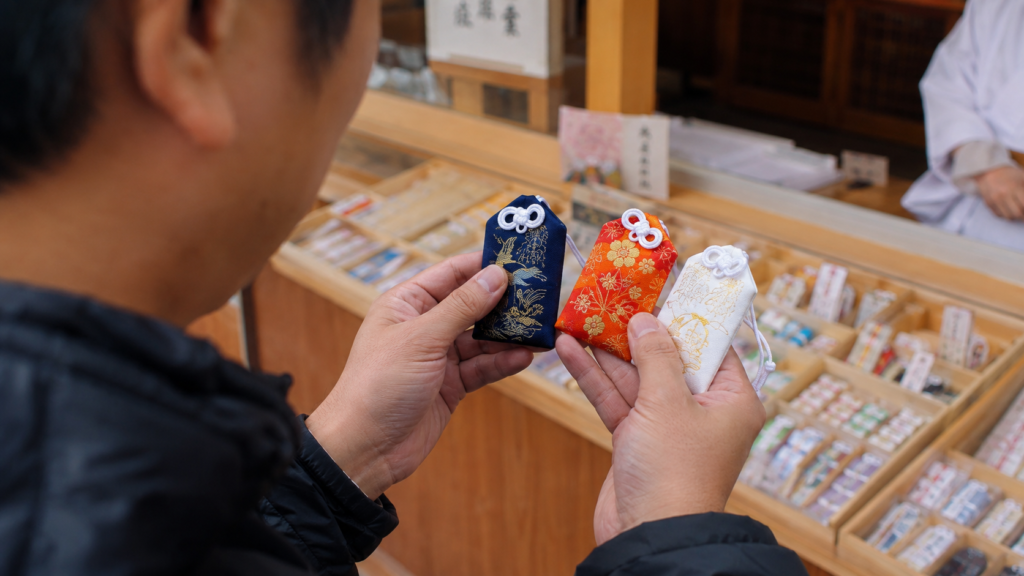
That does not mean appearance is unimportant.
Maybe you understand the meaning of two omamori and both suit your wish.
Then choose the one you like.
Perhaps its design reminds you of the shrine.
Perhaps it features a flower, animal, or motif that feels meaningful.
Perhaps you simply feel drawn to it.
That is fine.
Understanding the meaning does not mean you have to choose the least attractive one in the box.
It simply means you know what you are receiving as well as what it looks like.
What If You Accidentally Choose the Wrong One?
Do not panic.
Maybe you thought an omamori was for general health and later discovered it was specifically for recovery from illness.
Maybe you thought something meant romance when it was actually a broader prayer for good relationships.
You made a translation mistake.
You did not commit some serious act of disrespect.
Continue to treat the omamori with care.
And now you know what it means.
Can You Choose an Omamori Just Because You Love It?

You can certainly be attracted to an omamori because of its design.
For travelers, an omamori may become deeply connected with the memory of a particular shrine or trip.
But it is worth remembering that omamori are not simply decorative souvenirs.
The Association of Shinto Shrines explains that omamori are sacred items carried to receive the protection of the kami.
So if possible, find out what it means before choosing it.
Then you get both:
an omamori you love
and
a wish that actually means something to you.
You Do Not Have to Choose Only One
And if several different wishes matter to you, that is fine too.
You might have one omamori for travel safety.
Another for health.
Another connected with study or relationships.
Having more than one omamori is not inherently a problem.
If you are wondering how that works, see:
Can You Have More Than One Omamori?
Omamori Guide for Travelers
Choosing an Omamori in Japan?
Choosing an omamori can be harder than it first looks. Even within one broad category, there may be several different wishes.
Understand wishes such as enmusubi, ryoen kigan, and other relationship-related omamori.
See the difference between general well-being, recovery from illness, longevity, and more.
Find omamori for study, safety, travel, good fortune, success, protection, and other wishes.
Show the relevant Japanese words at the shrine office when asking for an omamori.
I created a Japanese Omamori Guide for travelers to help you understand these differences and choose the omamori that best matches what you are actually looking for.
Because the Japanese wording for each wish is included, you can show the relevant page directly to shrine staff when asking for an omamori.
You do not need to pronounce the Japanese perfectly. You do not need to rely on camera translation at the counter. And you do not have to choose based only on color or design.
See the Japanese Omamori Guide on EtsyFrequently Asked Questions
What do the Japanese words on an omamori mean?
They often indicate the type of wish or protection associated with the omamori, such as traffic safety, health, recovery from illness, academic success, relationships, safe childbirth, or business prosperity. Exact wording and categories vary by shrine.
Is every health omamori the same?
No. Shrines may distinguish between general health, physical well-being, recovery from illness, longevity, and other health-related wishes.
What is the difference between enmusubi and ryoen?
Both relate to connections and relationships. Enmusubi focuses on forming or binding connections and is often associated with romance, while ryoen refers to good or favorable connections. Individual shrines may use the terms in slightly different ways.
What does kotsu anzen mean?
Kotsu anzen (交通安全) means traffic safety. Omamori with this wording are associated with protection from traffic accidents and safety on the road.
What does byoki heiyu mean?
Byoki heiyu (病気平癒) refers to recovery from illness. It is more specific than a general health wish.
Can I ask shrine staff which omamori I should get?
Yes. You can tell them what kind of wish you are looking for, point to an omamori, or show them the Japanese wording for the wish on your phone.
Can I show shrine staff Japanese text instead of speaking Japanese?
Yes. If pronunciation is difficult, showing the Japanese wording for the type of omamori you want is a practical way to communicate at the shrine office.
Does the color of an omamori tell you what it means?
Not reliably. Some individual shrines use color to distinguish purposes, but there is no universal color system used by every shrine in Japan.
Final Thoughts
Not being able to read Japanese should not stop you from choosing an omamori that actually means something to you.
And you do not need to memorize a huge list of kanji before your trip.
The bigger thing to understand is that omamori can be surprisingly specific.
“Health” might mean general well-being, recovery from illness, or longevity.
“Relationships” might mean enmusubi, ryoen, family harmony, or another kind of connection.
Once you know what you are actually looking for, the Japanese becomes much easier to navigate.
And if you cannot say the words?
Show them.
You do not need perfect Japanese to communicate what you are hoping for.
The design can still catch your eye.
The color can still be your favorite.
And the omamori can still become a beautiful reminder of Japan.
But when you understand the wish behind it, you are no longer choosing only a pretty object.
You are choosing an omamori for a reason.
Omamori Guide for Travelers
Keep the Japanese words with you.
If you want to choose an omamori by meaning instead of guessing from color or design, Jin-journey’s English Omamori Guide explains common wishes and includes the Japanese wording you can show at the shrine office.
See the Japanese Omamori Guide on EtsyContinue Your Journey
Understanding the Japanese on an omamori is only one part of choosing and caring for one.
If you’d like to learn more about omamori and the shrine culture surrounding them, these guides are a good place to continue your journey.