
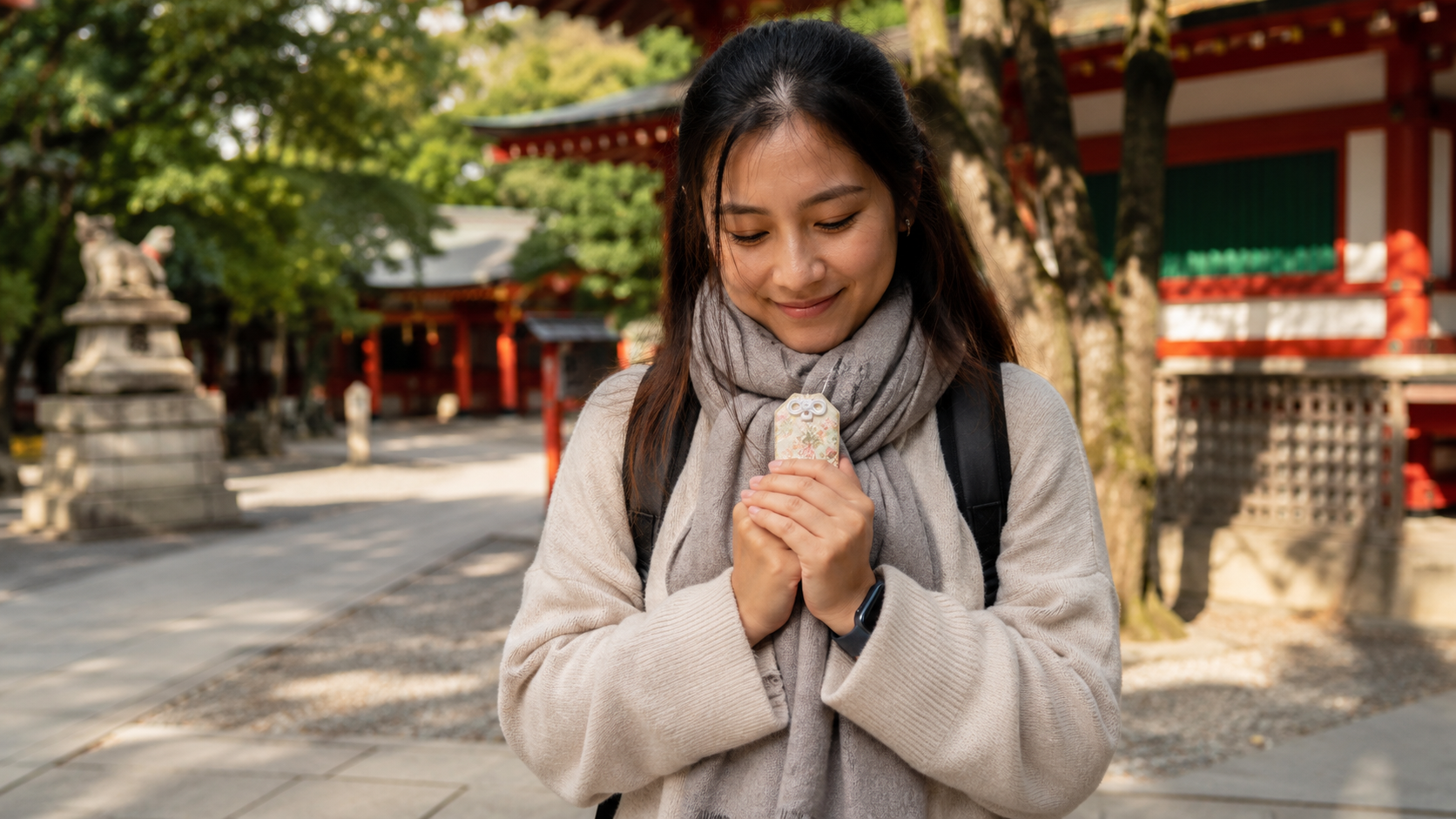
Can You Have More Than One Omamori?
You visit one shrine and find an omamori for safe travel.
At another shrine, you see one for good health.
Then there is one for success in work.
And another one you simply love because it reminds you of your trip to Japan.
At some point, you may start wondering:
Can you actually have more than one omamori?
Or will having several of them somehow cause a problem?
The short answer is:
Yes. You can have more than one omamori.
There is no rule saying that you must choose only one.
And despite a surprisingly common worry, the kami associated with different omamori are not believed to become jealous or “fight” with each other.
The Association of Shinto Shrines specifically explains that Japan has many kami with different divine virtues, and that they work together to protect people. Having several omamori is therefore not something you need to worry about.
Do Omamori From Different Shrines “Fight” With Each Other?
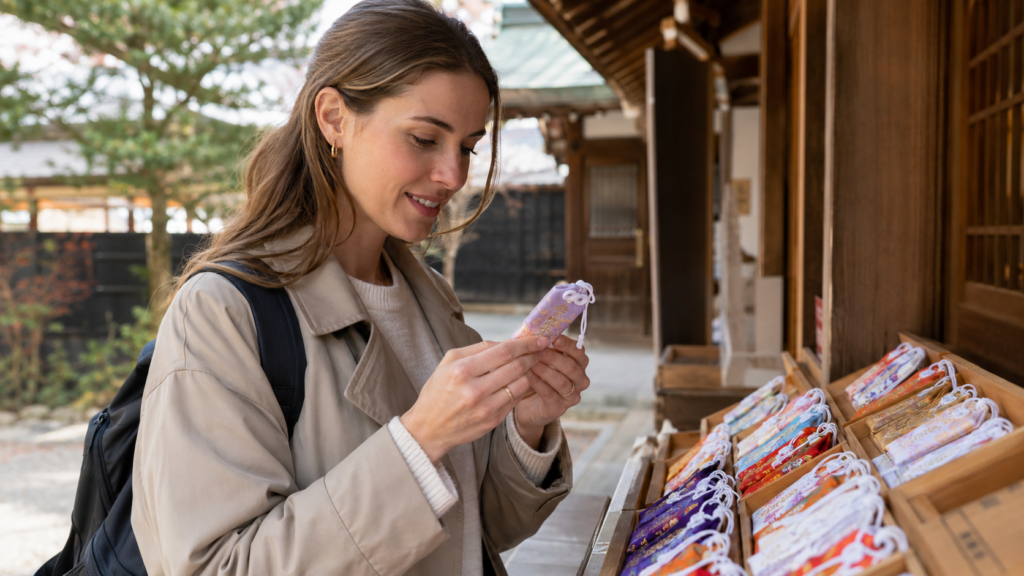
No.
This is one of the most persistent omamori myths.
You may hear people say that carrying omamori from different shrines is bad because the kami might become jealous of one another.
The Association of Shinto Shrines directly addresses this question and says there is no need to worry.
Shinto has the idea of yaoyorozu no kami—the countless kami of Japan.
Different kami have different divine virtues and are understood to cooperate in protecting people.
So carrying:
- a travel safety omamori from one shrine,
- a health omamori from another,
- and a good-luck omamori from somewhere else
is perfectly fine.
You do not need to choose which kami you want to “side with.”
Is There a Limit to How Many Omamori You Can Have?
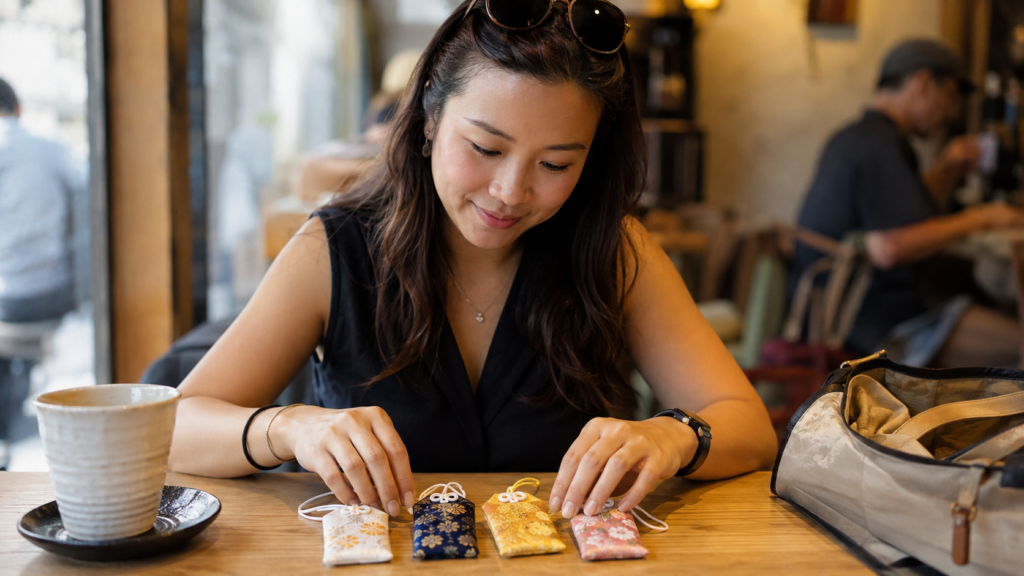
There is no official numerical limit.
You do not suddenly break an omamori rule when you acquire your third, fifth, or tenth one.
However, the Association of Shinto Shrines notes that it is uncommon to carry many copies of exactly the same kind of omamori from the same shrine.
Its English guidance suggests that if you want several, it makes more sense to receive omamori from different shrines or choose different kinds of protection from the same shrine.
That way, each one has its own meaning.
For example:
Travel safety for your journeys.
Health for everyday well-being.
Study for exams or education.
Enmusubi for relationships and meaningful connections.
Rather than asking “How many am I allowed to have?”, it may be more useful to ask:
What does each one mean to me?
You Do Not Need to Collect Omamori Just Because You Can
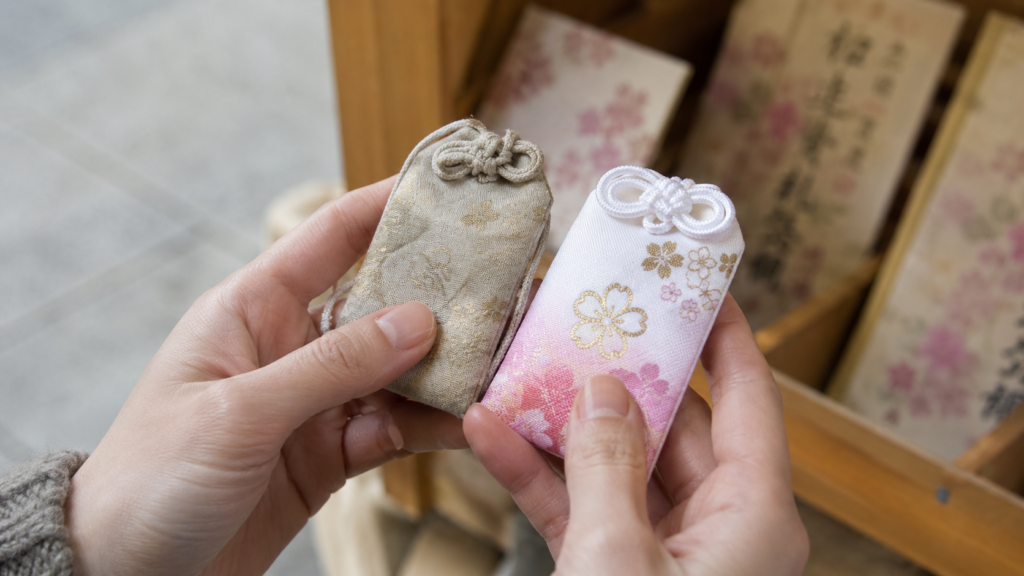
Omamori can be beautiful.
Some have traditional embroidery.
Some have modern designs.
Some are available only at a particular shrine.
And for international travelers, they can become deeply memorable objects connected with a specific day or place in Japan.
But an omamori is not simply a collectible charm.
The Association of Shinto Shrines describes omamori as sacred items through which people receive the protection of the kami, rather than ordinary souvenirs.
So there is nothing wrong with having several.
But the idea is not necessarily to gather as many as possible.
Choose the ones that have meaning for you.
If you are new to omamori, What Is an Omamori? explains what they are, what they mean, and how they are traditionally used.
Can You Carry Several Omamori Together?
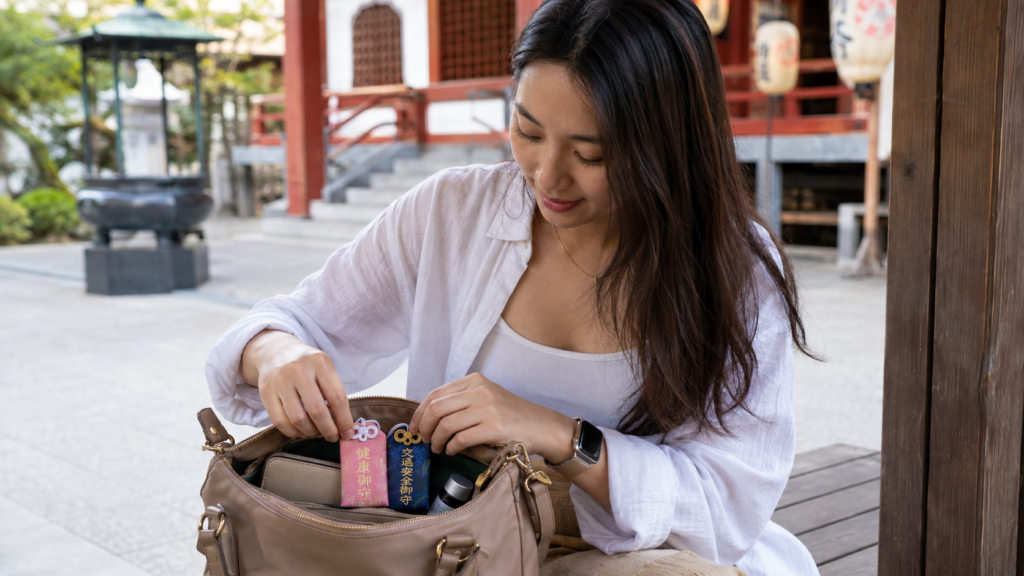
Yes.
There is no need to keep each omamori in a completely separate place simply because it comes from a different shrine.
Omamori are generally intended to be kept close to you.
Meiji Jingu, for example, explains that omamori may be attached to or placed inside a bag, purse, or pocket.
Depending on the purpose, you might keep different omamori in different places.
A travel-safety omamori might stay in your travel bag.
A traffic-safety omamori may be kept in a car.
A general protection omamori may stay in your everyday bag.
There is no requirement that all of them live in one place.
Do You Have to Replace an Omamori After One Year?
You will often hear:
“Omamori last for one year.”
There is some truth behind this, but it can sound more rigid in English than it really is.
The Association of Shinto Shrines says that it is considered good practice to receive new ofuda and omamori each year. Old ones are traditionally returned to a shrine and respectfully burned in an otakiage ceremony.
But one year should not be understood as a strict expiration date.
An omamori does not suddenly become useless at midnight exactly twelve months after you received it.
In fact, the Association of Shinto Shrines also says that it is fine to continue carrying an omamori until the wish connected with it has been fulfilled.
So “one year” is better understood as a traditional rhythm for renewing your omamori—not a hard use-by date.
What If Your Wish Comes True Before One Year?
You do not need to wait for the one-year mark.
If you received an omamori for a particular wish and that wish has been fulfilled, you can return it earlier.
For example:
You received an omamori for passing an exam.
You passed.
Or you received one for finding work.
You got the job.
At that point, returning to give thanks makes perfect sense.
The important idea is gratitude—not waiting until an exact date appears on the calendar.
Can You Keep an Omamori for More Than One Year?
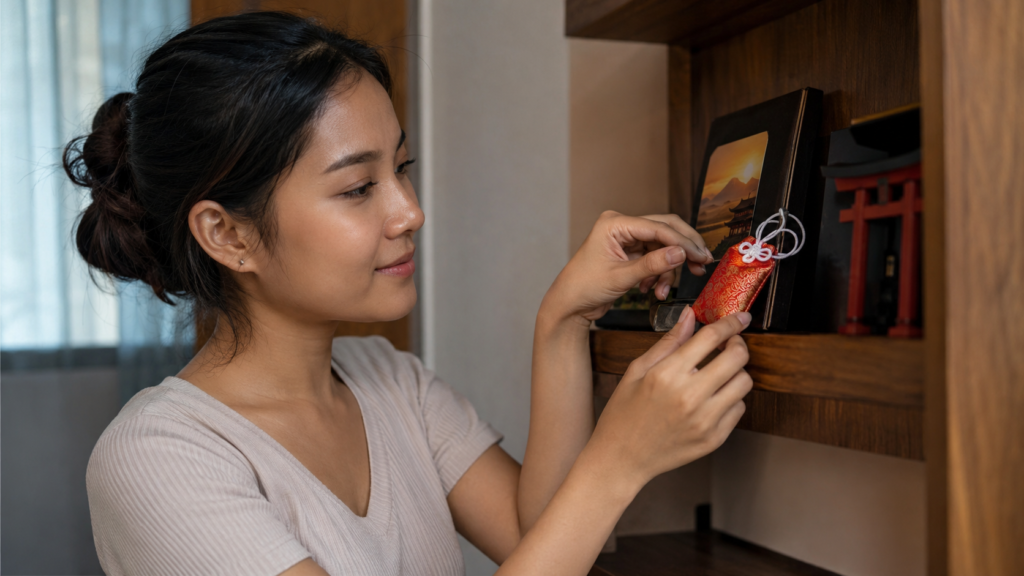
Yes.
This is where real life becomes more flexible than a simple “replace it every year” rule.
Some people continue to treasure a particular omamori because it has personal meaning to them.
Perhaps it came from an important shrine.
Or perhaps it simply became something they deeply value.
Official shrine guidance recommends renewing omamori periodically and also allows an omamori to be carried until its purpose has been fulfilled.
There is no need to think of an older omamori as something that suddenly becomes bad or dangerous.
If you choose to keep one for longer, treat it with care and respect.
What If You Want to Keep It as a Memory of Japan?
For international travelers, this matters a lot.
You may visit a shrine once and have no idea when—or whether—you will ever be able to return.
An omamori may also become part of the memory of that journey.
And there is nothing strange about becoming attached to it.
The important thing is to remember what it is.
An omamori may be a beautiful reminder of Japan, but it is also a sacred item connected with the shrine where you received it.
So if you decide to keep it for years because it has become meaningful to you, keep it respectfully rather than treating it like a disposable souvenir.
You do not need to panic because a year has passed and you are now thousands of kilometers away from Japan.
What Should You Do With an Old Omamori?
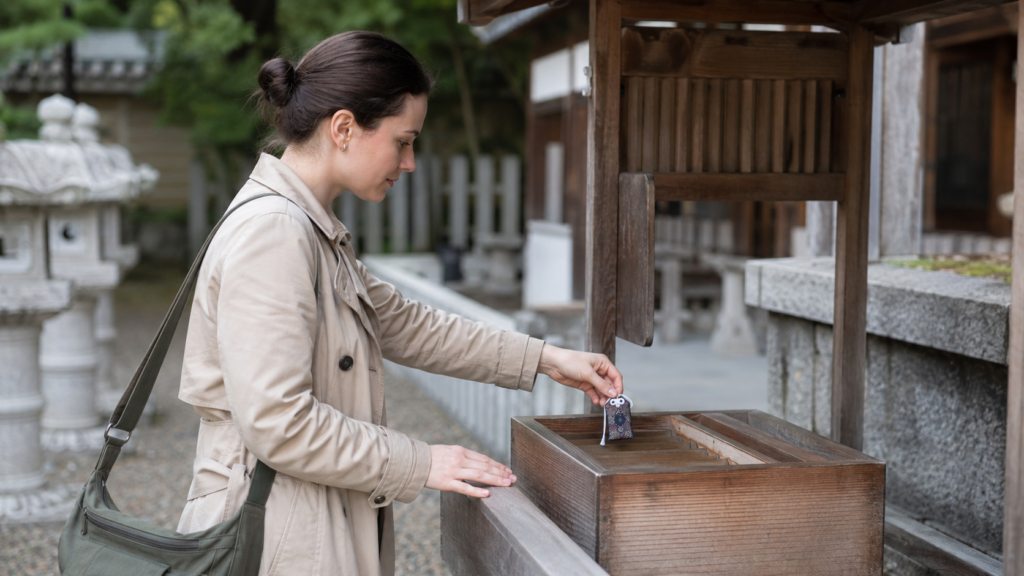
Traditionally, old omamori are returned to a shrine.
Many shrines have a place for returning old ofuda and omamori, often called a kofuda osamejo or similar name.
They may later be respectfully burned during ceremonies such as otakiage, dondoyaki, or sagicho.
The Association of Shinto Shrines advises returning old sacred items with gratitude for the protection you have received.
Ideally, an omamori is returned to the shrine where you received it.
But that is not always practical.
What If You Cannot Return to the Same Shrine?
This is especially common for travelers.
Maybe you received your omamori in Kyoto.
Now you live in Canada.
Flying back to Kyoto simply to return one omamori is obviously not realistic.
The Association of Shinto Shrines advises that when returning to the original shrine is difficult, you can contact a nearby shrine and ask whether they are able to accept it for respectful disposal.
The important word here is ask.
Do not assume that every shrine accepts items from every other shrine.
Policies differ.
Some shrines may accept them.
Others may only accept their own.
And a shrine overseas may have its own procedures.
What If You Cannot Return It Anywhere?
Then you do not have to rush to throw it away.
This is where I would be careful with the advice sometimes found online.
You may see detailed home-disposal instructions involving white paper, salt, particular folding methods, or specific phrases.
There is no single nationwide home-disposal procedure that I can verify as an official Shinto rule.
So rather than presenting one internet method as “the correct way,” a simpler approach is better:
If returning the omamori is not realistically possible, keep it somewhere clean and treat it respectfully until you have an opportunity to return it properly.
For an international traveler, that could mean keeping it for many years.
That is far better than feeling pressured to throw away something sacred simply because you cannot fly back to Japan.
Can an Omamori Be a Treasured Souvenir?

Yes—with one important nuance.
Calling an omamori only a “souvenir” misses what it is.
Official shrine guidance specifically says that omamori are not simple souvenirs but sacred objects associated with the protection of the kami.
But that does not mean they cannot also become treasured reminders of your journey.
Both things can be true.
An omamori can be:
a sacred item you received at a shrine
and
a meaningful reminder of your time in Japan.
If it becomes special to you, caring for it and keeping it respectfully is completely different from throwing it into a drawer with receipts and old train tickets.
What Matters Most Is How You Treat It
There are plenty of small omamori “rules” online.
- One year.
- One omamori.
- Never mix shrines.
- Never keep an old one.
Some of these ideas come from real customs.
But when reduced to one-line rules, they can make omamori feel much more rigid than they really are.
The broader idea is simpler.
An omamori is something sacred that you receive with a wish, prayer, or sense of protection.
Keep it close.
Treat it with care.
Be grateful for it.
And when the time feels appropriate and you are able to do so, return it respectfully.
That matters more than counting exactly how many omamori are in your bag.
Omamori Guide for Travelers
Choosing an Omamori in Japan?
Choosing an omamori can be harder than it first looks. Even within the same broad category, there may be several different wishes.
Enmusubi, ryoen kigan, and other wishes connected with good relationships.
General well-being, recovery from illness, longevity, and more specific wishes.
Study, safety, good fortune, travel, success, and other common omamori types.
Show the relevant wording at the shrine office when asking for an omamori.
I created a Japanese Omamori Guide for travelers to help you understand these differences and choose the omamori that best matches what you are looking for.
Because the guide includes the Japanese wording used for each wish, you can show the relevant page at the shrine office when asking for an omamori — even if you do not speak Japanese.
No need to guess from the design or rely on a translation app while you are standing at the counter. You can keep the guide on your phone and use it while visiting shrines in Japan.
See the Japanese Omamori Guide on EtsyFrequently Asked Questions
Can you have more than one omamori?
Yes. There is no rule limiting you to one omamori. The Association of Shinto Shrines explains that different kami do not “fight” with each other and that receiving protection from multiple kami is not a problem.
Can you carry omamori from different shrines together?
Yes. Omamori from different shrines can be carried at the same time. Official shrine guidance specifically says there is no need to worry about conflict between different kami.
How many omamori can you have?
There is no official numerical limit. The Association of Shinto Shrines notes that having many copies of exactly the same type from one shrine is uncommon and suggests choosing different types or receiving omamori from different shrines instead.
Do omamori expire after one year?
One year is a traditional time for renewing an omamori, but it is not best understood as a strict expiration date. The Association of Shinto Shrines also says that an omamori may be carried until the wish connected with it has been fulfilled.
Can I keep an omamori for several years?
Yes. Official guidance recommends periodic renewal but does not say that an older omamori suddenly becomes harmful after one year. If an omamori has personal meaning to you, you can continue to treat it with care and respect.
What should I do when my wish comes true?
You may return the omamori with gratitude rather than waiting for a full year to pass. Traditionally, returned omamori are respectfully burned by shrines.
What if I cannot return my omamori to Japan?
You can ask a nearby shrine whether it accepts old omamori from elsewhere. The Association of Shinto Shrines recommends checking first when returning to the original shrine is difficult. If returning it is not realistically possible, there is no need to panic or immediately throw it away; keeping it respectfully until another opportunity arises is a reasonable option.
Final Thoughts
So, can you have more than one omamori?
Absolutely.
You can carry omamori for different wishes.
You can receive them from different shrines.
And you do not need to worry that the kami will become jealous of one another.
The same flexibility is useful when thinking about how long to keep them.
Receiving a new omamori each year is a traditional custom, but one year is not a strict expiration date.
A wish may be fulfilled sooner.
An omamori may remain meaningful for much longer.
And for someone who traveled halfway around the world to visit Japan, returning it to the original shrine may simply not be possible anytime soon.
Do not let that turn something meaningful into a source of anxiety.
Treat your omamori with respect.
Keep it close if it still matters to you.
And if you visit Japan again someday, you can always bring it back with you and return it then.
Until that day, keep it somewhere safe, treat it with care, and let it remain a small reminder of the journey that brought it to you.
Maybe it will even give you one more reason to come back to Japan.
Omamori Guide for Travelers
Choose your omamori with more confidence.
If you want to understand common omamori types and the Japanese words you may see at shrine offices, Jin-journey’s English Omamori Guide is easy to keep on your phone while traveling in Japan.
See the Japanese Omamori Guide on EtsyContinue Your Journey
Omamori may be small, but they connect to many larger ideas in Japanese shrine culture—from prayer and the kami to gratitude and the way sacred items are treated.
If you’d like to understand more about what you may encounter during a shrine visit, these guides are a good place to continue your journey.